
Crash of a Reims-Cessna F406 Caravan II in Oakey: 2 killed

Date & Time: Jul 20, 2025 at 1500 LT
Type of aircraft:
Registration:
VH-EYQ
Flight Type:
Survivors:
No
Schedule:
Warwick - Oakey
MSN:
406-0047
YOM:
1990
Country:
Region:
Crew on board:
2
Crew fatalities:
Pax on board:
0
Pax fatalities:
Other fatalities:
Total fatalities:
2
Circumstances:
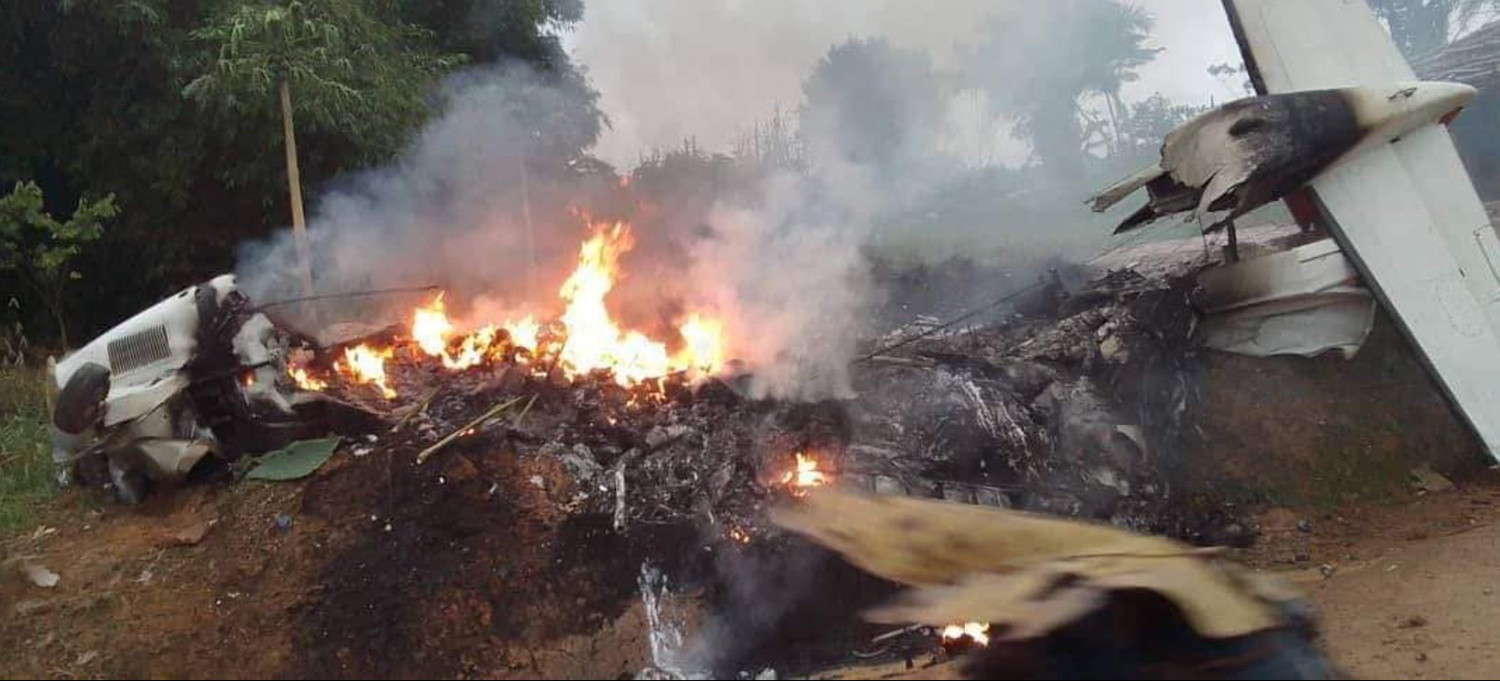
The crew departed Warwick Airport at 1426LT on a positioning flight to Oakey Airfield. On approach to runway 14, the twin engine airplane went out of control and crashed in a grassy area located 2 km from the airfield, bursting into flames. Both occupants were killed.

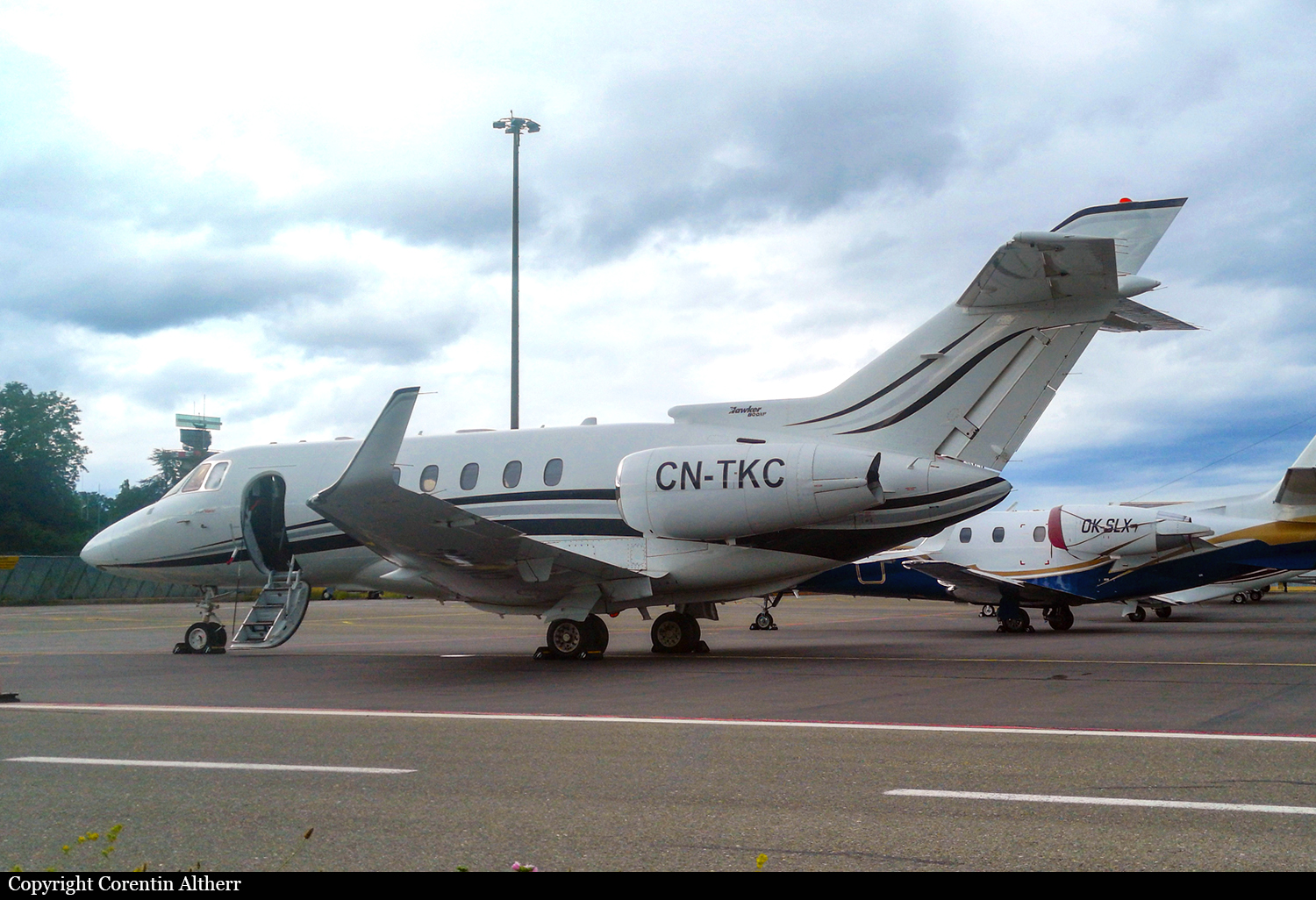
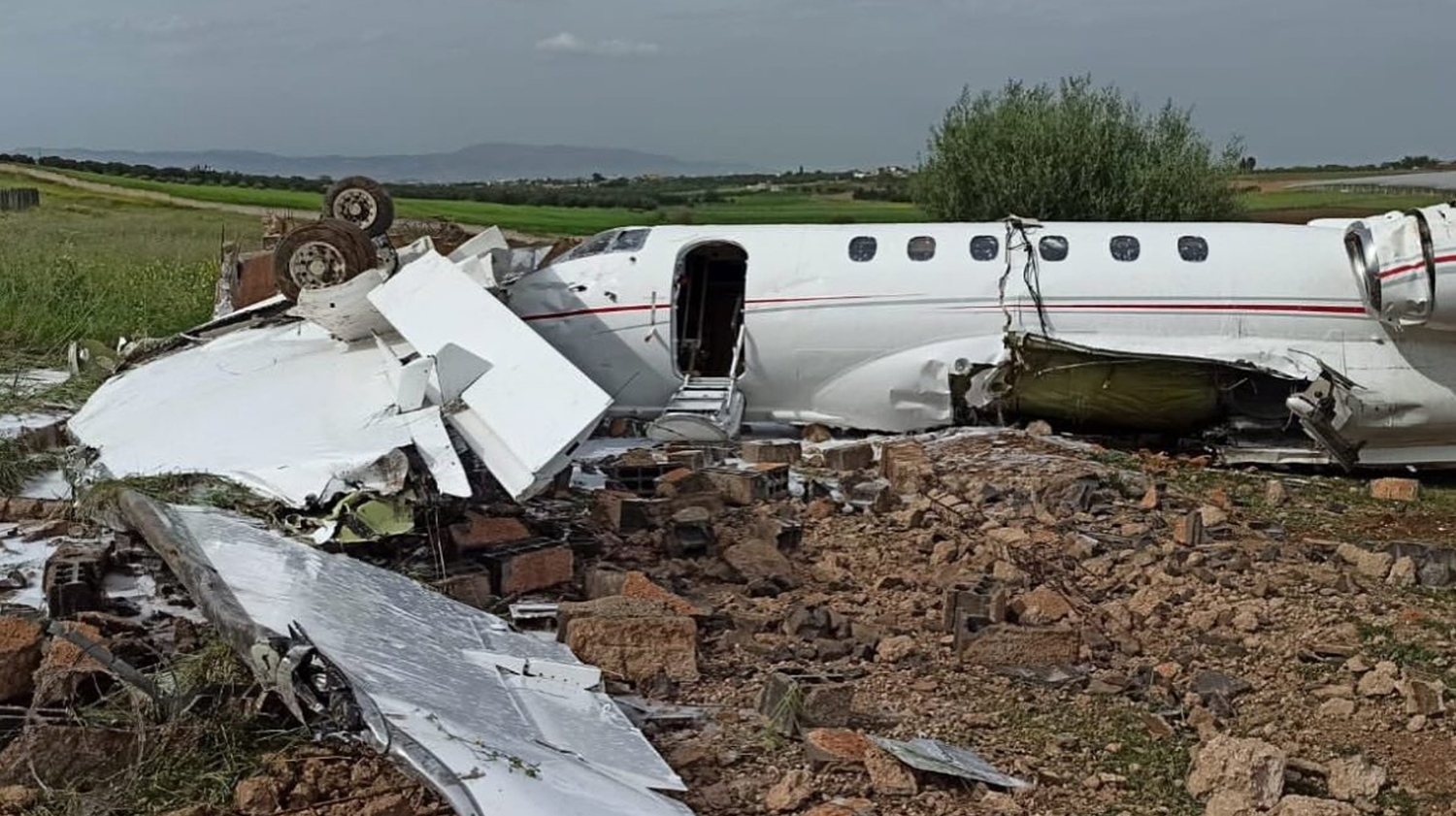
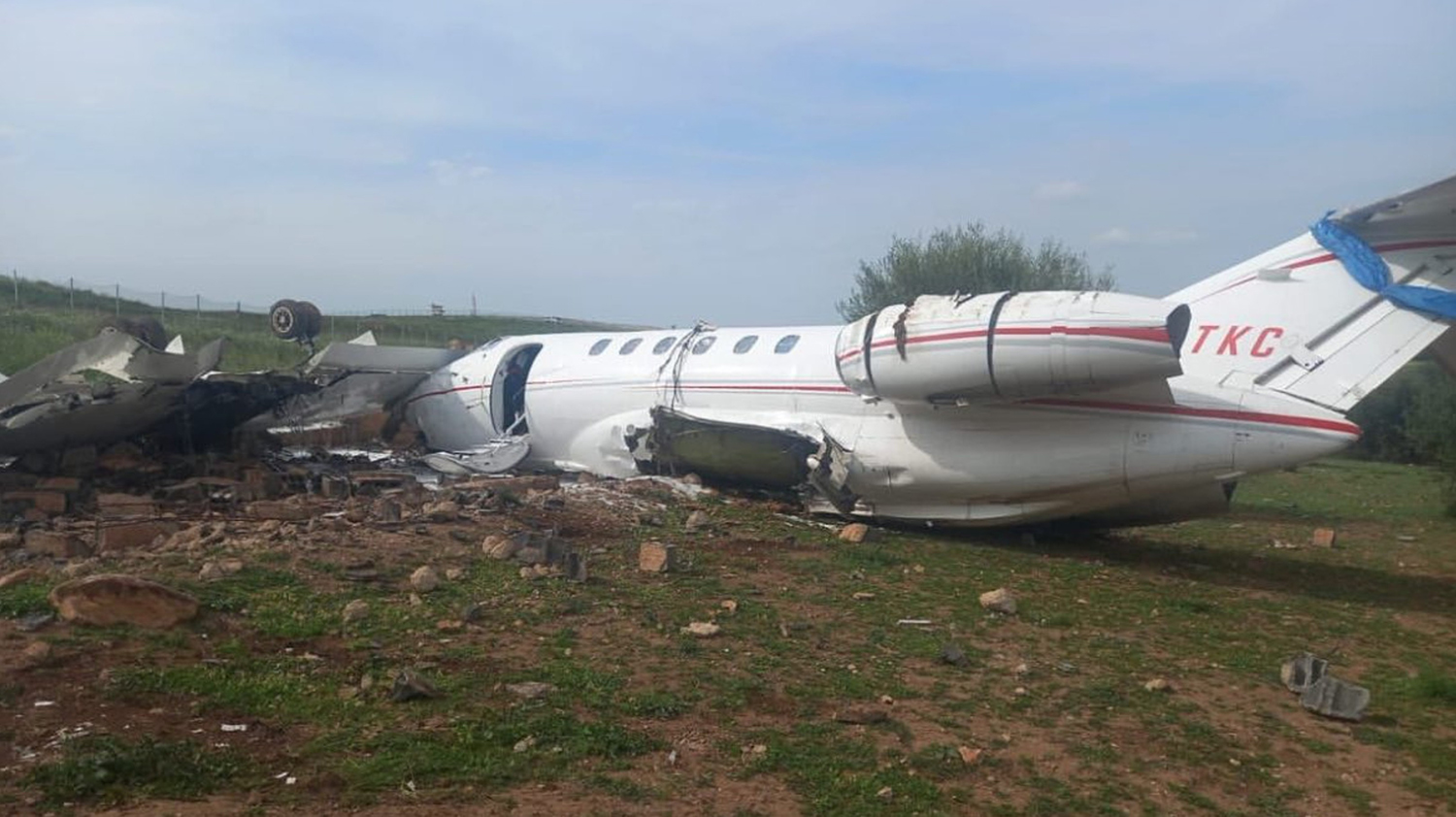
Crash of a Hawker 800XP in Fès

Date & Time: Apr 11, 2025 at 1511 LT
Type of aircraft:
Operator:
Registration:
CN-TKC
Flight Type:
Survivors:
Yes
Schedule:
Marrakech – Fès
MSN:
258670
YOM:
2004
Flight number:
AOM500C
Country:
Region:
Crew on board:
3
Crew fatalities:
Pax on board:
0
Pax fatalities:
Other fatalities:
Total fatalities:
0
Circumstances:
After landing on runway 09 at Fès-Saïss Airport, the airplane was unable to stop within the remaining distance. It overran, collided with a concrete wall located 168 metres past the runway end, lost its undercarriage and both wings then made a 180 turn and came to rest. All three crew members were injured and the airplane was destroyed.

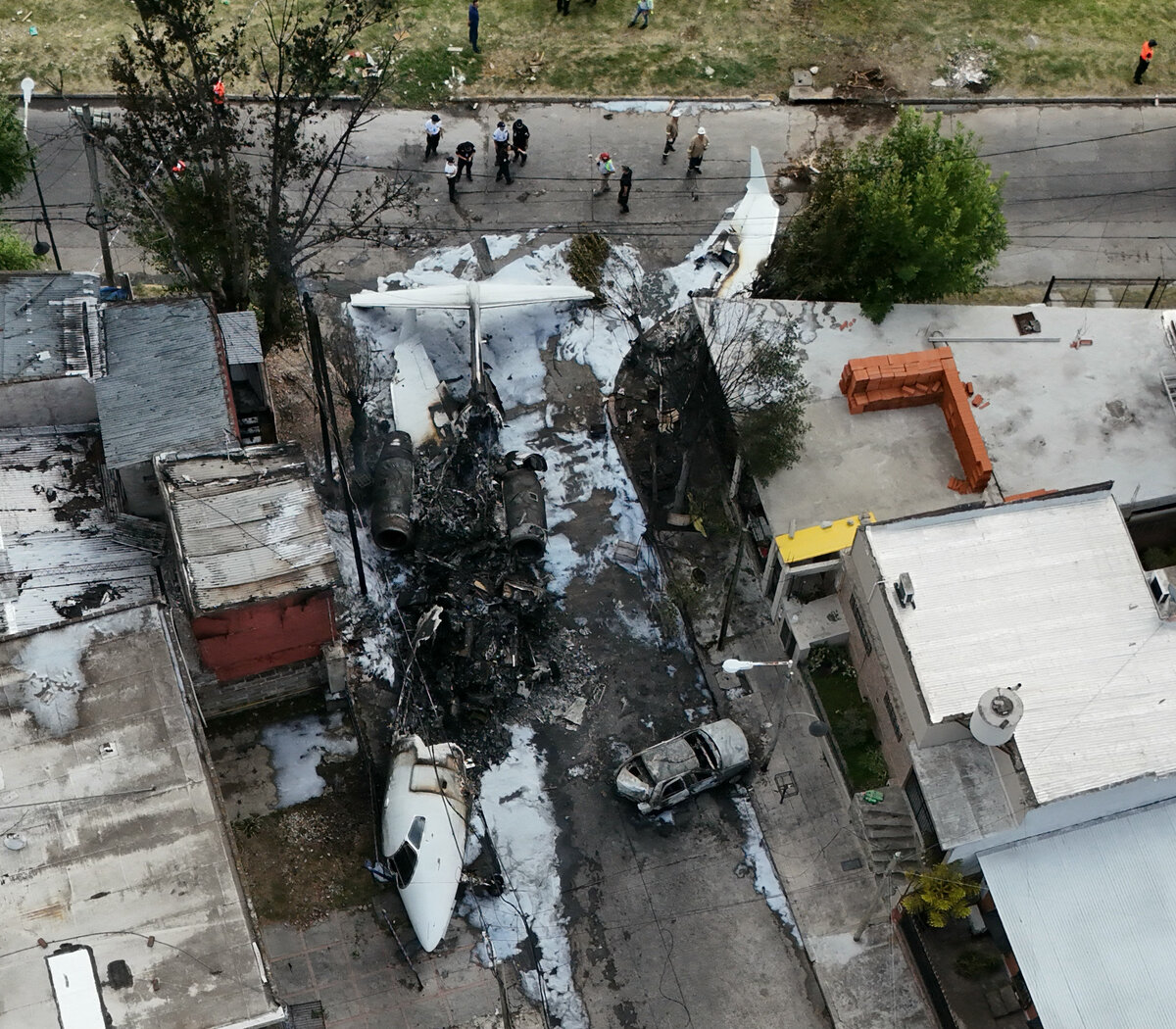
Crash of a Bombardier BD-100-1A10 Challenger 300 in Buenos Aires: 2 killed

Date & Time: Dec 18, 2024 at 1320 LT
Type of aircraft:
Registration:
LV-GOK
Flight Type:
Survivors:
No
Site:
Schedule:
Punta del Este - Buenos Aires
MSN:
20227
YOM:
2008
Country:
Crew on board:
2
Crew fatalities:
Pax on board:
0
Pax fatalities:
Other fatalities:
Total fatalities:
2
Circumstances:
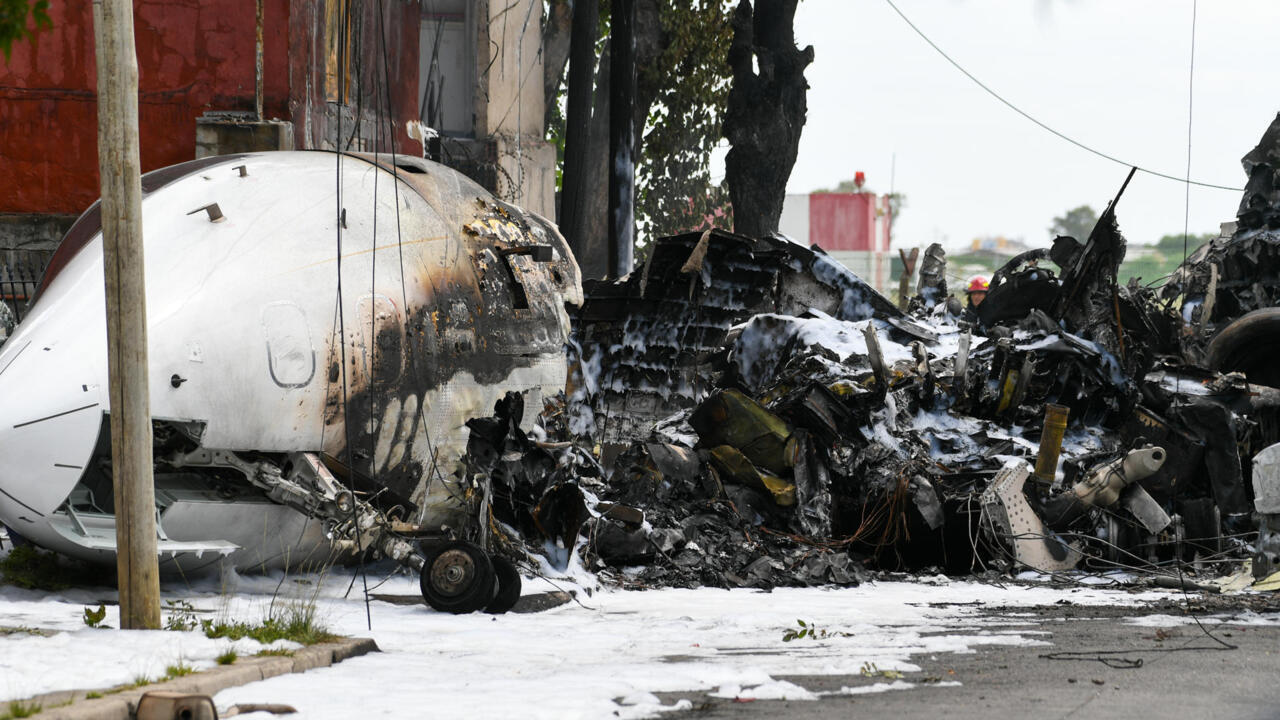
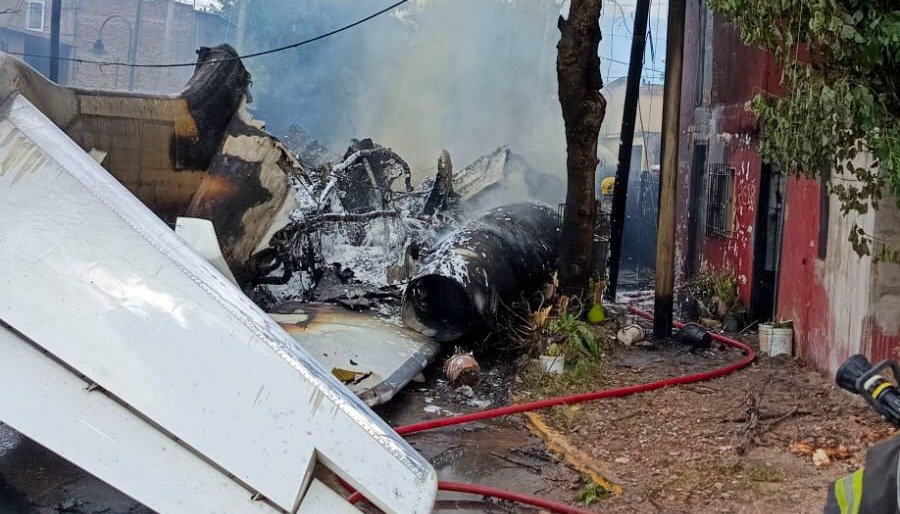
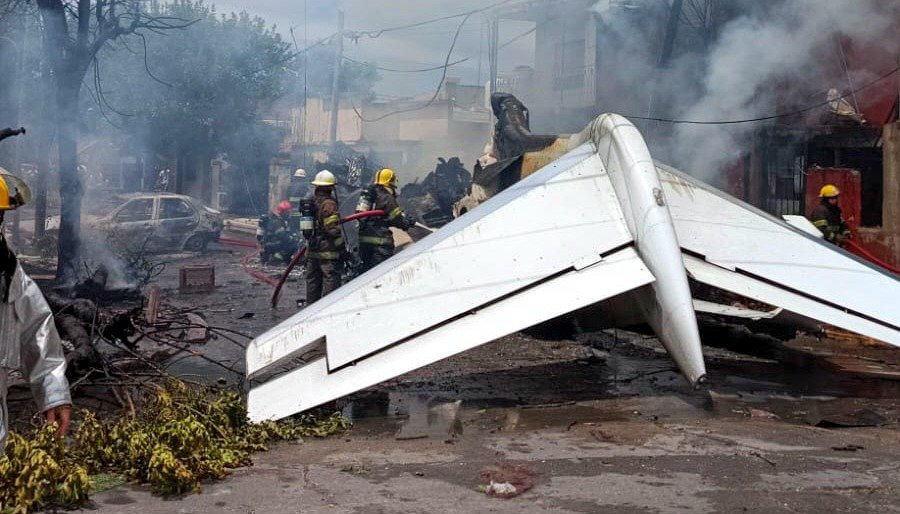
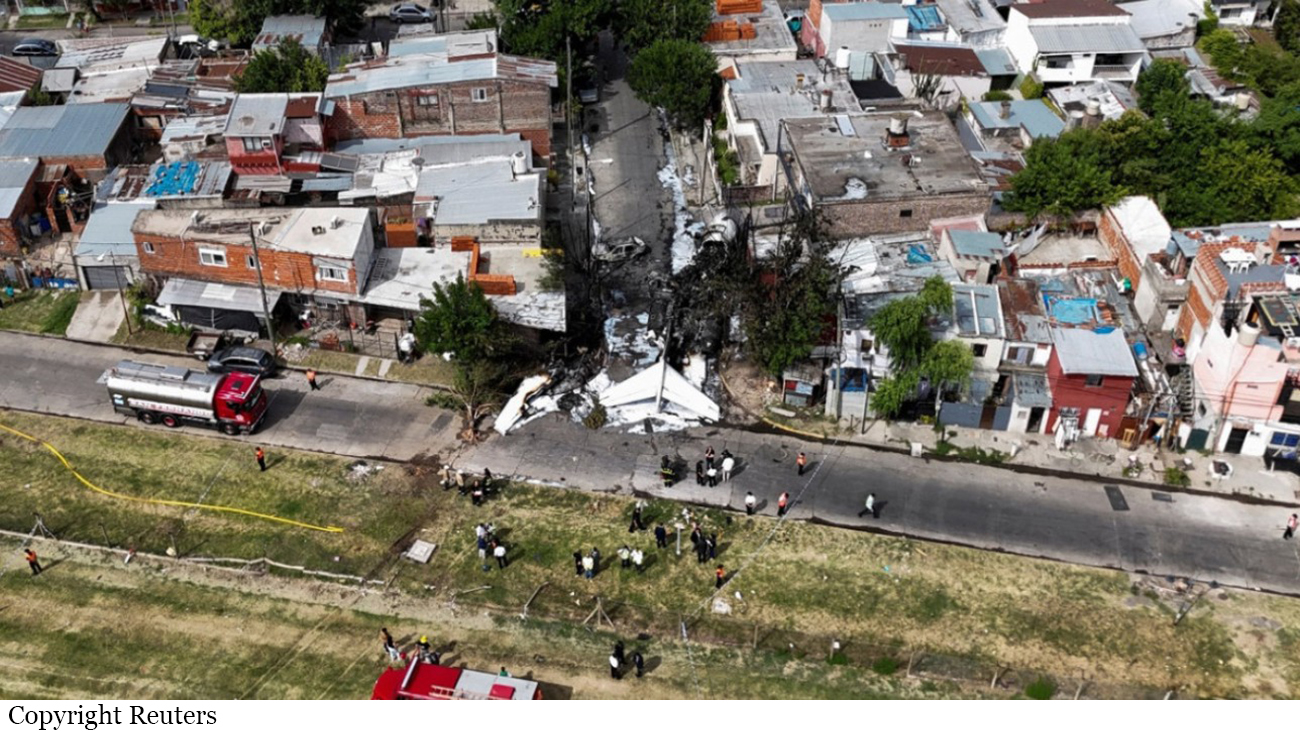
The crew was completing a positioning flight from Punta del Este to the airport of San Fernando in Buenos Aires. After landing on runway 05, the crew initiated the braking procedure but, for unknown reasons, the airplane was unable to stop within the remaining distance (runway 05 is 1,690 metres long). After the airplane overran the runway, the crew turned to the right to avoid runway 23 landing equipment. The airplane rolled for about 200 metres in a grassy area, crossed the perimeter fence and a small road before crashing in a street, bursting into flames. The airplane was totally destroyed and both pilots were killed. The airplane was owned by the Argentinian company New Lines, property of the businessman Jorge Pablo Brito.

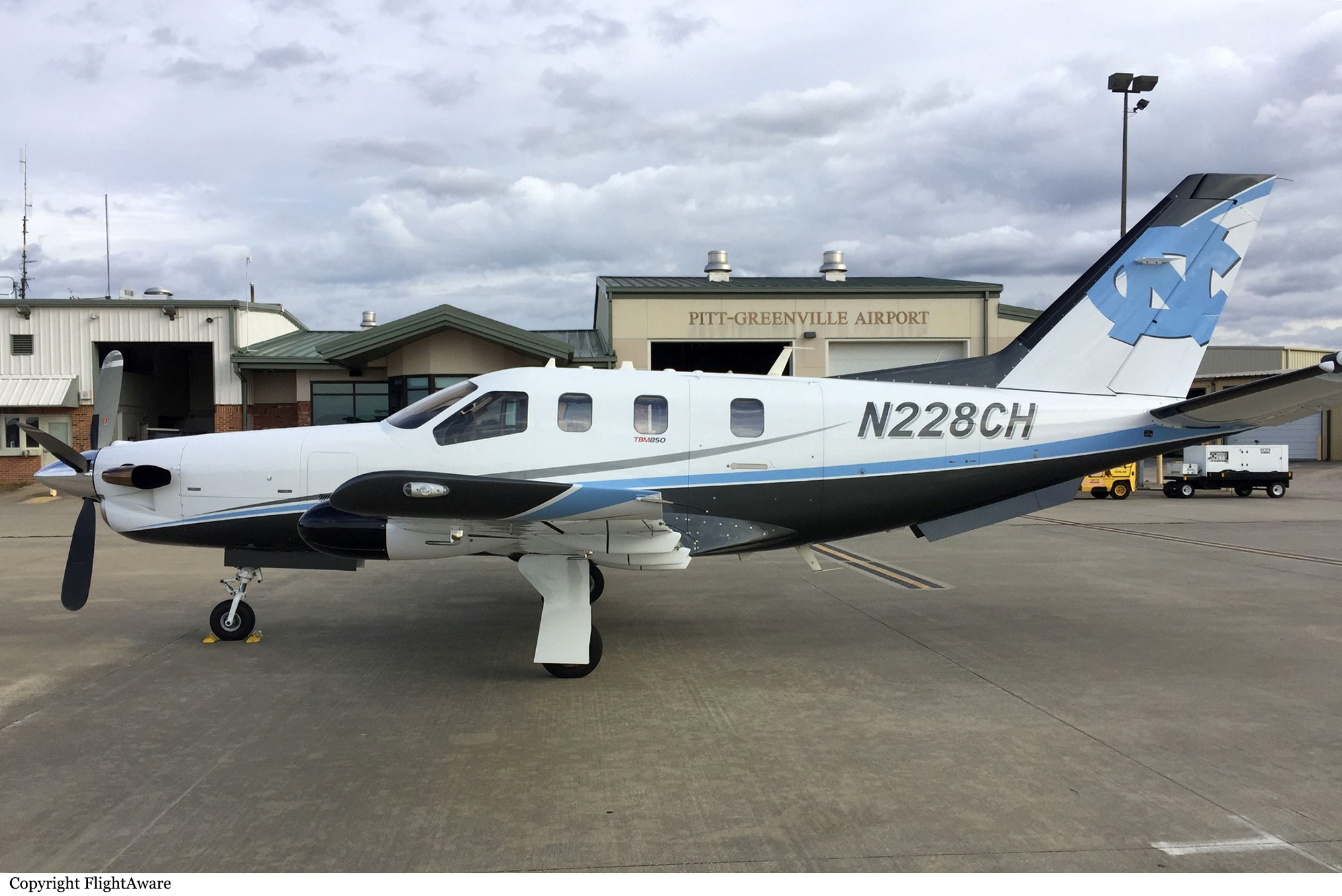
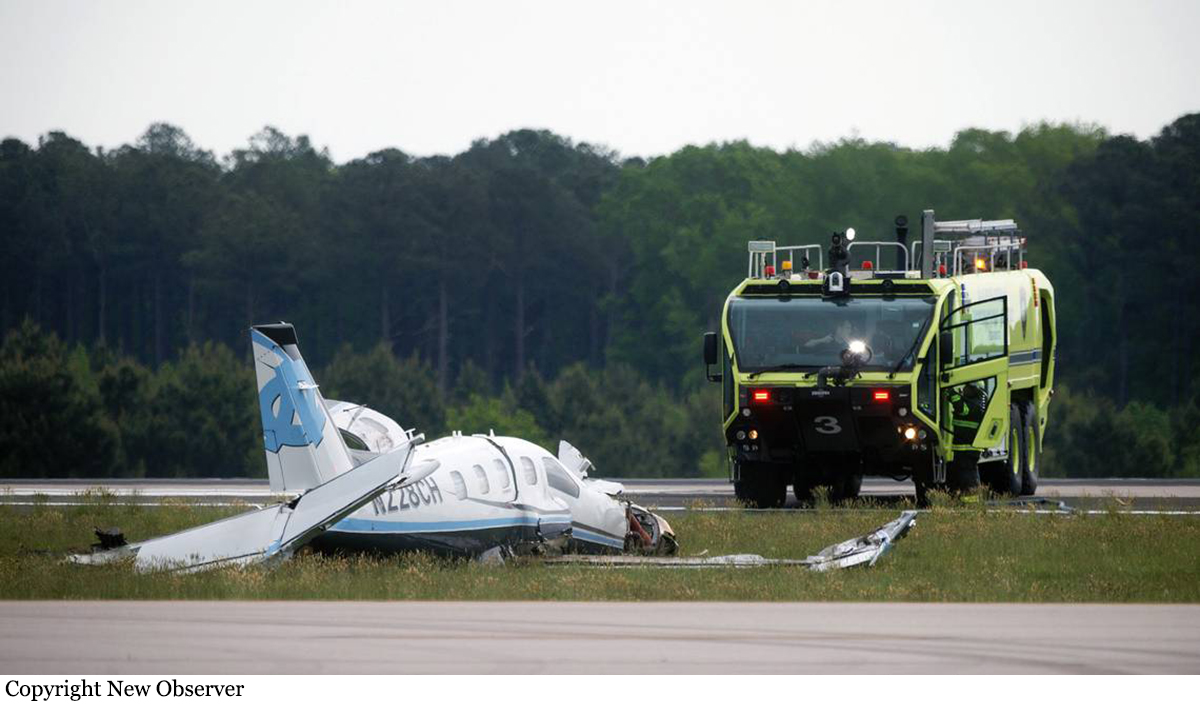
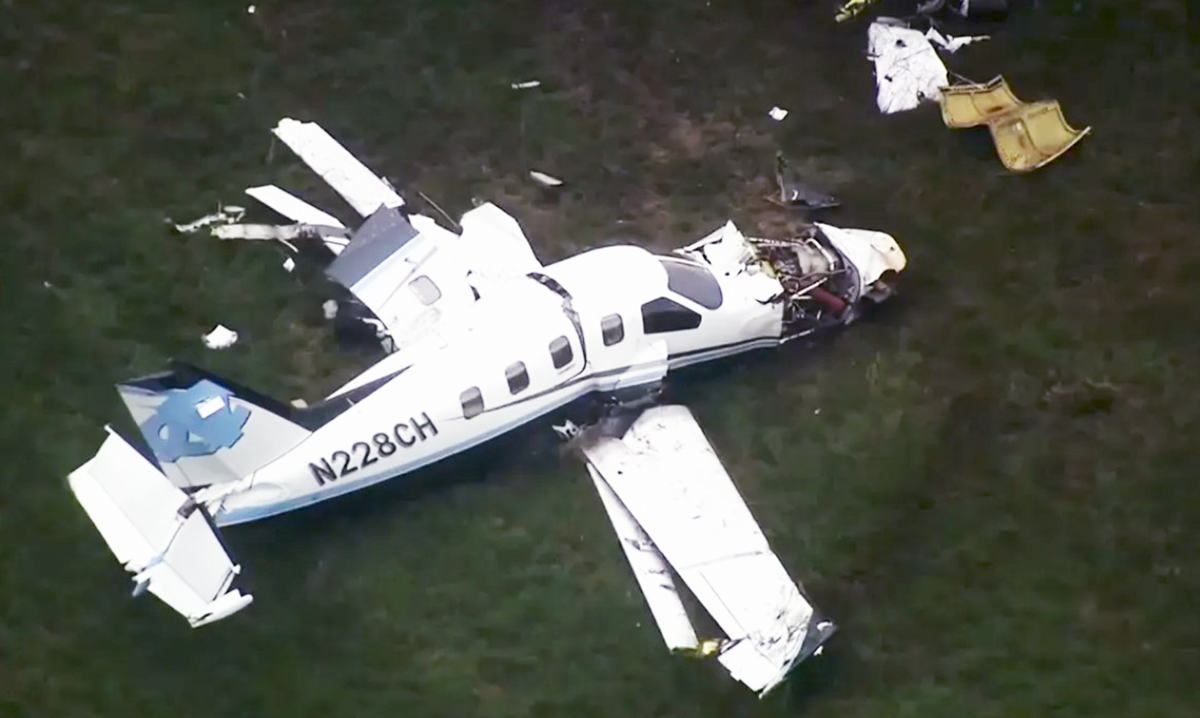
Crash of a Socata TBM-850 in Raleigh

Date & Time: Apr 24, 2024 at 1008 LT
Type of aircraft:
Operator:
Registration:
N228CH
Flight Type:
Survivors:
Yes
Schedule:
Wilmington - Raleigh
MSN:
356
YOM:
2006
Crew on board:
2
Crew fatalities:
Pax on board:
0
Pax fatalities:
Other fatalities:
Total fatalities:
0
Circumstances:
On final approach to Raleigh-Durham Airport, while on a positioning flight from Wilmington-New Hanover Airport, the single engine airplane went out of control and crashed nearby the runway. Both occupants were quickly rescued and the airplane was damaged beyond repair. It was reported that the pilot was attempting a go around procedure when the accident occurred.

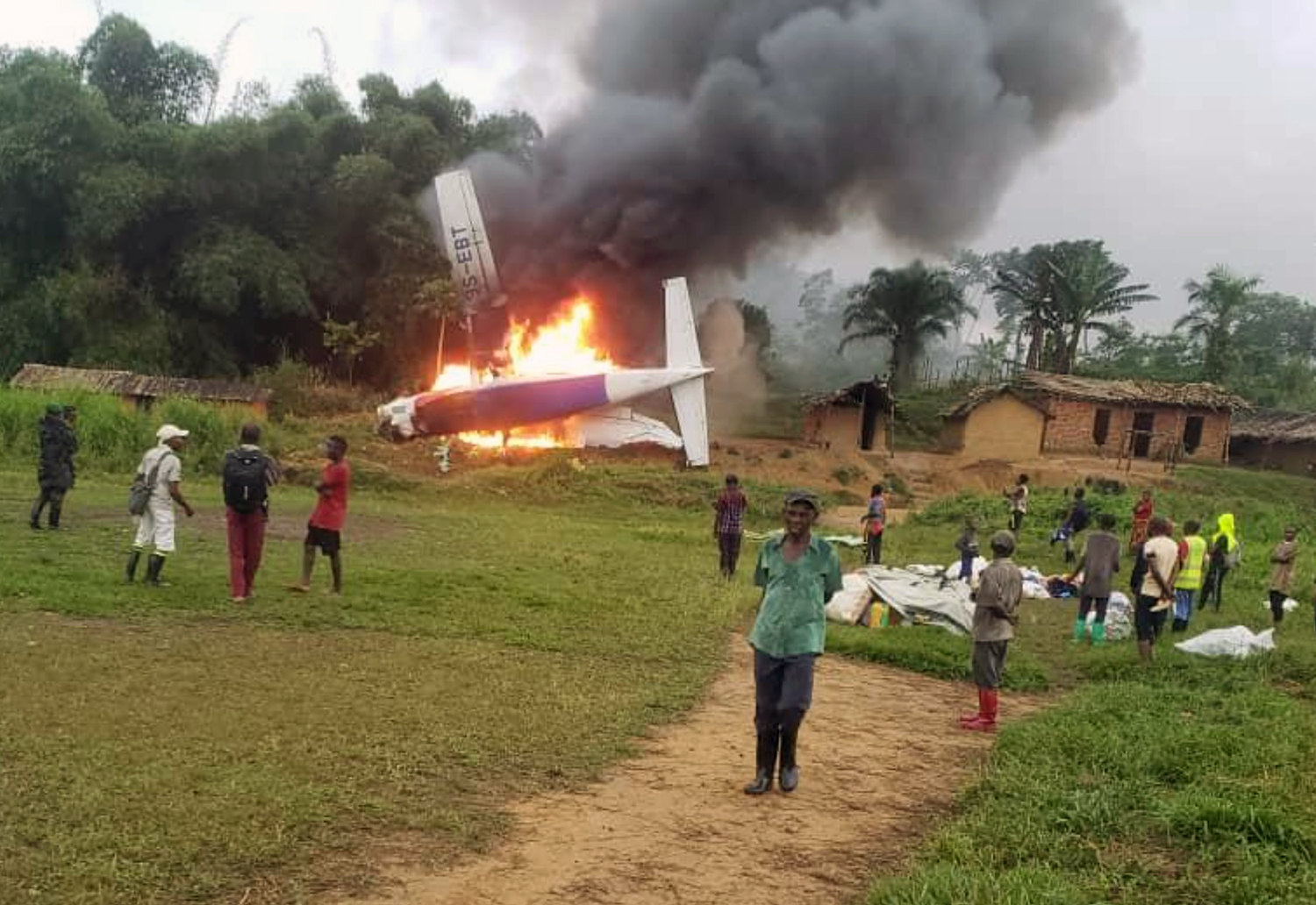
Crash of a Cessna 208B Grand Caravan in Katchungu: 1 killed

Date & Time: Mar 5, 2024 at 1200 LT
Type of aircraft:
Operator:
Registration:
9S-EBT
Flight Type:
Survivors:
Yes
Schedule:
Bukavu - Katchungu
Region:
Crew on board:
2
Crew fatalities:
Pax on board:
0
Pax fatalities:
Other fatalities:
Total fatalities:
1
Circumstances:
After landing on the airfield of Tchambogo located east of the village of Katchungu, the single engine airplane went out of control, hit a small house, lost its right wing and crashed, bursting into flames. The pilot was rescued and the captain was killed. The airplane was destroyed by a post crash fire.

Crash of a Cessna 402C in Nassau

Date & Time: Feb 17, 2024 at 1640 LT
Type of aircraft:
Operator:
Registration:
C6-JTJ
Flight Phase:
Flight Type:
Survivors:
Yes
Schedule:
Nassau – Andros Town
MSN:
402C-0648
YOM:
1982
Country:
Crew on board:
1
Crew fatalities:
Pax on board:
0
Pax fatalities:
Other fatalities:
Total fatalities:
0
Captain / Total flying hours:
2200
Captain / Total hours on type:
500.00
Aircraft flight hours:
7790
Circumstances:
The flight was for commercial purposes and had a destination of Fresh Creek Airport (MYAF), Fresh Creek, Andros, Bahamas. The pilot in command reported that upon contacting Nassau air traffic control, he requested a runway 14 departure from taxiway Bravo, but his request was denied. He subsequently requested a departure from taxiway Lima, which was granted by air traffic control. The pilot advised that upon receiving takeoff clearance from air traffic control, he entered the active runway and backtracked for additional room before commencing take off roll. After adding takeoff power and accelerating for some distance down the runway, shortly after, the pilot observed the left manifold pressure starting to drop and the aircraft started to “pull to the left”. Recognizing that the a problem was arising, the pilot added additional power to the right engine and continued takeoff roll but after achieving some lift, the pilot reported to observe the aircraft stall and it was unable to clear the inner layer of perimeter fencing (height of approximately 12 feet), at a distance of approximately 820 feet from the approach end of threshold of runway 32. The aircraft impacted the inner layer of perimeter fencing, hitting the surface and travelling for some 57 feet on a heading of approximately 123° before impacting the second outer layer of perimeter fencing. The aircraft’s trajectory continued in that general direction travelling for an additional 216 feet, sliding across Coral Harbour Road before coming to rest in a swampy area. The pilot advised that shortly after the aircraft came to rest, he observed flames from the left side of the aircraft which prompted him to make a hasty exit from the aircraft. While exiting the aircraft, the pilot observed flames on the outside, around the aircraft, and it was during his attempt to vacate the area, he received burns to the face. As soon as he was able to vacate the general area of the downed aircraft, the pilot observed an explosion and the aircraft continued to burn.
Probable cause:
The AAIA has determined the probable cause of this accident to be collision with obstacles during takeoff. The cause of this collision was undetermined. There was no evidence of malfunction or failure identified during post-crash inspection of aircraft engines and accessories that would suggest that the aircraft engines were unable to produce adequate power.
Contributing Factor:
- Decision to depart runway 14 at MYNN from intersection of Taxiway Lima.
Final Report:

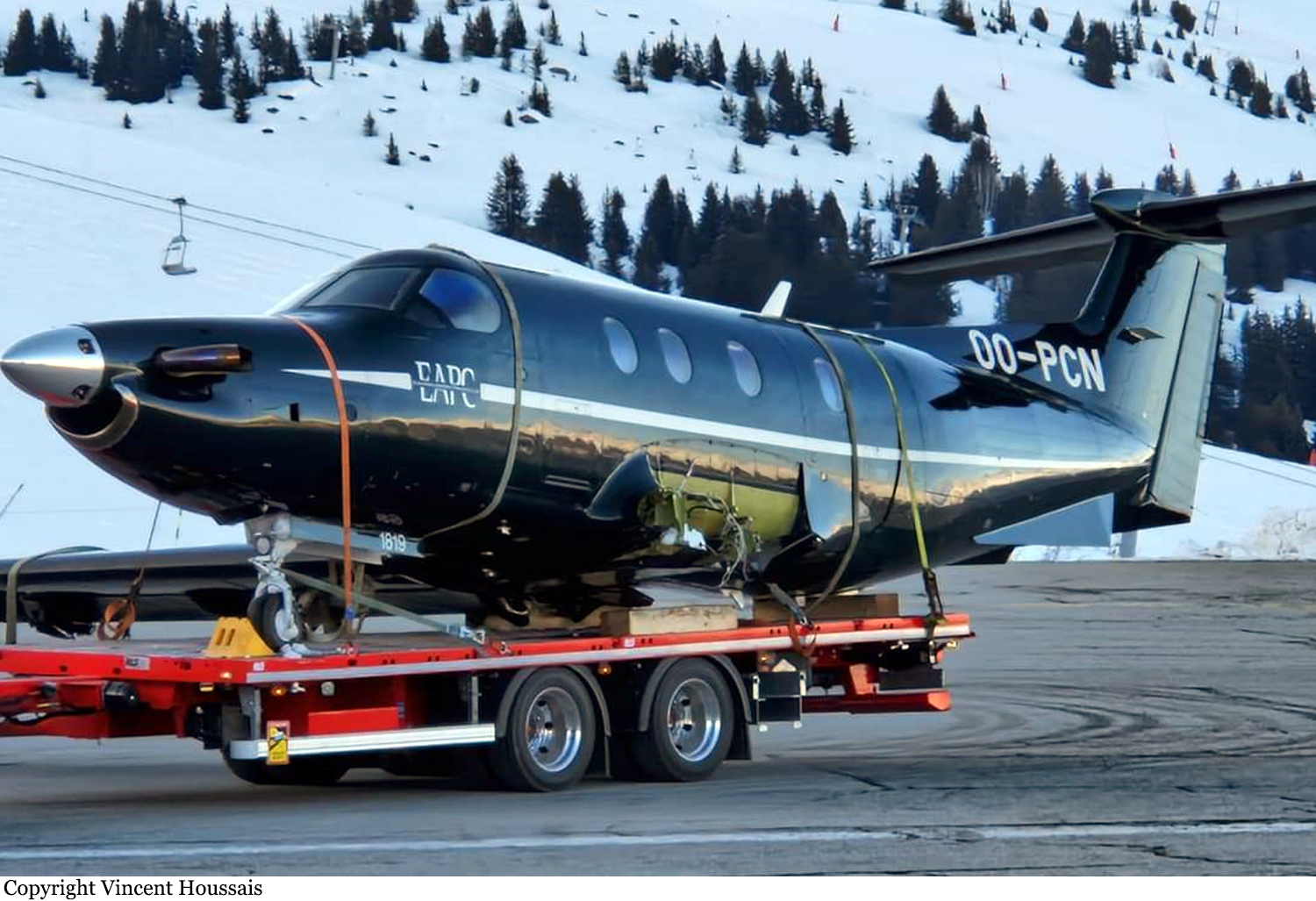
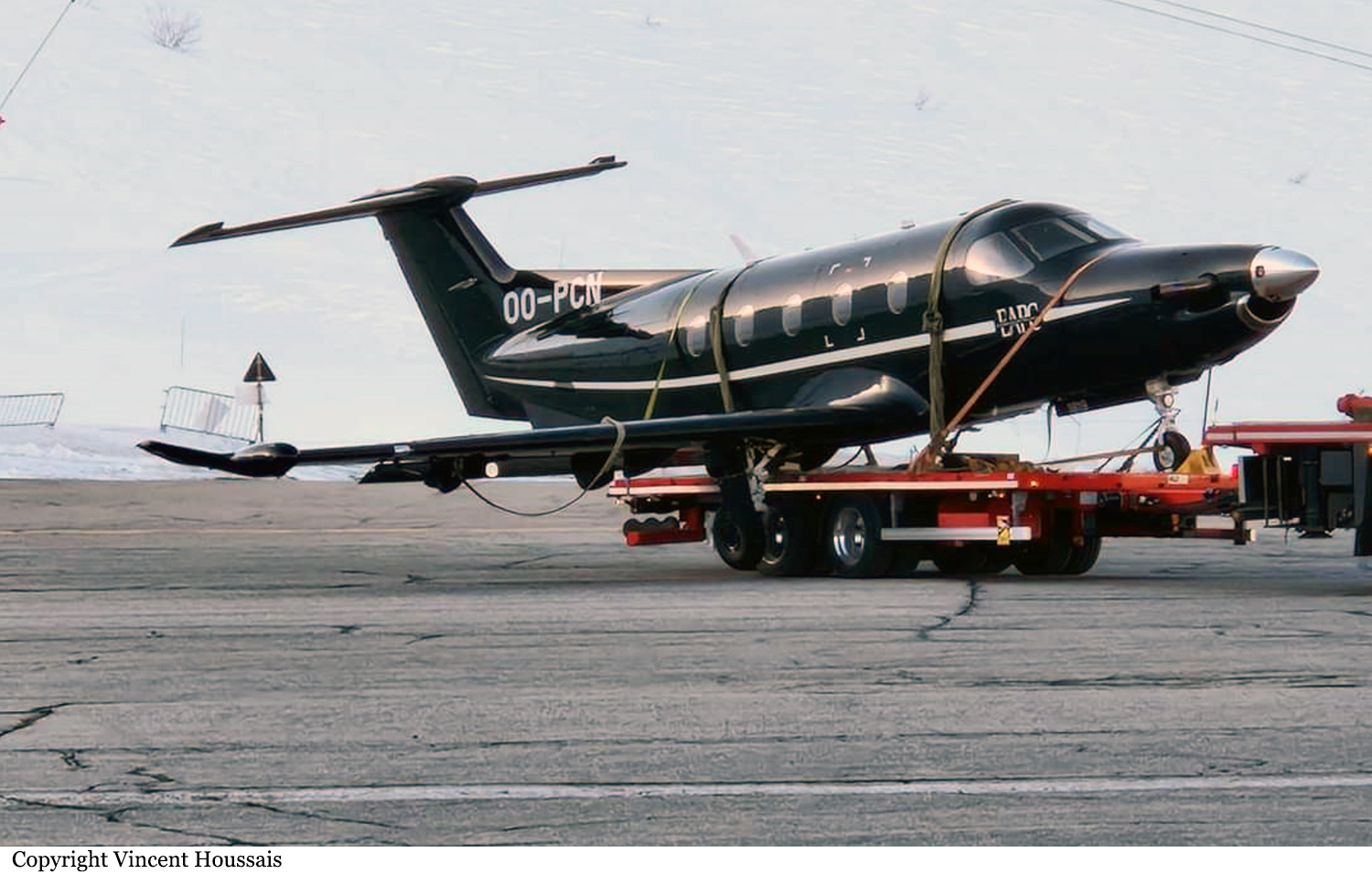
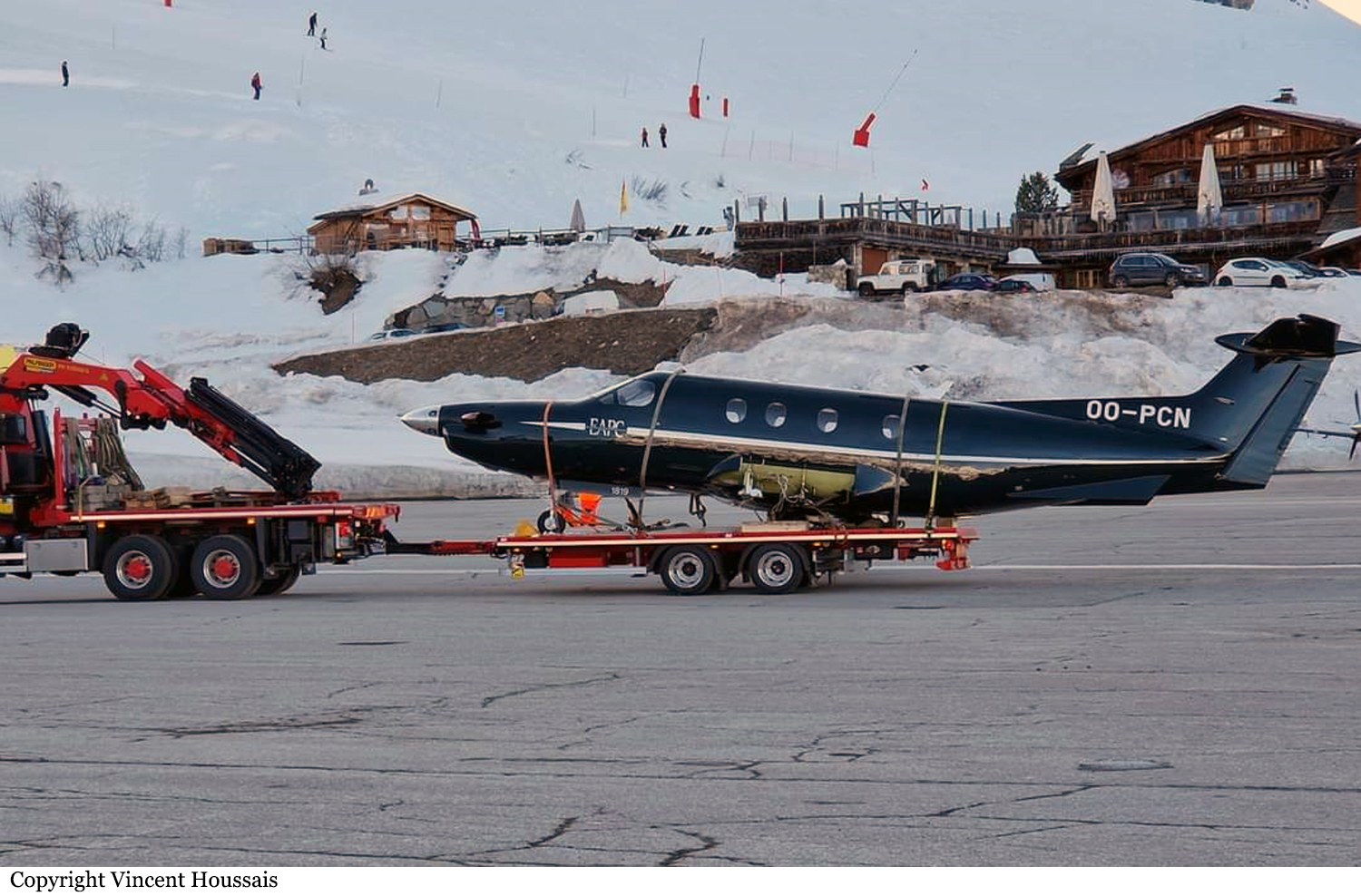
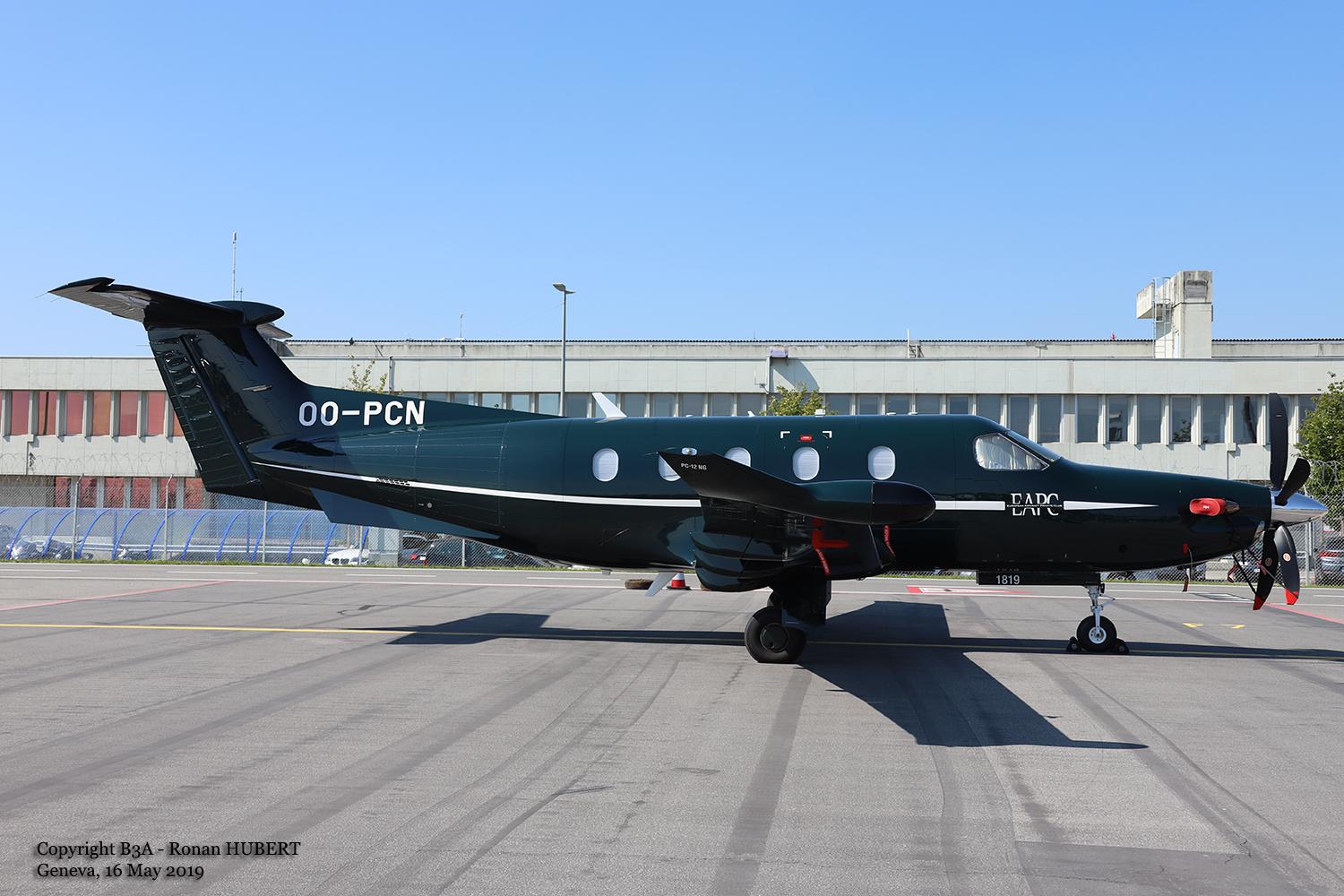
Crash of a Pilatus PC-12/47E in Courchevel

Date & Time: Feb 17, 2024 at 1025 LT
Type of aircraft:
Operator:
Registration:
OO-PCN
Flight Type:
Survivors:
Yes
Schedule:
Charleroi – Courchevel
MSN:
1819
YOM:
2018
Flight number:
PGC16F
Country:
Region:
Crew on board:
2
Crew fatalities:
Pax on board:
0
Pax fatalities:
Other fatalities:
Total fatalities:
0
Captain / Total flying hours:
2400
Captain / Total hours on type:
800.00
Copilot / Total flying hours:
645
Copilot / Total hours on type:
97
Circumstances:
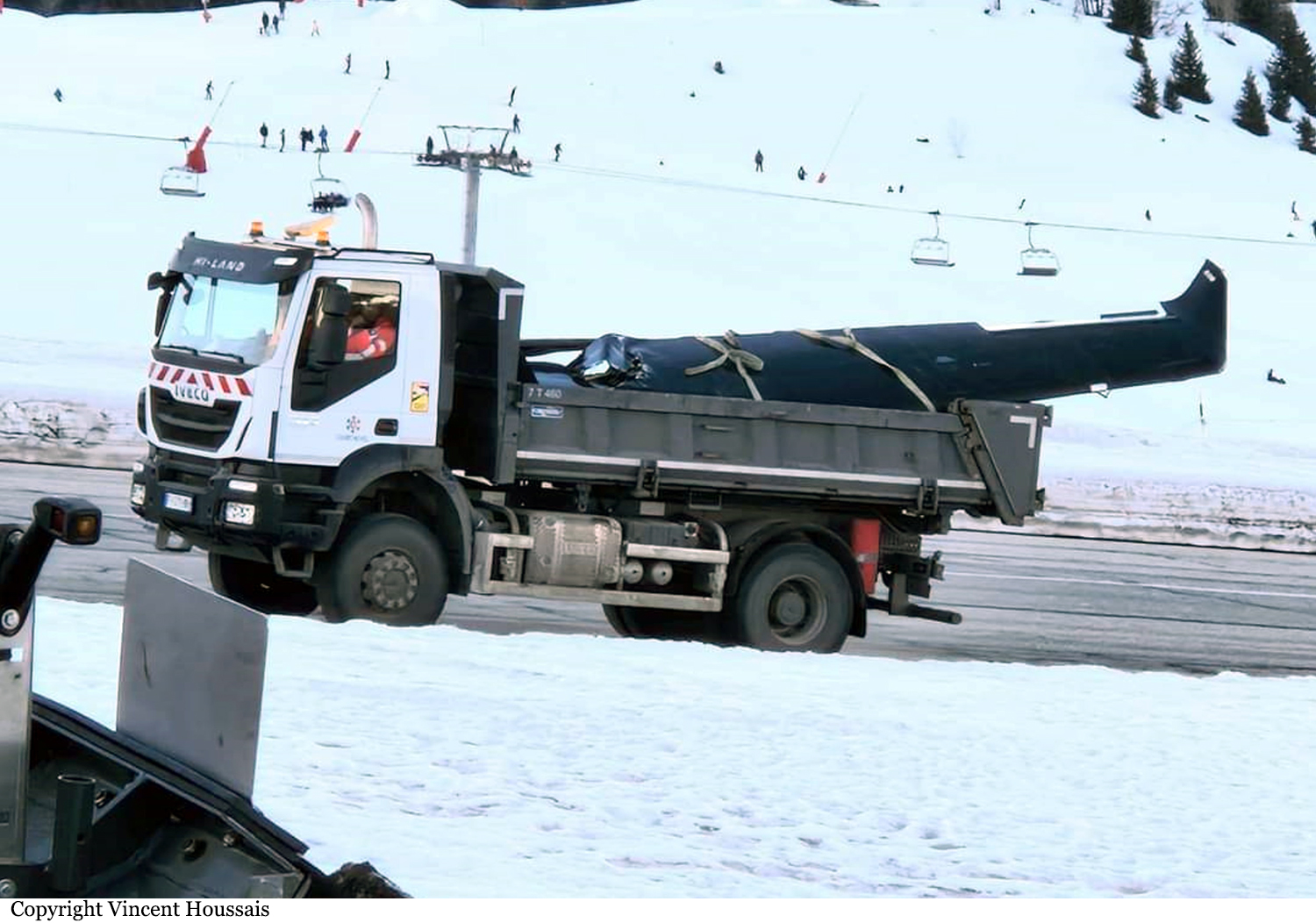
The single engine airplane departed Charleroi Airport on a positioning flight to Courchevel where seven passengers were supposed to be picked up. While descending to Courchevel Altiport, the crew completed the approach checklist, passed over the airfield to check the runway and both windsocks then made a circuit and started a second approach to land. On short final to runway 22, the airplane descended below the altitude of 6,371 feet corresponding to the runway threshold. At a distance of 0,1 NM (185 metres) from the threshold, the airplane descended at an altitude of 6,354 feet and at a speed of 84 knots. At this moment, the pilot significantly increased the aircraft's pitch attitude by reducing the engine power until it was completely shut down. This caused the airplane to descend too low and both main landing gear and the nose gear impacted an embankment located below the runway threshold. Upon impact, the left main gear was torn off and the airplane bounced several times on runway before veering to the left. The left wing collided with a snow berm located on the left side of the runway and was sheared off. The airplane then entered the snow berm, made a 180 turn and came to rest in the snow. Both crew members escaped with minor injuries. The aircraft was damaged beyond repair.
Probable cause:
The pilot began his descent late, forcing him to adopt a higher glide slope than the 5% recommended in the absence of wind, with the middle of the embankment below the runway threshold as his target point. As he approached the threshold, the pilot simultaneously increased the aircraft's pitch significantly and reduced engine power completely, causing the landing gear to collide with the embankment.
The following factors may have contributed to the unstabilized approach and collision with the embankment;
- The captain's limited experience flying in the mountains and at the Courchevel Altiport ;
- The length of the pilot's practical training for access authorization, which seems insufficient given his lack of previous experience landing at altiports;
- The first officer's lack of experience flying in the mountains, which prevented him from fulfilling his role of monitoring the flight path followed by the PF during the approach.
Final Report:

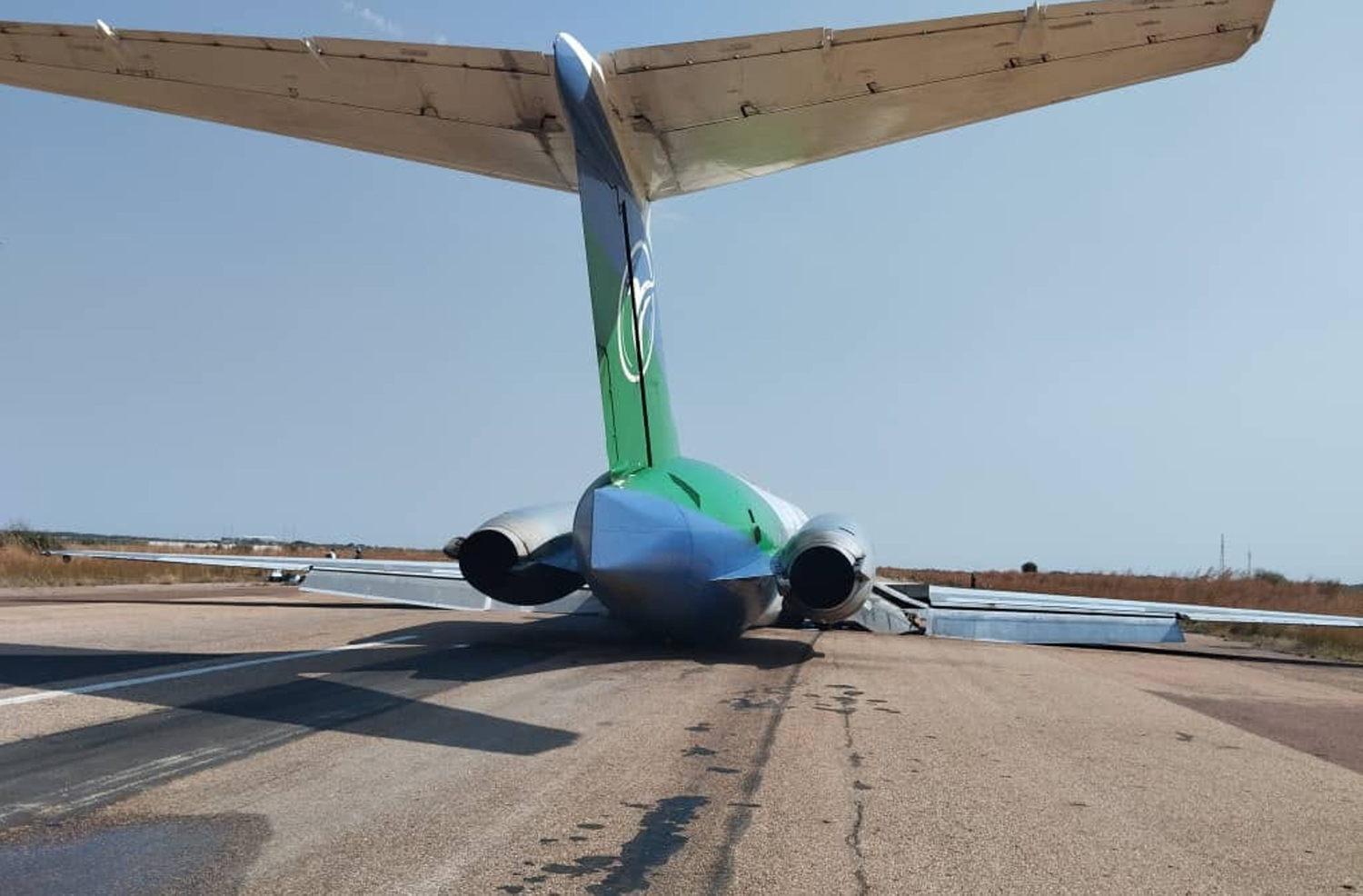
Crash of a McDonnell Douglas MD-82 in Malakal

Date & Time: Feb 9, 2024 at 0800 LT
Type of aircraft:
Operator:
Registration:
5Y-AXL
Flight Type:
Survivors:
Yes
Schedule:
Juba - Malakal
MSN:
49204
YOM:
1984
Country:
Region:
Crew on board:
2
Crew fatalities:
Pax on board:
0
Pax fatalities:
Other fatalities:
Total fatalities:
0
Circumstances:
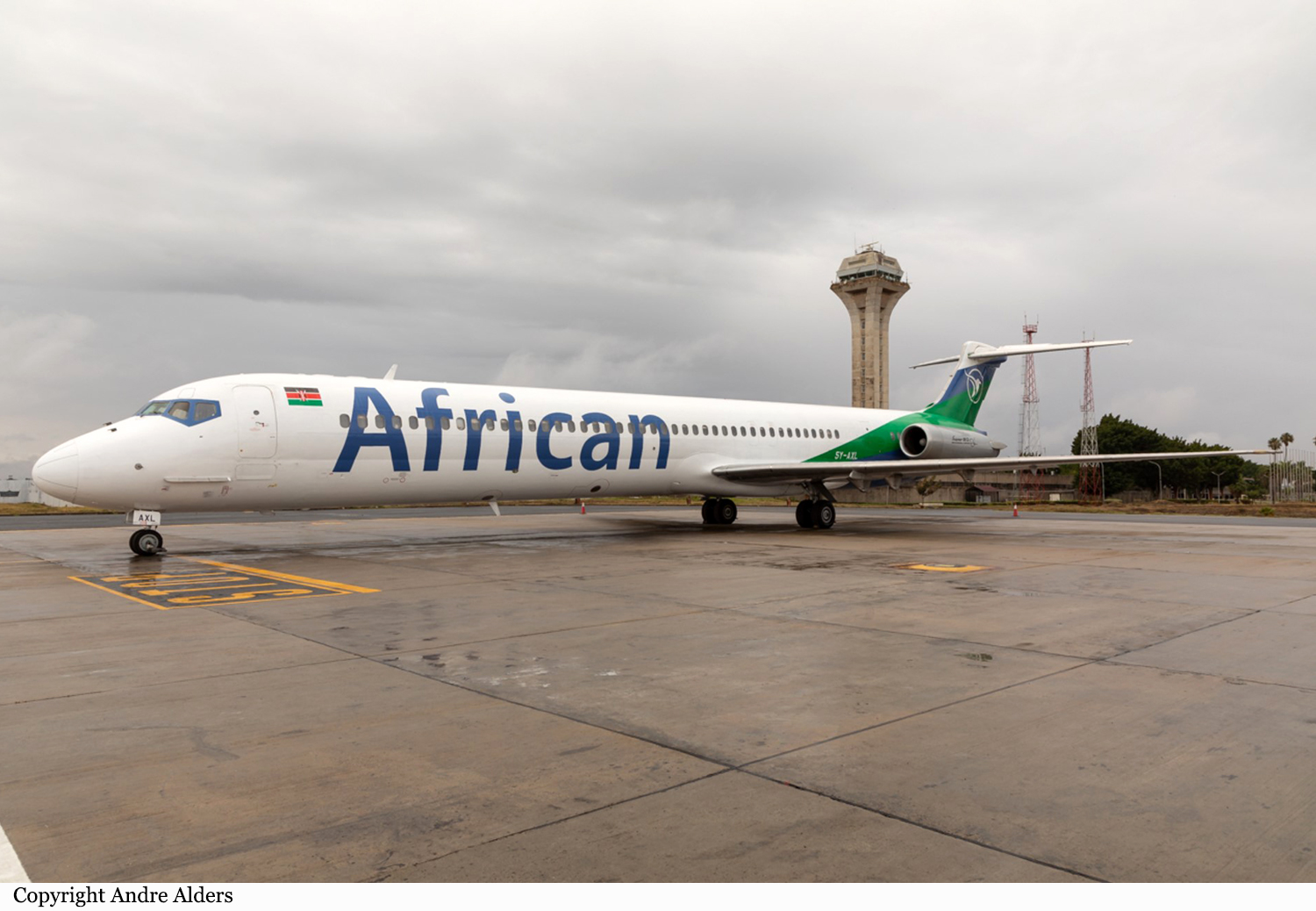
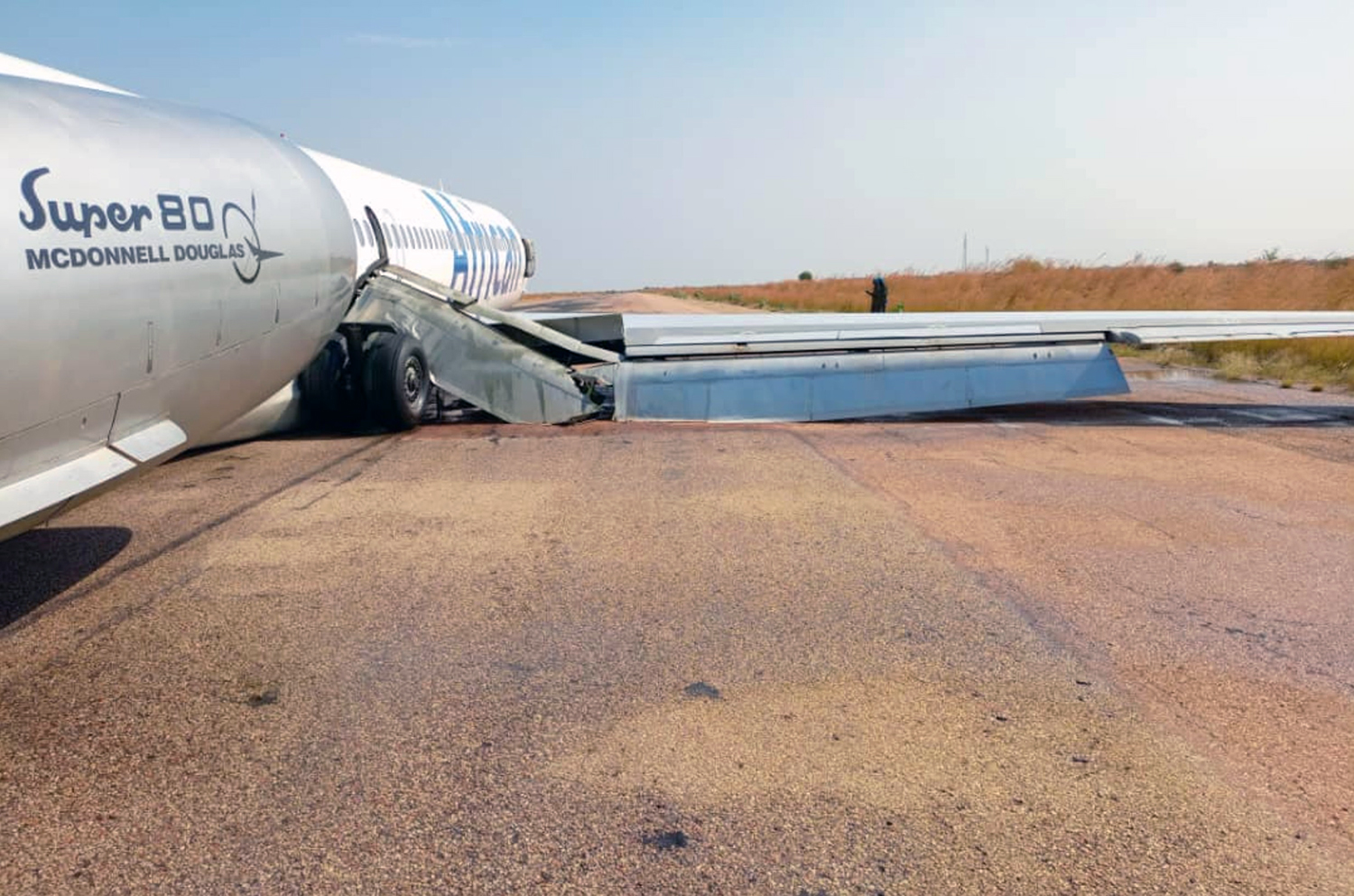
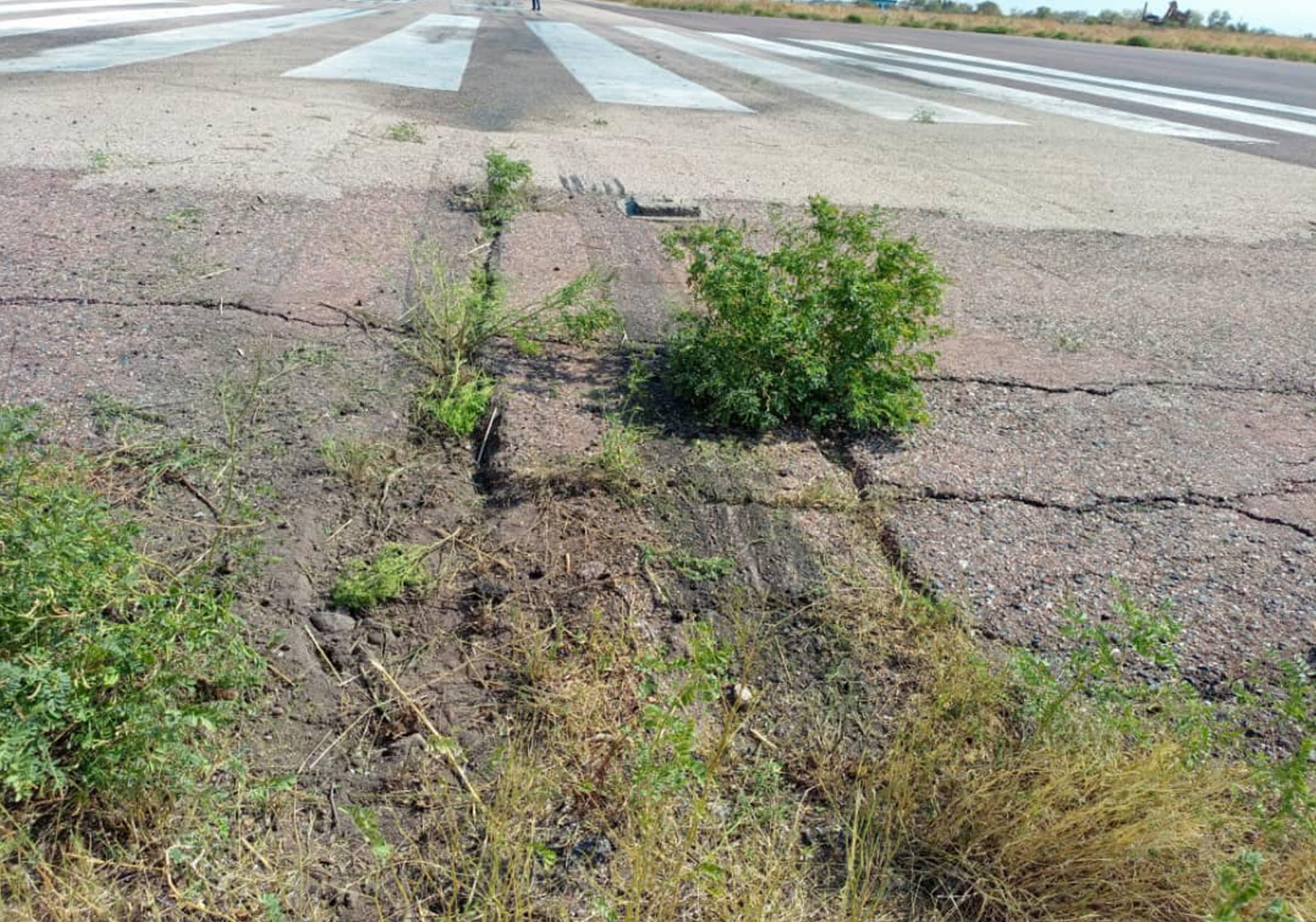
On final approach to Malakal Airport, the airplane was too low, causing both main landing gears to touch the ground about two metres short of runway 04 threshold. Upon impact, both landing gears sheared off and the airplane slid on its belly for few hundred metres before coming to rest in the middle of the runway. Both pilots escaped unharmed. According to locals, the airplane was en route from Juba to pick up returnees who had fled Sudan’s war from Malakal to Juba and had no passengers on board.

Crash of a Hawker 900XP in Westwater: 2 killed

Date & Time: Feb 7, 2024 at 1048 LT
Type of aircraft:
Operator:
Registration:
N900VA
Flight Phase:
Flight Type:
Survivors:
No
Schedule:
Grand Junction - Tacoma
MSN:
HA-0020
YOM:
2007
Location:
Crew on board:
2
Crew fatalities:
Pax on board:
0
Pax fatalities:
Other fatalities:
Total fatalities:
2
Captain / Total flying hours:
8188
Captain / Total hours on type:
70.00
Copilot / Total flying hours:
15734
Copilot / Total hours on type:
2249
Aircraft flight hours:
4704
Circumstances:
The airplane departed Grand Junction Airport at 1037LT on a positioning flight to Tacoma, following a routine maintenance. The crew was conducting a stall test in the airplane following the recent removal, inspection, and reinstallation of the wing leading edges and de-ice panels as part of routine maintenance. The airplane departed normally, entered a climbing right turn to the northeast, and leveled off about 20,000 feet mean sea level (msl). In its final minute of flight, the airplane entered a rapid vertical descent consistent with a flat spin and never recovered. It crashed in an uninhabited area located in Westwater, eastern Utah, near the border with Colorado. The airplane was mostly consumed by a post crash fire and was highly fragmented, which precluded a complete and thorough wreckage examination of the airframe and engines. Both pilots were killed.
Probable cause:
The flight crew’s decision to conduct a post-maintenance stall test in an area of icing conditions, which resulted in wing contamination that significantly decreased the airplane’s critical angle of attack. Also causal was the airplane manufacturer’s lack of training and experience requirements for the flight crew to safely conduct the stall test, which resulted in an attempted remedial action that aggravated the aerodynamic stall and led to a loss of control from which they were unable to recover. Contributing to the accident was the flight crew’s failure to follow the test conditions regarding cloud clearance, altitude limit, visual meteorological conditions, and ensuring all external surfaces were free from ice.
Final Report:

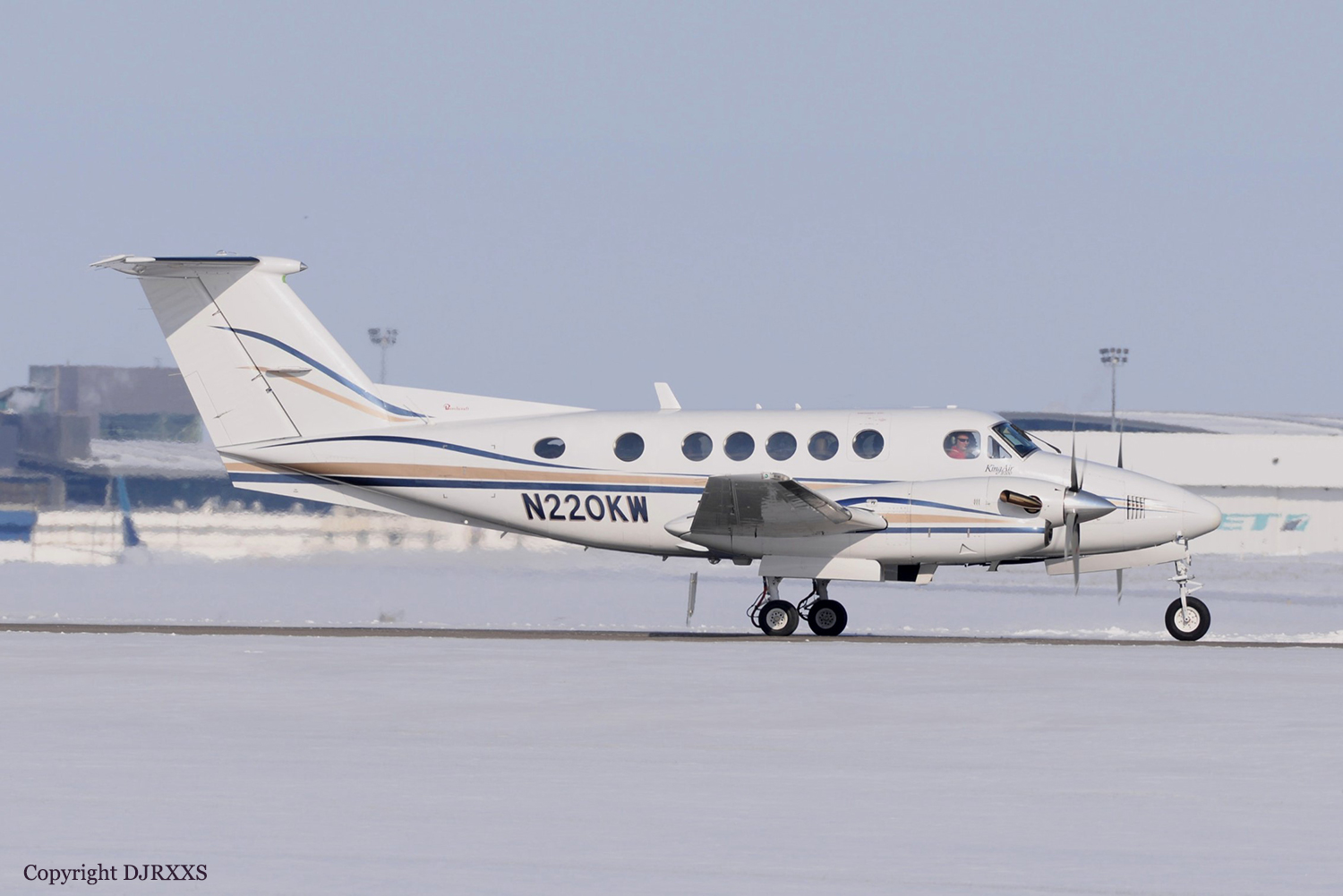
Crash of a Beechcraft 200 Super King Air in Elk Grove Village

Date & Time: Sep 8, 2023 at 1841 LT
Operator:
Registration:
N220KW
Flight Type:
Survivors:
Yes
Schedule:
Chicago – Waterloo
MSN:
BB-1120
YOM:
1983
Crew on board:
1
Crew fatalities:
Pax on board:
0
Pax fatalities:
Other fatalities:
Total fatalities:
0
Captain / Total flying hours:
3394
Captain / Total hours on type:
156.00
Aircraft flight hours:
9817
Circumstances:
The pilot reported that he had completed a charter flight and departed to pick up new passengers at an airport about 200 nautical miles away. While on approach to the destination airport, the previous passengers notified the pilot that they were ready to be picked up, so the pilot did not land and turned the airplane back toward the departure airport. The pilot climbed to 10,000 ft and noticed the airplane’s fuel burn was high, so he climbed to 16,000 ft. The pilot reported that “everything was routine until about a 3-mile final” to the runway, when the controller asked the pilot to slow to a final approach speed. An airplane was still on the runway, so the controller told the pilot to go around. The pilot told controllers twice that he had minimum fuel available. The pilot continued on a visual approach for the same runway when the right engine lost power followed by the left engine. He feathered both propellers and made a forced landing to a wooded area. The airplane sustained substantial damage to the fuselage, both wings, and the empennage. The pilot reported that there were no preimpact mechanical malfunctions or failures that would have precluded normal operation. The pilot later stated that he was “trying to do too much with too little” fuel and the accident was a result of poor fuel management. Although the controller directed the pilot to go around, the pilot should have recognized the criticality of the minimum fuel situation and landed the airplane.

Probable cause:
The pilot’s improper fuel planning, that resulted in a total loss of engine power due to fuel exhaustion, and a subsequent forced landing. Also causal was the pilot’s decision to go around with minimum fuel.
Final Report: