
Crash of an Ilyushin II-76TD in Bakhtaran: 4 killed

Date & Time: May 24, 1991
Type of aircraft:
Operator:
Registration:
LZ-INK
Flight Type:
Survivors:
Yes
Schedule:
Cologne - Bakhtaran
MSN:
00934 94835
YOM:
1989
Country:
Region:
Crew on board:
10
Crew fatalities:
Pax on board:
0
Pax fatalities:
Other fatalities:
Total fatalities:
4
Aircraft flight hours:
1099
Aircraft flight cycles:
353
Circumstances:
The aircraft departed Cologne-Bonn Airport on a humanitarian flight to Bakhtaran, Iran, carrying various goods for Kurdish refugees on behalf of the Swiss company Mexair. On approach to Bakhtaran airport, the crew encountered poor weather conditions and decided to initiate a go-around procedure. Few minutes later, a second attempt to land and then a third attempt were also abandoned. During the fourth approach, the captain informed ATC that he was shot of fuel and elected to make an emergency landing. The aircraft crashed in an open field located 11 km from the airport. Four crew members were killed while six others were seriously injured.
Probable cause:
It was determined that the flight time between Cologne and Bakhtaran was five hours and 10 minutes. Following a poor flight planning, the fuel quantity prior to departure from Cologne was insufficient in case of a diversion or possible go-around maneuver. At the time of the accident, the visibility was below minimums.


Crash of an Ilyushin II-76MD in Kabul

Date & Time: Jun 12, 1990
Type of aircraft:
Operator:
Registration:
CCCP-86905
Flight Type:
Survivors:
Yes
Schedule:
Tashkent - Kabul
MSN:
00234 36054
YOM:
1982
Location:
Country:
Region:
Crew on board:
10
Crew fatalities:
Pax on board:
0
Pax fatalities:
Other fatalities:
Total fatalities:
0
Aircraft flight hours:
3343
Aircraft flight cycles:
2342
Circumstances:
While cruising over the Pagman Pass at an altitude of 7,700 meters on a cargo flight from Tashkent to Kabul, the aircraft was hit by a Stinger missile that struck the front left part of the fuselage. Three meters square of fuselage was sheared off and both left engine failed. The crew started an emergency descent while being 70 km from the Kabul Airport but was eventually forced to attempt an emergency landing in a field located few km from Kabul Airport. The aircraft landed with flaps and undercarriage up and came to rest. All 10 occupants were rescued, among them two were seriously injured.
Probable cause:
Shot down by a Stinger missile.

Crash of an Ilyushin II-76MD in Kabul: 9 killed

Date & Time: Mar 27, 1990 at 1130 LT
Type of aircraft:
Operator:
Registration:
CCCP-78781
Flight Type:
Survivors:
No
Schedule:
Tashkent - Kokand - Kabul
MSN:
00834 89670
YOM:
1988
Flight number:
3501
Location:
Country:
Region:
Crew on board:
9
Crew fatalities:
Pax on board:
0
Pax fatalities:
Other fatalities:
Total fatalities:
9
Aircraft flight hours:
1228
Aircraft flight cycles:
925
Circumstances:
The aircraft was completing a cargo flight from Tashkent to Kabul with an intermediate stop in Kokand, Uzbekistan, carrying a load of fuel drums. While descending to Kabul Airport, the crew was instructed by ATC to maintain FL190 as an Afghan Antonov AN-32 was passing just below at FL180. Shortly later, the aircraft entered an uncontrolled descent and crashed in a huge explosion 7,6 km east of Kabul-Khwaja Rawash Airport. All nine occupants were killed.
Probable cause:
The accident was the consequence of the combination of the following factors:
- Crew failure to maintain flight speed modes recommended by IL-76 for various airplane configurations, which reduced the available margin of angle of attack to critical modes;
- Insufficient control of crew members over the determining flight parameters, which led to a violation of the established restrictions on the permissible angle of attack and the minimum flight speed;
- Lack of piloting skills at high angles of attack, due to the imperfection of the training system for crews in special flight situations;
- The pilots were unable to recognize the exit to critical angles of attack and implement the IL-76 recommendations to prevent stall;
- The need for maneuvering according to the descent scheme in combat conditions at close to flight restriction conditions and the presence of three aircraft flying in clouds at short intervals without appropriate radar control created a difficult situation for the crew, which was aggravated after the controller informed about the need to temporarily stop the descent in connection with the take-off of the An-32 aircraft, which led to a change in the prevailing stereotype of crew actions.

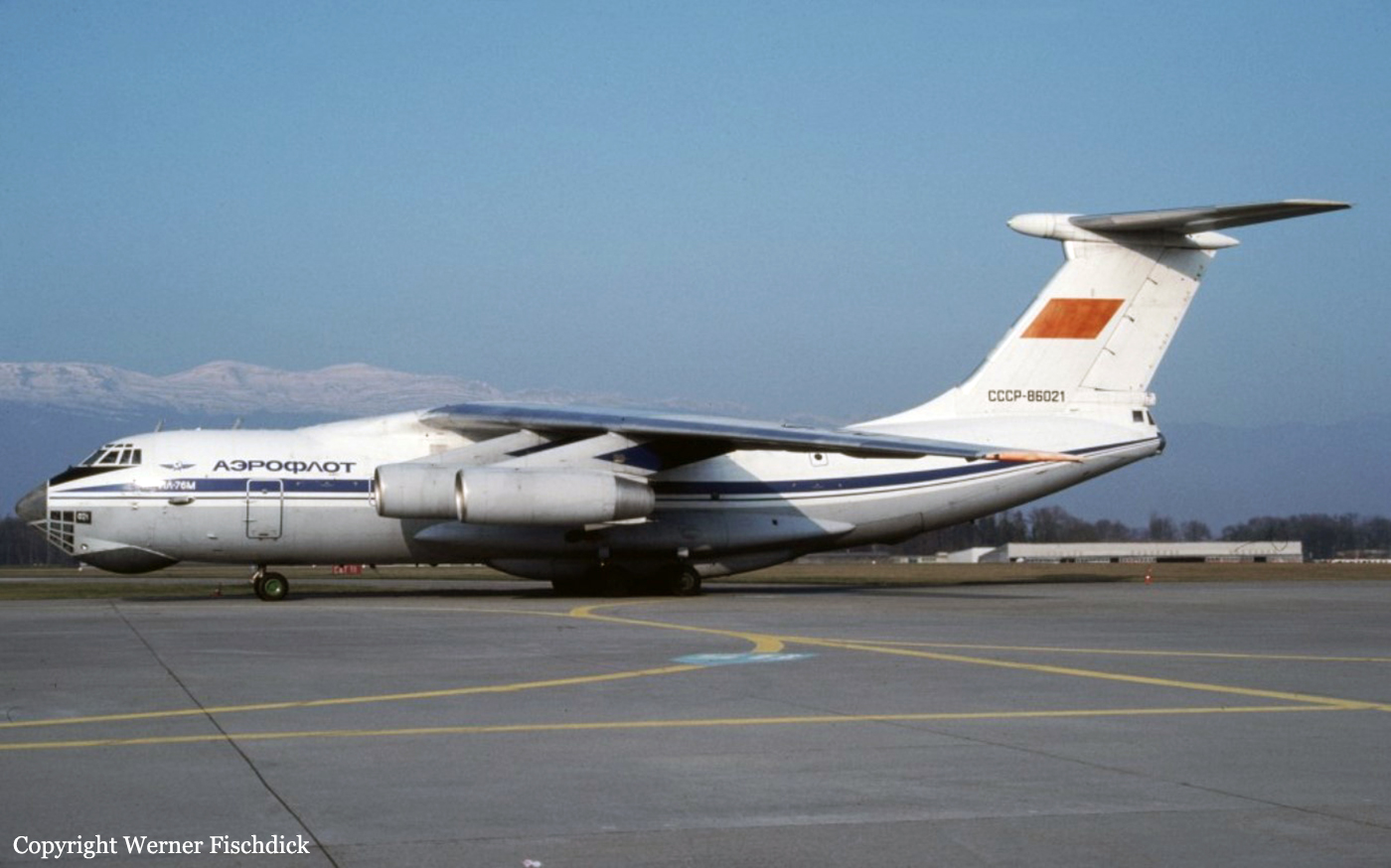
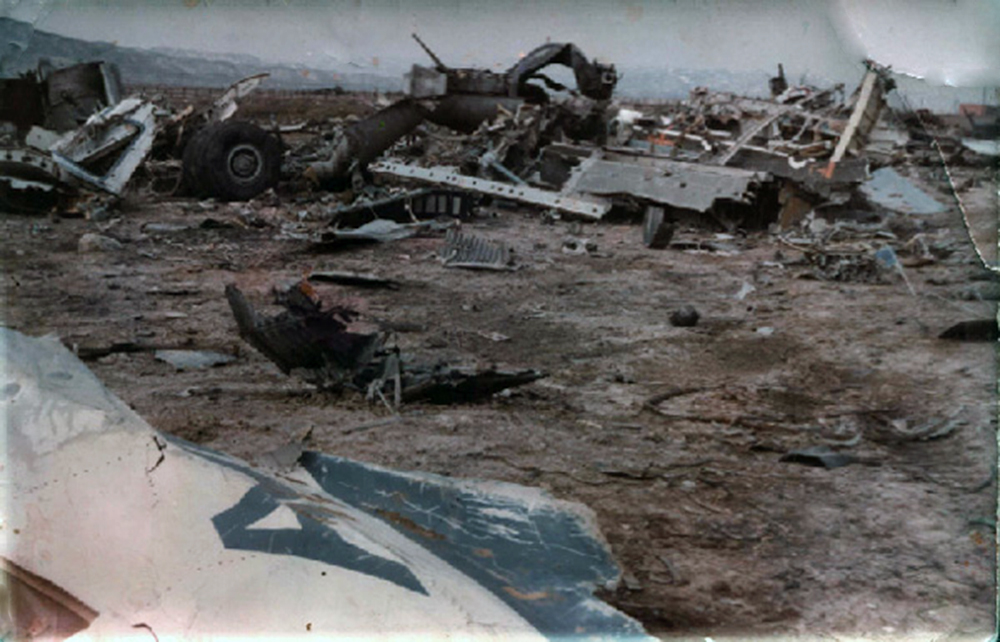
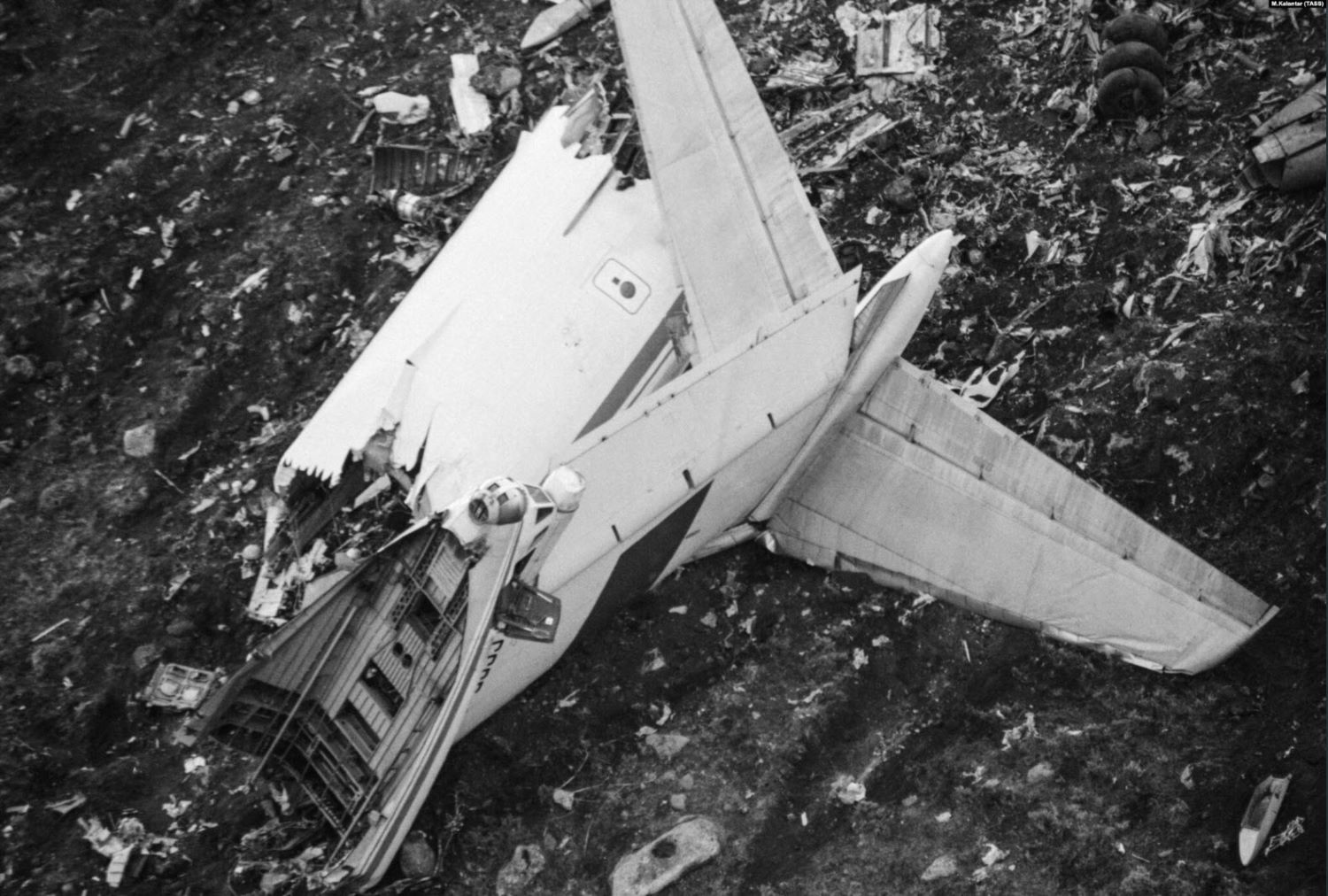
Crash of an Ilyushin II-76M at Panevežys-Pajuostis AFB: 8 killed

Date & Time: Feb 1, 1990
Type of aircraft:
Operator:
Registration:
CCCP-86021
Flight Phase:
Flight Type:
Survivors:
No
Schedule:
Panevėžys - Panevėžys
MSN:
0834 13405
YOM:
1978
Country:
Region:
Crew on board:
8
Crew fatalities:
Pax on board:
0
Pax fatalities:
Other fatalities:
Total fatalities:
8
Circumstances:
The crew was completing a local training flight at Panevėžys-Pajuostis AFB consisting of touch-and-go. After 14 minutes into the mission, the crew completed a touch-and-go then initiated a climb when, at an altitude of 230 feet, the aircraft entered clouds when control was lost. It went in a nose down attitude, descended with a rate of 7,800 feet per minute and crashed at a speed of 275 knots in a wooded area located 3,7 km from the airbase. The aircraft disintegrated on impact and all eight crew members were killed. All four engine were turning at full power at impact.

Crash of an Ilyushin II-76TD in Leninakan: 15 killed

Date & Time: Oct 20, 1989 at 0232 LT
Type of aircraft:
Operator:
Registration:
CCCP-76466
Flight Type:
Survivors:
No
Site:
Schedule:
Ulyanovsk - Leninakan
MSN:
00234 40153
YOM:
1982
Country:
Region:
Crew on board:
10
Crew fatalities:
Pax on board:
5
Pax fatalities:
Other fatalities:
Total fatalities:
15
Aircraft flight hours:
2053
Aircraft flight cycles:
2193
Circumstances:
The four engine aircraft departed Ulyanovsk on a cargo flight to Leninakan, carrying 5 passengers, 10 crew members and a load of 37,2 tons of construction materials and tools. The crew was cleared to descend to 3,300 meters then ATC transmitted the airport pressure being 637 mm Hg. The crew misunderstood this pressure value and the altimeters were mistakenly set at 736 mm Hg. This caused a gap of 1,100 meters and the aircraft continued the approach with a vertical speed of 10 meters per seconds. After passing below the glide in limited visibility due to the night, while at an altitude of 270 meters, the GPWS alarm sounded. The flight engineer realized the mistake and informed the captain 19 seconds after the first alarm sounded. For unknown reasons, the pilot failed to initiate any corrective action and 10 seconds later, the aircraft struck the mountain at a speed of 440 km/h and disintegrated on impact. All 15 occupants were killed.
Probable cause:
The accident was the consequence of the following factors:
- Wrong altimeter setting on part of the crew with a value of 736 mm Hg pressure instead of the actual 637 mm Hg, causing the aircraft to descend below MDA,
- Failure to use the radio altimeters, which deprived the crew of additional information about their descent below MDA,
- Failure of the crew to respond to the recommendation by the flight engineer to climb and to initiate appropriate corrective actions,
- This was the instructor captain's first flight into Leninakan and the student pilot's (in the right hand seat) first flight on an Il-76,
- Poor crew resource management,
- Lack of crew training regarding the actions to be taken in case of a GPWS warning.

Crash of an Ilyushin II-76MD off Nasosny AFB: 57 killed

Date & Time: Oct 18, 1989
Type of aircraft:
Operator:
Registration:
CCCP-76569
Flight Type:
Survivors:
No
Schedule:
Nasosny AFB - Zhovtneve AFB
MSN:
00334 48421
YOM:
1983
Country:
Region:
Crew on board:
7
Crew fatalities:
Pax on board:
50
Pax fatalities:
Other fatalities:
Total fatalities:
57
Circumstances:
Five minutes after takeoff from Nasosny AFB, the engine n°1 suffered an uncontained failure. The crew elected to return when the engine caught fire and detached few minutes later. The left wing caught fire as well and on short final, it detached. Out of control, the aircraft crashed in the Caspian Sea about 5,250 meters short of runway 18 threshold and 500 meters offshore. The aircraft was totally destroyed and all 57 occupants were killed. The passengers were paratroopers returning to their base in Zhovtneve (near Bolgrad, Ukraine) after being dispatched in Baku to maintain order following a popular uprising.
Probable cause:
Failure and fire of the engine n°1 following a intershaft bearing failure.

Crash of an Ilyushin II-76M near Novgorod: 7 killed

Date & Time: Aug 10, 1989
Type of aircraft:
Operator:
Registration:
CCCP-86718
Flight Phase:
Flight Type:
Survivors:
No
Schedule:
Krechevitsky AFB - Krechevitsky AFB
MSN:
0734 09259
YOM:
1977
Country:
Region:
Crew on board:
7
Crew fatalities:
Pax on board:
0
Pax fatalities:
Other fatalities:
Total fatalities:
7
Circumstances:
The crew departed Krechevitsky AFB on a local training flight. After several materials have been dropped at low height, the crew elected to gain altitude when he encountered technical problems with the electrical system. The aircraft nosed up to an angle of 26° then climbed from 940 meters to 1,300 metres in few seconds. Suddenly, it adopted a nose down attitude of 55°, entered a dive and crashed at a speed of 570 km/h. The wreckage was found between the villages of Rogavka and Kerest, about 32 km northwest of the airbase. The aircraft disintegrated on impact and all seven crew members were killed.
Probable cause:
It is believed that the electrical system failed in flight, maybe after the aircraft has been struck by lightning. At the time of the accident, visibility was limited due to poor weather conditions. After the electrical system failed, the pilot-in-command suffered a spatial disorientation and lost control of the airplane.

Crash of an Ilyushin II-76M in Leninakan: 78 killed

Date & Time: Dec 11, 1988 at 2000 LT
Type of aircraft:
Operator:
Registration:
CCCP-86732
Flight Type:
Survivors:
No
Site:
Schedule:
Nasosny AFB – Leninakan
MSN:
0834 13388
YOM:
1978
Country:
Region:
Crew on board:
9
Crew fatalities:
Pax on board:
69
Pax fatalities:
Other fatalities:
Total fatalities:
78
Circumstances:
The aircraft was on its way to Leninakan to drop soldiers, first aid, medics and goods for the victims of the recent earthquake. On final approach at night, the aircraft disappeared from radar screens after it struck the slope of a mountain located 15 km from the airport. All 9 crew members and 68 of the 69 passengers were killed. A survivor was found among the debris (he was seating on the deck of a truck parked in the cargo compartment) but unfortunately died the following day.
Probable cause:
The accident was caused by an error on part of the crew who set a wrong altimeter pressure prior to descend to Leninakan Airport. The wrong altimeter setting (734 mm instead of 634 mm) caused the aircraft to descent below the minimum prescribed altitude by 1,100 metres.

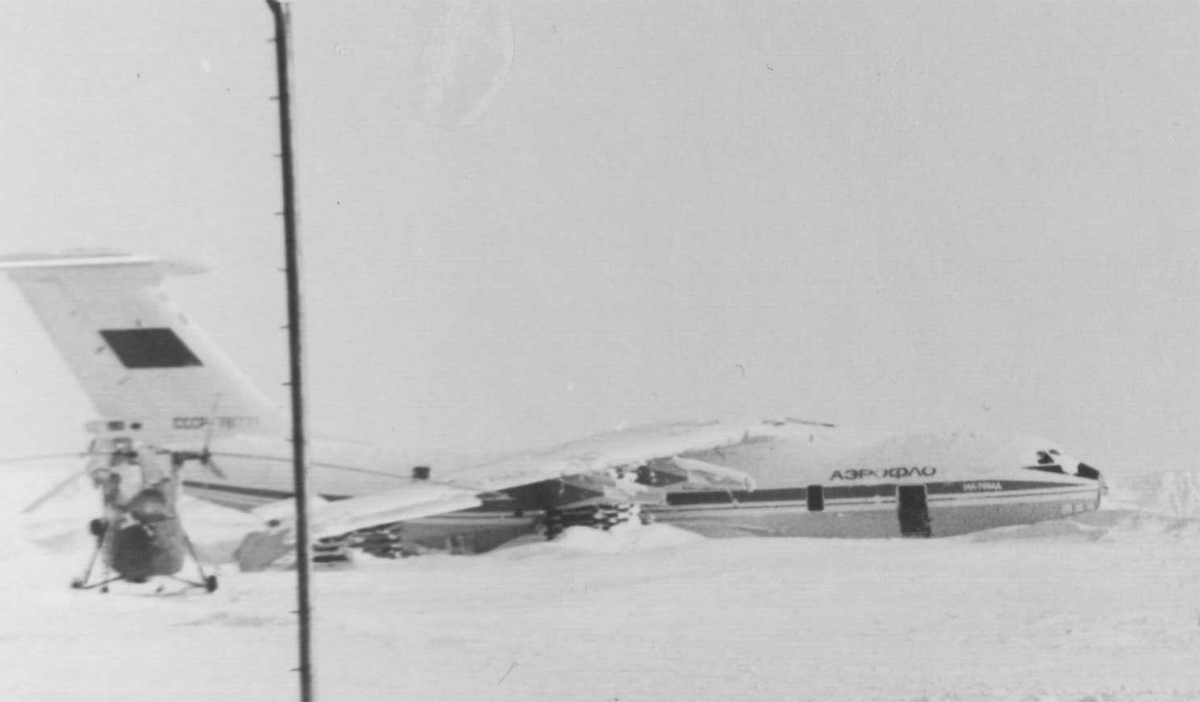
Crash of an Ilyushin II-76MD at Rogachevo AFB

Date & Time: Nov 19, 1988
Type of aircraft:
Operator:
Registration:
CCCP-78771
Flight Type:
Survivors:
Yes
Schedule:
Arkhangelsk - Rogachevo
MSN:
0083487622
YOM:
1988
Country:
Region:
Crew on board:
7
Crew fatalities:
Pax on board:
3
Pax fatalities:
Other fatalities:
Total fatalities:
0
Circumstances:
The approach to Rogachevo AFB (Amderma-2) was completed by night and poor visibility due to snow falls. At a speed of 276 km/h, the aircraft touched down with a positive acceleration of 1.85 g about five meters to the right of the runway centerline. The aircraft bounced and landed a second time 160 meters further with a positive acceleration of 1,8 g. After landing, the aircraft went out of control, veered off runway to the right and collided with an APM-90 spotlight system installed on a ZiL-130 truck chassis. Upon impact, both right engines and the right main gear were torn off and the aircraft came to rest in snow. All 10 occupants escaped uninjured while the aircraft was damaged beyond repair.
Probable cause:
The crew got probably blinded by a snow flurry which reflected the landing lights.