Crash of a Cessna 207 Skywagon in Grants Pass: 2 killed

Date & Time: Apr 9, 2003 at 0850 LT
Registration:
N9785M
Survivors:
No
Site:
Schedule:
North Bend – Grants Pass
MSN:
207-0729
YOM:
1981
Crew on board:
1
Crew fatalities:
Pax on board:
1
Pax fatalities:
Other fatalities:
Total fatalities:
2
Captain / Total flying hours:
34976
Aircraft flight hours:
4516
Circumstances:
During a visual flight rules (VFR) cross-country flight from North Bend, Oregon, to Grants Pass, Oregon, the airplane collided with mountainous terrain approximately seven miles northwest of the pilot's planned destination. Weather data and witness reports outlined areas of low ceilings and low visibility throughout the area during the approximate time of the accident. Post-accident inspection of the aircraft and engine revealed no evidence of a mechanical malfunction or failure.
Probable cause:
The pilot's failure to maintain clearance from mountainous terrain while in cruise flight. Factors include low ceilings and mountainous terrain.
Final Report:

Crash of a Cessna 207A Skywagon in Put-in-Bay

Date & Time: Jan 20, 2003 at 0945 LT
Operator:
Registration:
N9945M
Flight Phase:
Survivors:
Yes
Schedule:
Put-in-Bay – Port Clinton
MSN:
207-0153
YOM:
1970
Location:
Crew on board:
1
Crew fatalities:
Pax on board:
2
Pax fatalities:
Other fatalities:
Total fatalities:
0
Captain / Total flying hours:
4500
Captain / Total hours on type:
405.00
Aircraft flight hours:
6283
Circumstances:
Shortly after takeoff, about 300 feet agl, the engine lost all power. The pilot activated the electric fuel pump, and moved the fuel selector several times. However, the engine did not regain power, and the pilot performed a forced landing into trees. After the accident, the pilot stated to a police officer that he might have departed with the fuel selector positioned to an empty tank. The pilot subsequently stated that both fuel gauges indicated "1/4" full, and he could not remember which tank was selected during the takeoff. Additionally, a passenger stated that he did not smell or observe fuel when he exited the airplane. The passenger added that in the past, the pilot had exhausted one fuel tank, then switched to the other tank and the engine re-started. Examination of the wreckage by an FAA inspector revealed that fuel selector was positioned to the right tank. The right fuel tank contained some fuel, and left fuel tank had ruptured. Following the accident, a successful engine test-run was performed.
Probable cause:
The pilot's inadequate fuel management, which resulted in fuel starvation and a total loss of engine power during the initial climb.
Final Report:

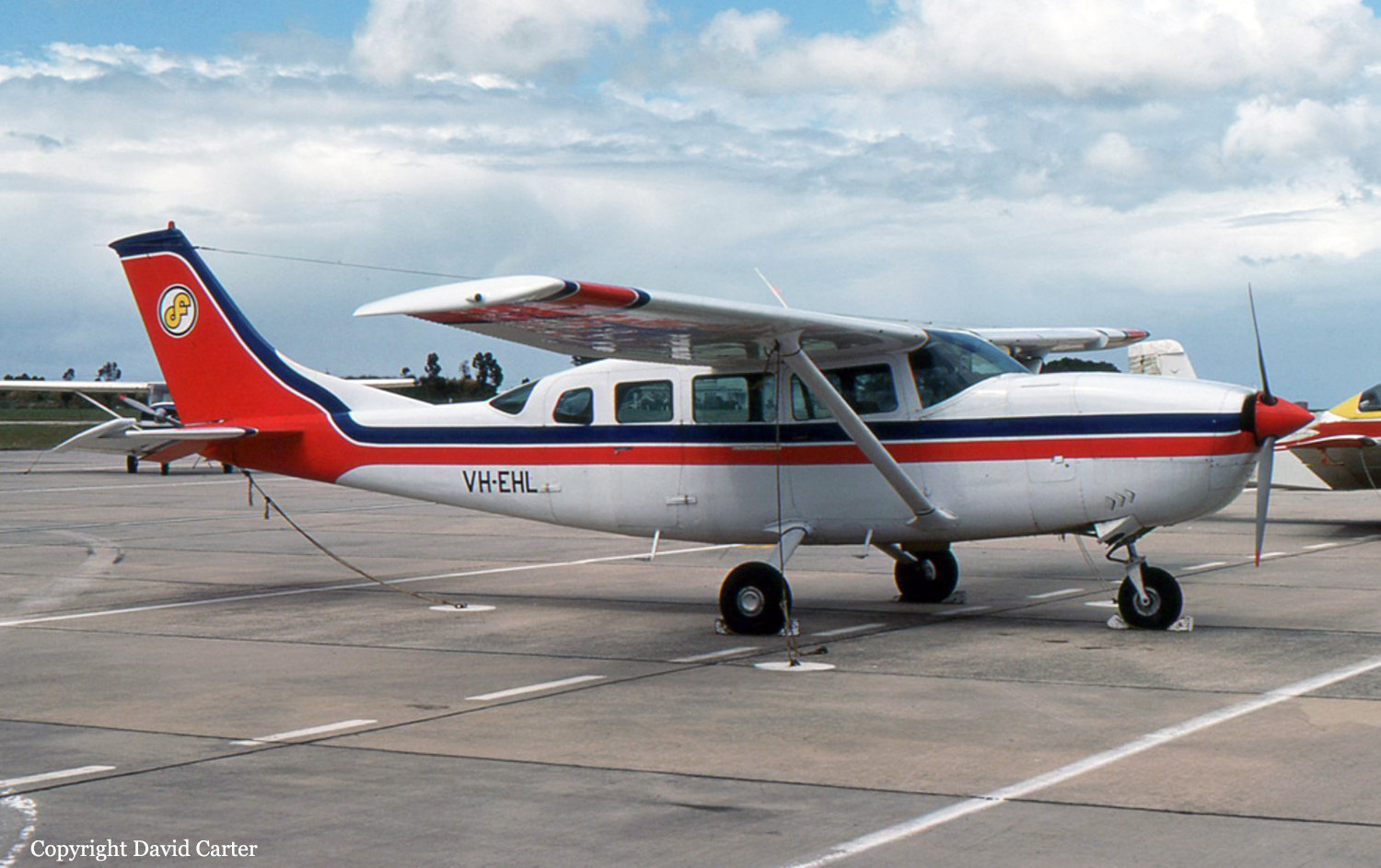
Crash of a Cessna 207 Skywagon in Cradle Mountain

Date & Time: Nov 7, 2002 at 1404 LT
Registration:
VH-EHL
Flight Type:
Survivors:
Yes
Schedule:
Cradle Mountain - Cradle Mountain
MSN:
207-0141
YOM:
1970
Country:
Region:
Crew on board:
1
Crew fatalities:
Pax on board:
4
Pax fatalities:
Other fatalities:
Total fatalities:
0
Captain / Total flying hours:
730
Captain / Total hours on type:
180.00
Circumstances:
The Cessna 207 aircraft (C207) was engaged on a sightseeing flight from Cradle Mountain, to Lake St. Clair and return. On board were the pilot and 4 passengers. The flight departed Cradle Mountain at approximately 1310 ESuT and tracked direct to Lake St Clair at 7000 ft due to turbulence. The aircraft then returned to Cradle Mountain. At approximately 1404, as the aircraft was approaching the airfield, the pilot configured the aircraft for a straight in approach to strip 02. The pilot had selected two stages of flap, and had reduced power to approximately 19 inches of manifold pressure. He reported that at approximately half a mile from the airfield the engine stopped without any prior warning. After completing trouble checks, the pilot became aware that the aircraft would not reach the airfield. He then manoeuvred the aircraft towards an open area on his right while broadcasting a MAYDAY call. Melbourne air traffic control acknowledged this call. The pilot then completed additional trouble checks and changed the fuel tank selection, but the engine failed to respond. The aircraft touched down heavily on the main wheels and slid approximately 40 metres before coming to a stop. During the touchdown and subsequent ground slide, the nose wheel detached from the aircraft, the propeller was damaged and the right wing was partially separated from the airframe. After the aircraft stopped the pilot checked the passengers and discovered that two of them had suffered serious injuries.
Probable cause:
The pilot reported that he had completed a daily inspection of the aircraft earlier in the morning. That inspection included assessing the fuel quantity on board the aircraft and completing a fuel drain and water check. Both of these checks did not reveal any problem with the fuel. The pilot estimated that there was approximately 185 litres of fuel on board the aircraft, 90 litres in the right tank and 95 litres in the left tank. The aircraft had last been refuelled the day previously from drum stock. The aircraft had completed two flights since that refuelling with no problems being reported. The engineers that recovered the aircraft reported that there was approximately 30 litres of fuel in the left tank and approximately 100 litres of fuel in the right tank. The C207 aircraft has a fuel selector in the cockpit that allows the pilot to supply fuel to the engine from either the right tank or the left tank, but not from both tanks simultaneously. The pilot reported that he conducted the flight with the fuel selector switched to the left tank. He also reported that he did not move the selector during the flight and only moved it to the right tank as part of his trouble checks when the engine failed. The pilot reported that he did not complete flight or fuel plans for the flight, but operated on previous knowledge from other flights. A post occurrence analysis of the weather indicated that the winds at 7000 feet were as forecast. Post flight analysis of the flight revealed that the aircraft would have required 57 litres of fuel to complete the flight, which included allowances for taxi and climb. The engine was sent by the owner to an engine overhaul facility for testing. The ATSB did not attend the testing of the engine. The engine was fitted to the test cell in the condition as removed from the aircraft. The engine was started and test run in accordance with the engine manufacturer's overhaul manual. The engine ran normally and all temperature and pressure limits were within normal ranges. The investigation was unable to determine why the engine failed to operate normally in the latter stages of the flight.
Final Report:

Crash of a Cessna 207 Skywagon in Marshall

Date & Time: Oct 28, 2002 at 2000 LT
Operator:
Registration:
N91090
Flight Phase:
Flight Type:
Survivors:
Yes
Site:
Schedule:
Marshall - Bethel
MSN:
207-0069
YOM:
1969
Location:
Crew on board:
1
Crew fatalities:
Pax on board:
0
Pax fatalities:
Other fatalities:
Total fatalities:
0
Captain / Total flying hours:
1745
Captain / Total hours on type:
115.00
Aircraft flight hours:
14551
Circumstances:
The commercial pilot was positioning the airplane from the departure airport to another airport. The flight took place on a dark night with overcast skies, and no discernible horizon. The pilot departed and climbed to a cruise altitude between 1,200 and 1,400 feet msl. About 4 miles south of the departure airport, the airplane collided with an east-west ridge at 1,200 feet msl. The ridgeline is perpendicular to the direct route of flight between the departure and destination airports, and rises from west to east with a summit elevation of 1,714 feet msl. The departure airport was a newly commissioned airport 3 miles east-northeast of the old airport. The accident flight was the pilot's second trip to the new airport, and his first night departure from either the old or new airport. Direct flight from the new airport to the destination airport requires a higher altitude to clear the ridgeline than does a direct flight from the old airport. A direct flight from the old airport crosses the same ridgeline farther to the west, where the elevation of the ridge is less than 500 feet msl.
Probable cause:
The pilot's failure to maintain clearance from terrain, which resulted in an in-flight collision with a ridgeline. Factors contributing to the accident were the high terrain, the pilot's inadequate preflight planning, and the dark night light conditions.
Final Report:

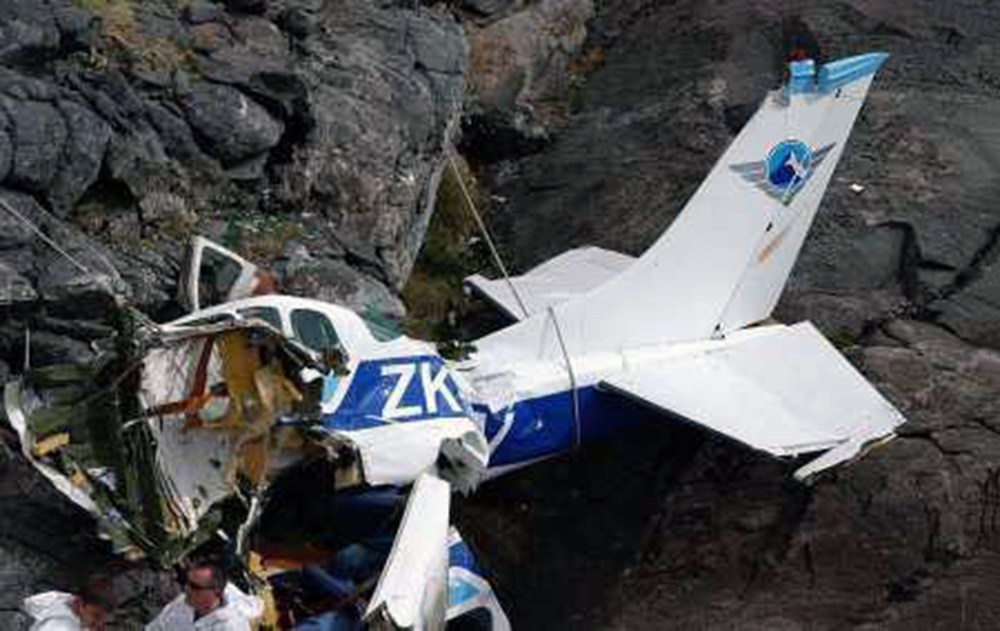
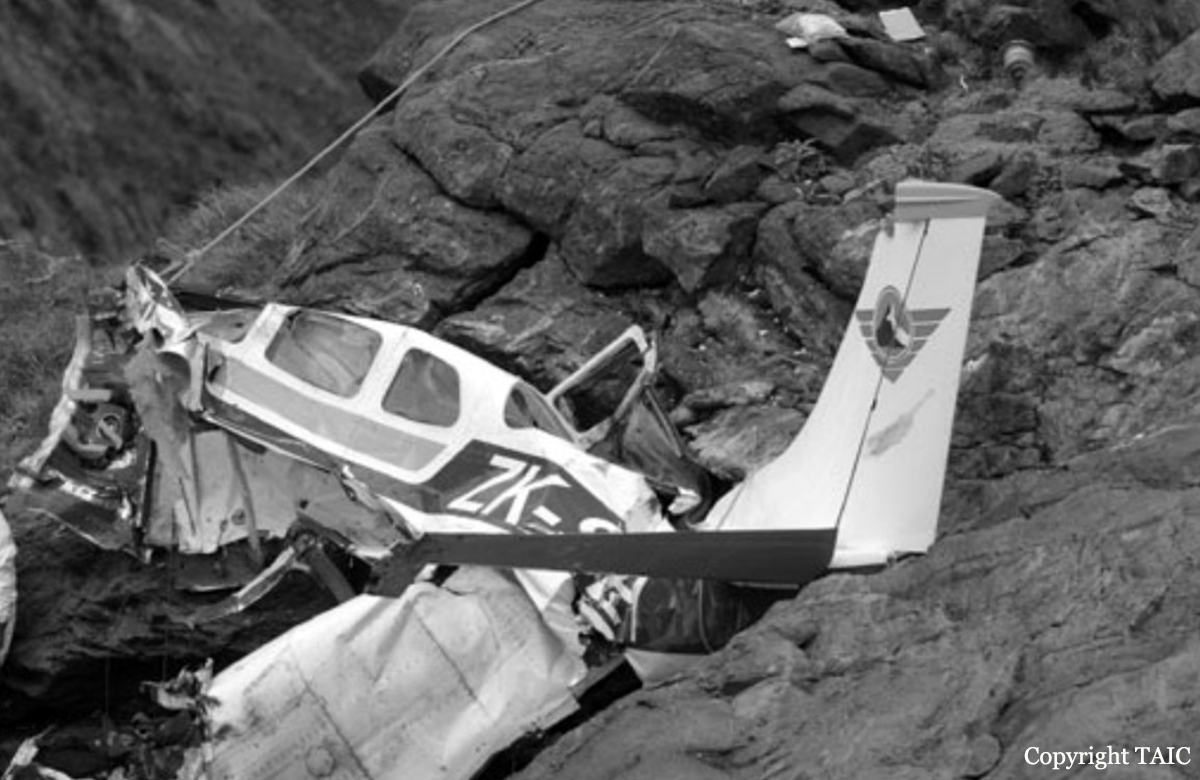
Crash of a Cessna 207 Skywagon in Milford Sound: 6 killed

Date & Time: Jan 19, 2002 at 1000 LT
Operator:
Registration:
ZK-SEV
Flight Phase:
Survivors:
No
Site:
Schedule:
Te Anau - Milford Sound
MSN:
207-0204
YOM:
1971
Country:
Region:
Crew on board:
1
Crew fatalities:
Pax on board:
5
Pax fatalities:
Other fatalities:
Total fatalities:
6
Captain / Total flying hours:
635
Captain / Total hours on type:
13.00
Circumstances:
On Saturday, 19 January 2002, at 0931, ZK-SEV, a Cessna 207, took off from Te Anau Aerodrome for Milford Sound Aerodrome. At about 1000 the aircraft collided with the side of a mountainous valley, approximately 4400 feet above sea level and 500 metres southeast of Gertrude Saddle, some 11 kilometres from Milford Sound. The pilot and 5 passengers on board died in the collision. The aircraft probably had not reached a suitable altitude to safely cross over Gertrude Saddle, and the pilot probably left his decision too late to turn back in the valley in order to gain more height.
Probable cause:
Findings:
Findings and safety recommendations are listed in order of development and not in order of priority.
- The pilot was appropriately qualified, fit and authorised to conduct the flight.
- The aircraft records indicated the aircraft was properly maintained and airworthy. The aircraft was appropriate for the purpose and was approved for air transport operations.
- The weather conditions were suitable for the flight.
- The aircraft was probably too low to safely cross Gertrude Saddle, and the pilot probably elected to use his escape option of a left reverse turn after recognising that he would be unable to safely cross the saddle. This was left too late to safely complete the manoeuvre.
- Had the aircraft reached a suitable height to safely cross Gertrude Saddle prior to entering Gertrude Valley, the accident may have been averted.
- The pilot may have misjudged the strength of the tailwind and thus the aircraft ground speed, and the strength of any downdraughts, as he approached Gertrude Saddle. Consequently, the
closing speed with the saddle and the low height of the aircraft may have caught the pilot by surprise.
- The pilot’s delayed action in initiating a reverse turn away from Gertrude Saddle was probably a prime contributing factor to the accident.
- Pilot inexperience may have contributed to the accident.
- The current aeroplane pilot training requirements are not sufficient to ensure pilots are suitably equipped to handle the demanding flying challenges that mountainous environments can present.
Final Report:

Crash of a Cessna T207A Turbo Stationair 7 II in Kanab

Date & Time: May 27, 2001 at 1400 LT
Operator:
Registration:
N6427H
Flight Type:
Survivors:
Yes
Schedule:
Marble Canyon – Kanab
MSN:
207-0522
YOM:
1979
Location:
Crew on board:
1
Crew fatalities:
Pax on board:
0
Pax fatalities:
Other fatalities:
Total fatalities:
0
Captain / Total flying hours:
940
Captain / Total hours on type:
34.00
Aircraft flight hours:
7485
Circumstances:
The pilot departed for the cross-country flight with 10 gallons of fuel in the left tank and 17 gallons of fuel in the right tank. He leveled off and reduced to cruise power. He said he was "preparing to make switch from left to right tank....just before I could make the switch, the engine lost power." He attempted to switch tanks and restart the engine, but could not get a restart. He performed a forced landing to a dirt road. During the landing roll, the left wing struck a tree and the airplane rotated 180 degrees. The engine was torn from the mount, both wing spars were bent, and the empennage sustained substantial damage. A salvage team member noted, during the airplanes recovery, that there were approximately 10 to 15 gallons of fuel in the left tank; he said the right fuel tank was empty.
Probable cause:
The pilot's inadequate fuel consumption planning, and the subsequent fuel starvation, which resulted in a loss of engine power.
Final Report:

Crash of a Cessna 207 Skywagon in 47 Mile Creek: 1 killed

Date & Time: Sep 20, 2000 at 0615 LT
Operator:
Registration:
N42472
Flight Phase:
Flight Type:
Survivors:
No
Schedule:
47 Mile Creek – Aniak
MSN:
207-0148
YOM:
1970
Crew on board:
1
Crew fatalities:
Pax on board:
0
Pax fatalities:
Other fatalities:
Total fatalities:
1
Captain / Total flying hours:
1788
Captain / Total hours on type:
900.00
Circumstances:
The air taxi pilot had flown to a remote airstrip and lodge in a company airplane to go hunting. He was scheduled the next morning for a flight from his company's base of operations, his original departure airport. According to a hunting guide at the lodge, the pilot departed the lodge's airstrip about 0608, with a load of revenue cargo. A few minutes later, the guide heard the sound of an airplane, and then a loud impact. The guide could not see the wreckage because it was too dark outside. He departed in his own airplane, but entered clouds shortly after takeoff, and had to return. The guide commented he thought the accident pilot was trying to return to the lodge airstrip because of the poor weather and darkness. The wreckage was located on a nearby mountain in daylight hours after the cloud cover had dissipated. Post accident inspection disclosed no evidence of any preimpact mechanical anomalies with the airplane. Official sunrise was 0813; official civil twilight was 0730. The time of the accident was approximately 0615.
Probable cause:
The pilot's decision to initiate visual flight into dark night instrument meteorological conditions. Factors associated with the accident are a low ceiling, a dark night, the pilot's failure to follow regulatory procedures and directives, and his self-induced pressure to return to base to take another flight.
Final Report:

Crash of a Cessna 207 Skywagon in San Juan de Manapiare: 3 killed

Date & Time: Aug 23, 2000 at 0703 LT
Registration:
YV-753C
Survivors:
Yes
Schedule:
Puerto Ayacucho – San Juan de Manapiare
MSN:
207-0344
YOM:
1976
Country:
Crew on board:
1
Crew fatalities:
Pax on board:
5
Pax fatalities:
Other fatalities:
Total fatalities:
3
Circumstances:
On final approach to San Juan de Manapiare Airport in bad weather conditions, the single engine aircraft crashed on hilly terrain. The pilot and two passengers were killed while three other occupants were injured.

Crash of a Cessna 207 Skywagon in Las Terrenas: 7 killed

Date & Time: Jan 22, 2000 at 1145 LT
Registration:
HI-528CT
Flight Phase:
Survivors:
No
MSN:
207-0112
YOM:
1969
Crew on board:
1
Crew fatalities:
Pax on board:
6
Pax fatalities:
Other fatalities:
Total fatalities:
7
Circumstances:
The single engine aircraft was completing a local touristic flight with six passengers and a pilot on board. While flying at low altitude in the vicinity of the Samaná Bay, the aircraft collided with a coconut tree. The right wing was torn off and the aircraft crashed, killing all seven occupants. Weather conditions were good at the time of the accident.

Crash of a Cessna T207A Skywagon in Bethel

Date & Time: Dec 24, 1999 at 1045 LT
Operator:
Registration:
N1864
Flight Phase:
Survivors:
Yes
Schedule:
Bethel – Chefornak
MSN:
207-0526
YOM:
1979
Location:
Crew on board:
1
Crew fatalities:
Pax on board:
5
Pax fatalities:
Other fatalities:
Total fatalities:
0
Captain / Total flying hours:
2507
Captain / Total hours on type:
1080.00
Aircraft flight hours:
9809
Circumstances:
The certificated commercial pilot, with five passengers aboard, was departing runway 18 on a scheduled commuter flight. The pilot stated that the flight's original departure time was delayed for two hours due to ice fog, and low visibility. He said that just after takeoff, the engine surged followed by a loss of power. The airplane collided with snow-covered terrain during an off-airport emergency landing, and sustained substantial damage to the propeller, fuselage, and wings. Following retrieval of the airplane, an FAA airworthiness inspector examined the airplane, and found no mechanical anomalies. While still attached to the airplane, the engine was started and run at idle. The engine later produced full power on an engine test stand. A pilot-rated Alaska State Trooper, with extensive experience in the accident airplane make and model, examined the airplane soon after the accident. He said the wings, horizontal stabilizer, and elevators had an accumulation of frost.
Probable cause:
The pilot's failure to remove frost from the airplane prior to flight, and an inadvertent stall/mush.
Final Report: