Crash of a Boeing 737-2F9 in Port Harcourt

Date & Time: Oct 15, 1988
Type of aircraft:
Operator:
Registration:
5N-ANW
Survivors:
Yes
Schedule:
Jos – Port Harcourt
MSN:
22771
YOM:
1982
Country:
Region:
Crew on board:
8
Crew fatalities:
Pax on board:
124
Pax fatalities:
Other fatalities:
Total fatalities:
0
Circumstances:
The approach to Port Harcourt Airport was completed in heavy rain falls. After touchdown, the airplane encountered difficulties to stop within the remaining distance and overran. While contacting soft ground, the nose and right main gear collapsed and the aircraft came to rest. 36 occupants were injured and the aircraft was damaged beyond repair.

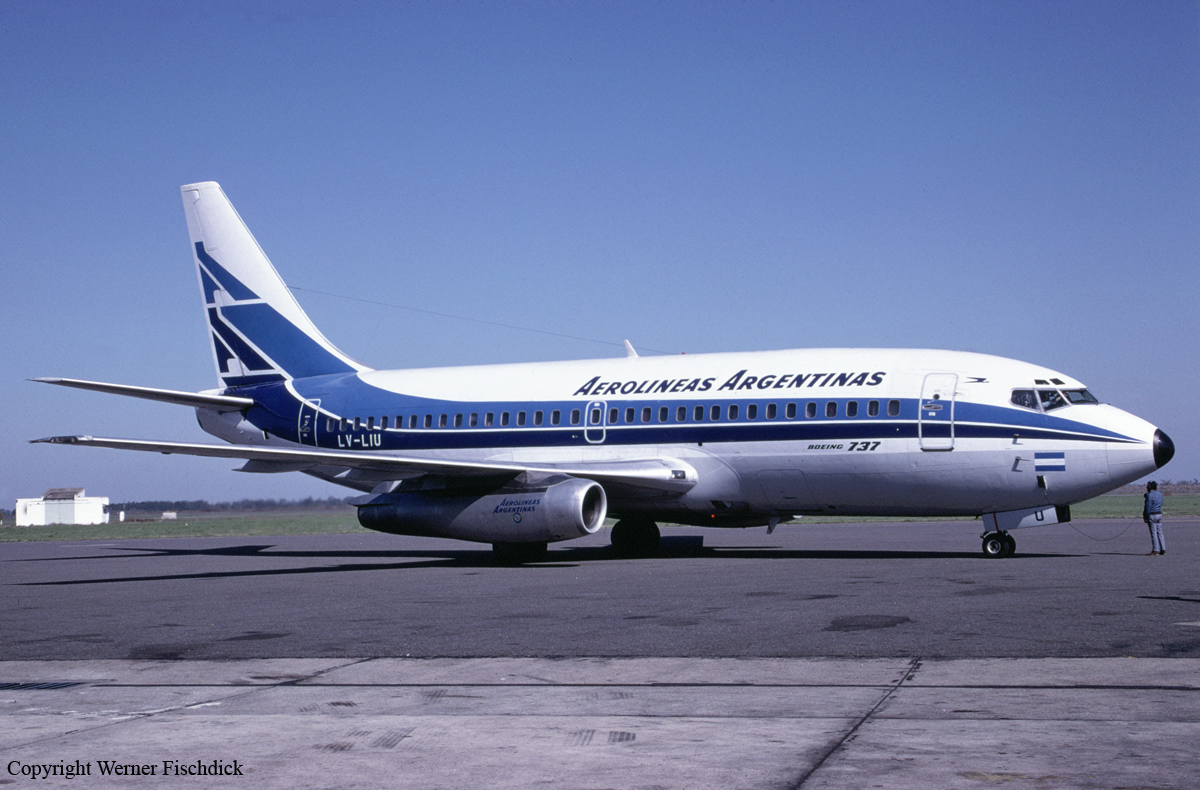
Crash of a Boeing 737-287 in Ushuaia

Date & Time: Sep 26, 1988 at 1136 LT
Type of aircraft:
Operator:
Registration:
LV-LIU
Survivors:
Yes
Schedule:
Buenos Aires – Bahia Blanca – Río Grande – Ushuaia
MSN:
20964
YOM:
1974
Flight number:
AR648
Country:
Crew on board:
6
Crew fatalities:
Pax on board:
56
Pax fatalities:
Other fatalities:
Total fatalities:
0
Circumstances:
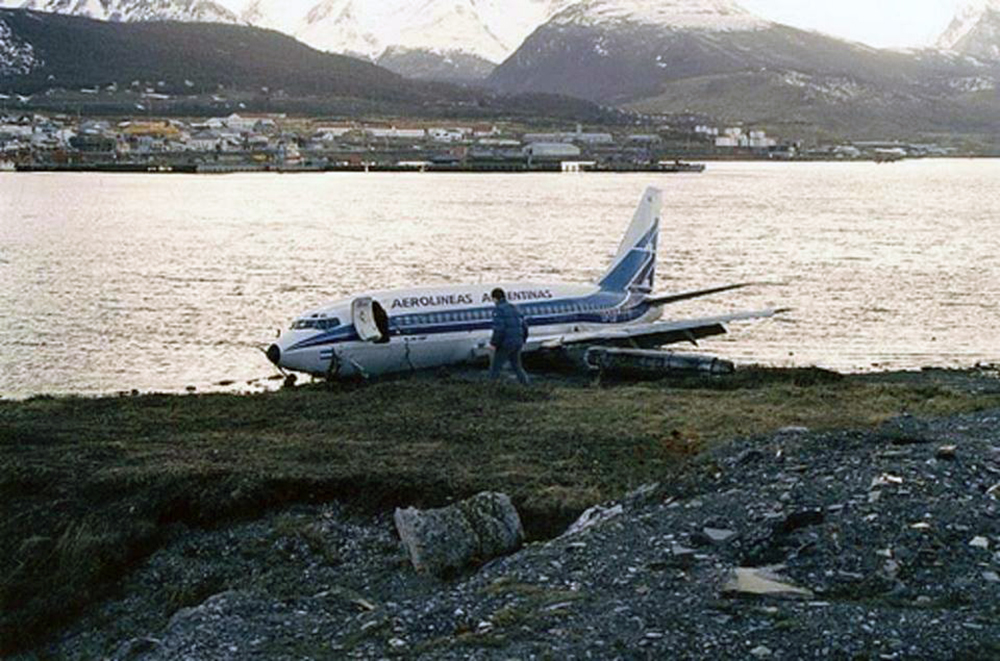
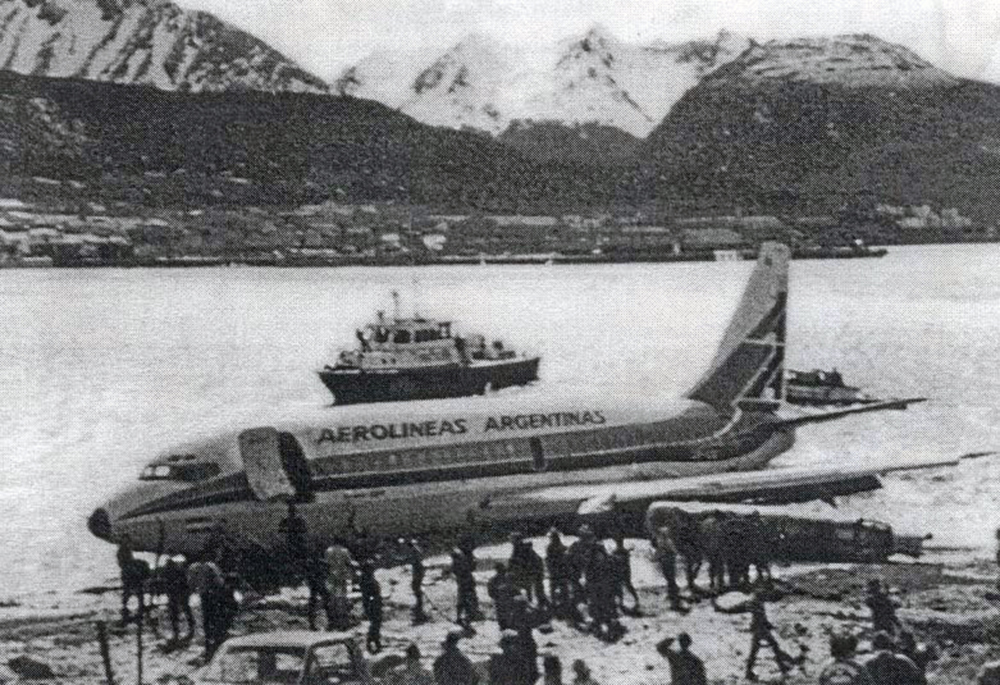
While descending to Ushuaia Airport, the crew was informed about the weather conditions at destination: wind 230° at 12 knots, runway 16 in use, visibility 30 km, 3/8 SC at 1,200 meters, 2/8 CU at 1,500 meters, temperature 9° C, QNH 998,4 mb. After passing 8,000 feet on descent, the crew was cleared to land on runway 16 but the captain prefered to land on runway 34 as the last report indicated a wind from 360° gusting at 20 knots. Therefore, the crew was informed about possible windshear on approach. At an excessive speed of 140 knots (instead of the 128 knots as prescribed), the aircraft landed hard on runway 34 (positive acceleration of 1,89 G) and bounced. Out of control, it veered off runway, went down an embankment and came to rest in the sea (about two meters of water). All 62 occupants were evacuated, among them 13 were injured. The aircraft was destroyed.
Probable cause:
Wrong approach configuration on part of the crew who landed the aircraft at an excessive speed. The crew failed to use all available braking systems after touchdown, which was considered as a contributing factor.

Crash of a Boeing 737-260 in Bahar Dar: 35 killed

Date & Time: Sep 15, 1988 at 1305 LT
Type of aircraft:
Operator:
Registration:
ET-AJA
Survivors:
Yes
Schedule:
Addis Ababa - Bahar Dar - Asmara
MSN:
23914
YOM:
1987
Flight number:
ET604
Country:
Region:
Crew on board:
6
Crew fatalities:
Pax on board:
98
Pax fatalities:
Other fatalities:
Total fatalities:
35
Captain / Total flying hours:
19936
Captain / Total hours on type:
449.00
Copilot / Total flying hours:
9447
Aircraft flight hours:
1377
Aircraft flight cycles:
1870
Circumstances:
Ethiopian Airlines flight 604, a Boeing 737-200, was a scheduled service from Addis Ababa to Bahar Dar and Asmara. The first leg of the flight was uneventful. At 09:50, the engines were started normally and the airplane was taxied to its take-off position. The flight crew reported that In order to gain additional thrust they elected not to use engine bleed air during take-off. The airplane accelerated at a normal rate during the take-off roll and passed V1 (take-off-reject) speed. As the airplane passed V1 and very near VR (rotation speed) the flight crew saw a flock of pigeons lifting up from the left side. At this time the captain took over control from the copilot and pulled up. Almost immediately after rotation, the airplane struck the flock of pigeons at an airspeed of 146 knots and altitude of 5730 feet above mean sea level. Loud bangs were heard. The captain then called for gear up and the copilot complied. At approximately 100-200 ft. above the ground, both engines started backfiring. At this time, the flight crew reported that they experienced a considerable power loss and the airplane started mushing down at which time the captain "fire walled" the thrust levers. The engines reportedly responded and the airplane began to gain some altitude. The gain in attitude encouraged the captain to make a right turn away from Lake Tana and back to the take-off runway for landing. During the initial 32 seconds after the impact, the airplane had gained altitude from 5,730 feet to 6,020 feet and had accelerated from 146 knots to 154 knots. The crew report further indicated that both engines continued to surge and the exhaust gas temperature gauges (EGT) were reading at the top extreme and the engine pressure ratio (EPR) gauge readings were fluctuating at about 1.6. During this time the captain reported that the he reduced engine thrust to prolong the operational life of the engines. The frequency of the surges decreased with engines power reduction. The airplane entered an approximate 90 degree right turn. Altitude remained constant 6,020 feet while its airspeed increased from 154 knots to 162 knots. The airplane then began another right turn and entered the downwind leg of the return to runway 04. Altitude had increased to 6,410 feet and airspeed to 173 knots. On the downwind leg the aircraft further climbed to 7,100 feet. Then, within a timeframe of about five seconds, both engines lost power completely. The copilot pointed out a cleared area slightly ahead and to the right. The captain then turned towards the clearing and performed a gear-up landing. The aircraft broke up and a fire erupted. Out of the 104 occupants, 35 suffered fatal injuries.
Probable cause:
The accident occurred because the airplane could not be safely returned to the runway after the internal destruction and subsequent failure of both engines to operate arising from multiple bird ingestion by both engines during take-off.

Crash of a Boeing 737-2A8 in New Delhi

Date & Time: Jun 19, 1988 at 1726 LT
Type of aircraft:
Operator:
Registration:
VT-EAI
Survivors:
Yes
Schedule:
Srinagar – Jammu – Chandigarh – New Delhi
MSN:
20482/272
YOM:
1970
Flight number:
IC422
Country:
Region:
Crew on board:
6
Crew fatalities:
Pax on board:
128
Pax fatalities:
Other fatalities:
Total fatalities:
0
Captain / Total flying hours:
9000
Circumstances:
Indian Airlines flight IC422 was a domestic service from Srinagar to Delhi via Jammu and Chandigarh, India. The aircraft, a Boeing 737-200, landed gear up on runway 10 at Delhi-Indira Gandhi International Airport. The left engine then caught fire due to a fuel leak from ruptured fuel lines and a broken fuel control unit. The fire was quickly put out by fire services. All 134 occupants evacuated safely.
Probable cause:
The accident occurred because of commander's negligent flying contrary to laid down procedures and failure to ensure that the landing gears were down and locked before landing. The co-pilot's failure to bring to the notice of the commander the deviations from the laid down procedures and to verify and cross-check that the gears were down, was a contributory factor to the accident.

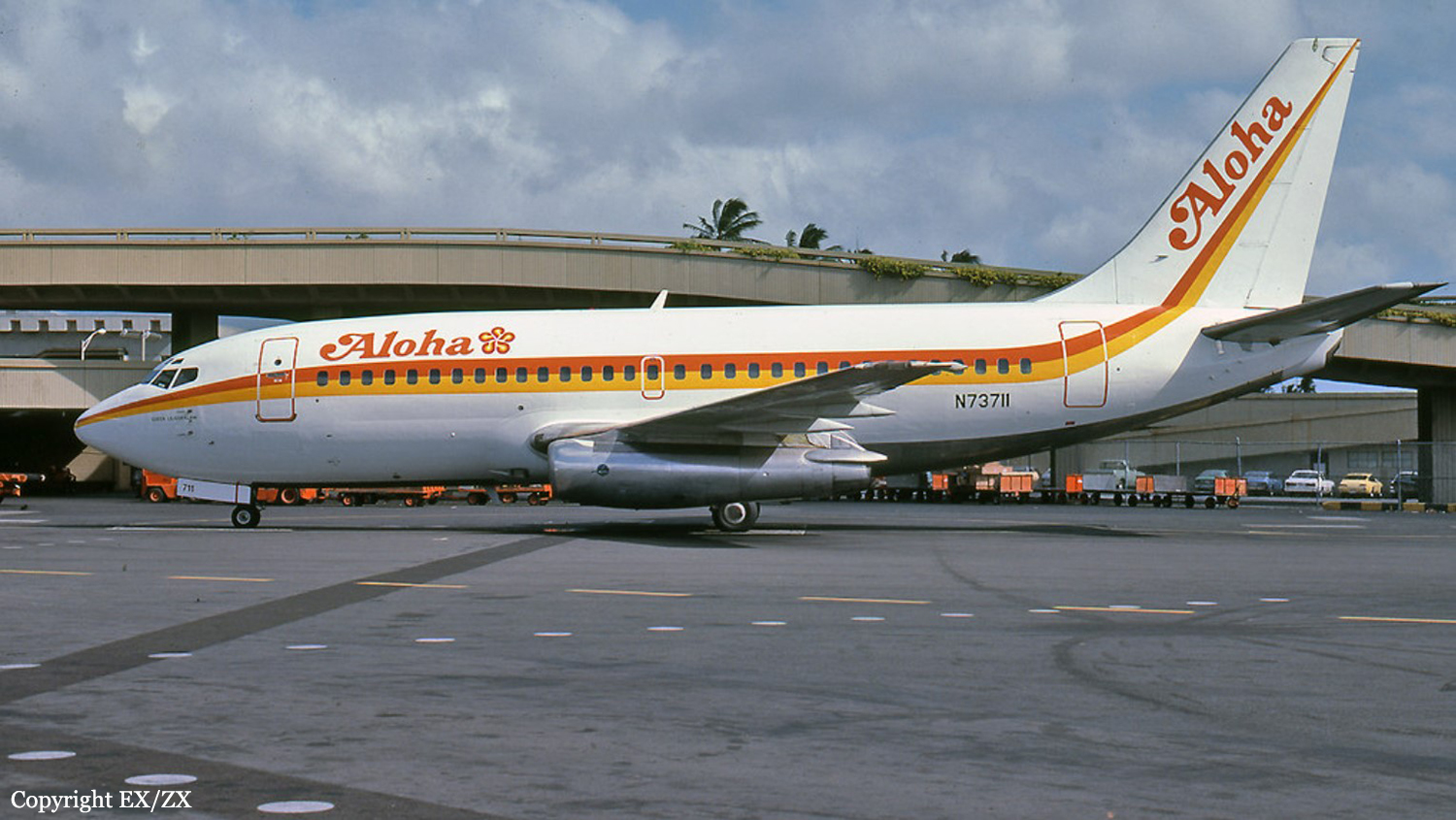
Crash of a Boeing 737-297 in Kahului: 1 killed

Date & Time: Apr 28, 1988 at 1346 LT
Type of aircraft:
Operator:
Registration:
N73711
Flight Phase:
Survivors:
Yes
Schedule:
Hilo - Honolulu
MSN:
20209
YOM:
1969
Flight number:
AQ243
Location:
Crew on board:
5
Crew fatalities:
Pax on board:
90
Pax fatalities:
Other fatalities:
Total fatalities:
1
Captain / Total flying hours:
8500
Captain / Total hours on type:
6700.00
Copilot / Total flying hours:
8000
Copilot / Total hours on type:
3500
Aircraft flight hours:
35496
Aircraft flight cycles:
89680
Circumstances:
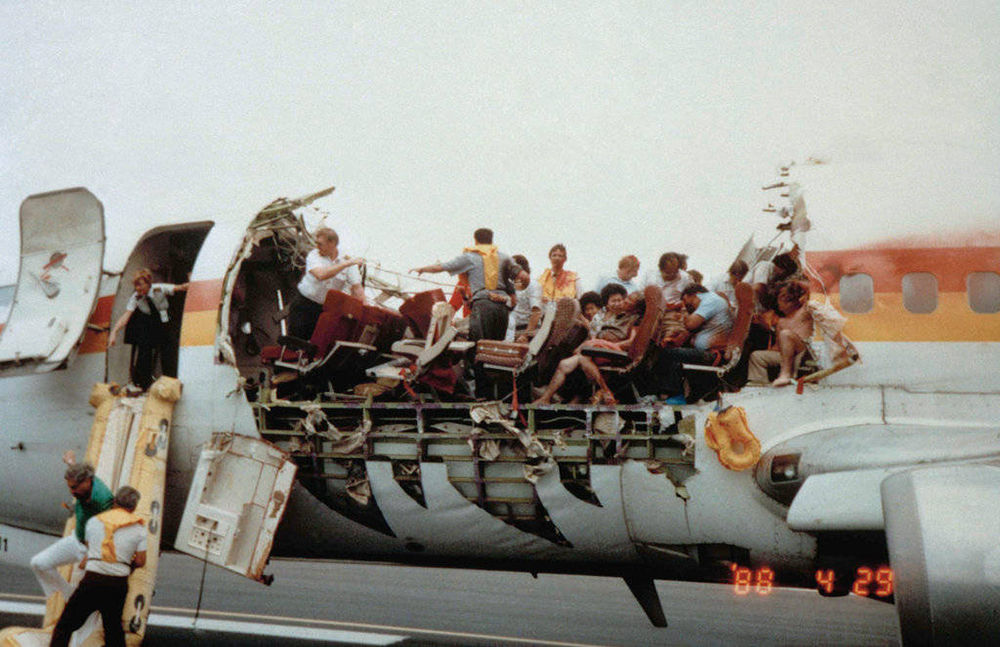
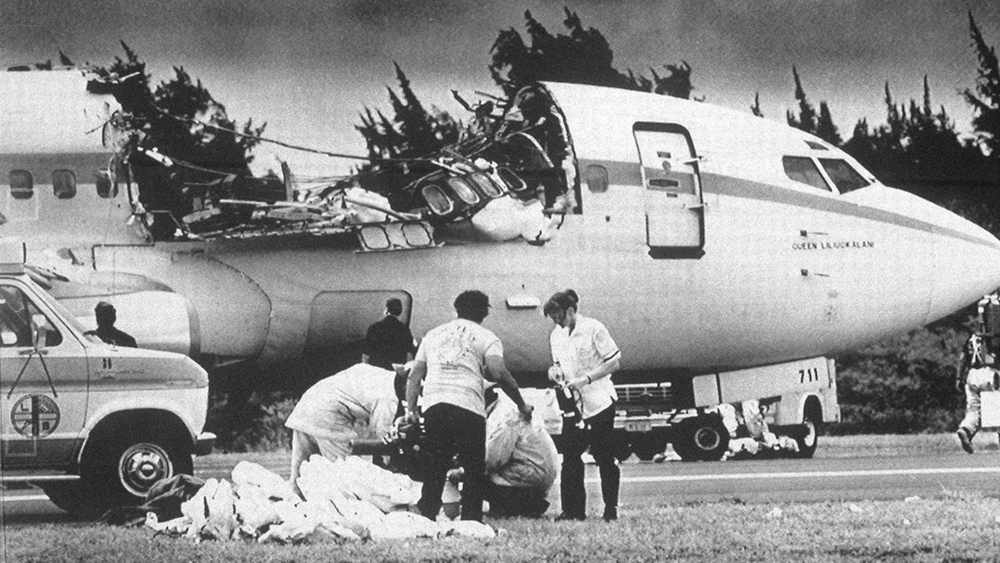
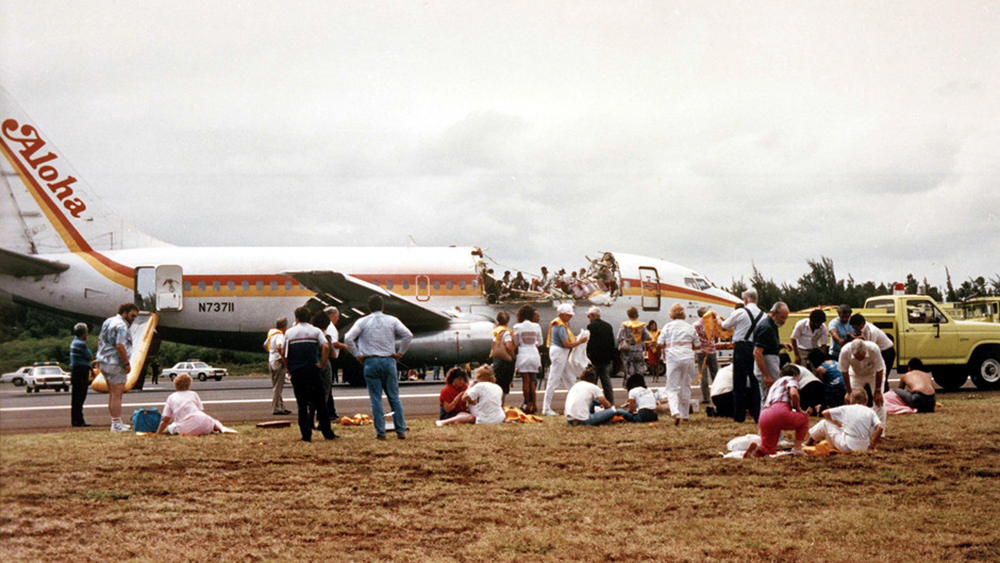
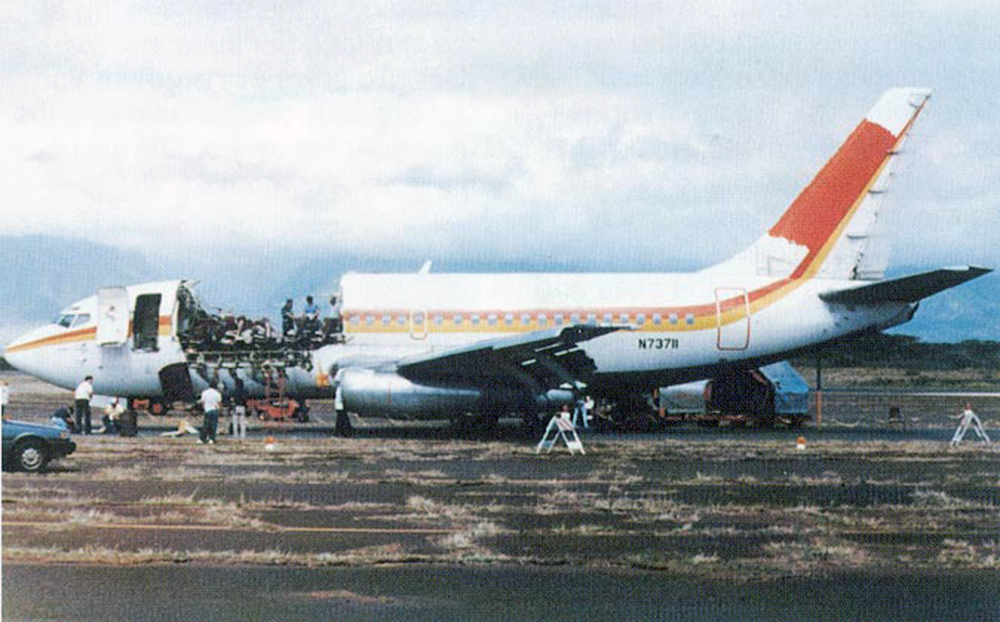
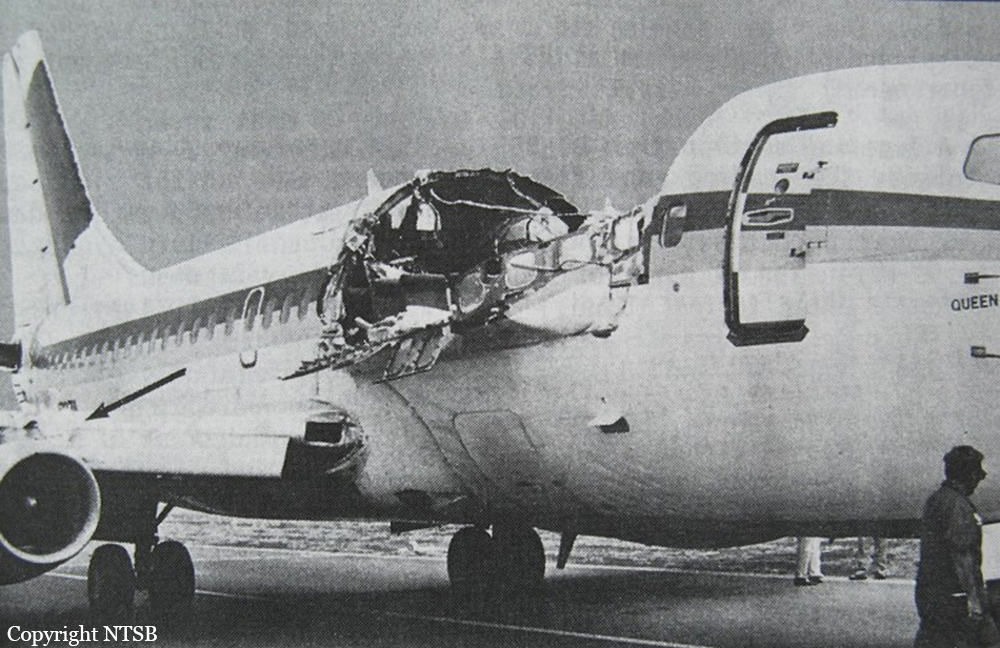
On April 28, 1988, an Aloha Airline Boeing 737, N73711, was scheduled for a series of interisland flights in Hawaii. The crew flew three uneventful roundtrip flights, one each from Honolulu to Hilo (ITO), Kahului Airport, HI (OGG) on the island of Maui, and Kauai Island Airport (LIH). At 11:00, a scheduled first officer change took place for the remainder of the day. The crew flew from Honolulu to Maui and then from Maui to Hilo. At 13:25, flight 243 departed Hilo Airport en route to Honolulu. The first officer conducted the takeoff and en route climb to FL240 in VMC. As the airplane leveled at 24,000 feet, both pilots heard a loud "clap" or "whooshing" sound followed by a wind noise behind them. The first officer's head was jerked backward, and she stated that debris, including pieces of gray insulation, was floating in the cockpit. The captain observed that the cockpit entry door was missing and that "there was blue sky where the first-class ceiling had been." The captain immediately took over the controls of the airplane. He described the airplane attitude as rolling slightly left and right and that the flight controls felt "loose." Because of the decompression, both pilots and the air traffic controller in the observer seat donned their oxygen masks. The captain began an emergency descent. He stated that he extended the speed brakes and descended at an indicated airspeed (IAS) of 280 to 290 knots. Because of ambient noise, the pilots initially used hand signals to communicate. The first officer stated that she observed a rate of descent of 4,100 feet per minute at some point during the emergency descent. The captain also stated that he actuated the passenger oxygen switch. The passenger oxygen manual tee handle was not actuated. When the decompression occurred, all the passengers were seated and the seat belt sign was illuminated. The No. 1 flight attendant reportedly was standing at seat row 5. According to passenger observations, the flight attendant was immediately swept out of the cabin through a hole in the left side of the fuselage. The No. 2 flight attendant, standing by row 15/16, was thrown to the floor and sustained minor bruises. She was subsequently able to crawl up and down the aisle to render assistance and calm the passengers. The No. 3 flight attendant, standing at row 2, was struck in the head by debris and thrown to the floor. She suffered serious injuries. The first officer tuned the transponder to emergency code 7700 and attempted to notify Honolulu Air Route Traffic Control Center (ARTCC) that the flight was diverting to Maui. Because of the cockpit noise level, she could not hear any radio transmissions, and she was not sure if the Honolulu ARTCC heard the communication. Although Honolulu ARTCC did not receive the first officer's initial communication, the controller working flight 243 observed an emergency code 7700 transponder return about 23 nautical miles south-southeast of the Kahalui Airport, Maui. Starting at 13:48:15, the controller attempted to communicate with the flight several times without success. When the airplane descended through 14,000 feet, the first officer switched the radio to the Maui Tower frequency. At 13:48:35, she informed the tower of the rapid decompression, declared an emergency, and stated the need for emergency equipment. The local controller instructed flight 243 to change to the Maui Sector transponder code to identify the flight and indicate to surrounding air traffic control (ATC) facilities that the flight was being handled by the Maui ATC facility. The first officer changed the transponder as requested. At 13:50:58, the local controller requested the flight to switch frequencies to approach control because the flight was outside radar coverage for the local controller. Although the request was acknowledged, Flight 243 continued to transmit on the local controller frequency. At 13:53:44, the first officer informed the local controller, "We're going to need assistance. We cannot communicate with the flight attendants. We'll need assistance for the passengers when we land." An ambulance request was not initiated as a result of this radio call. The captain stated that he began slowing the airplane as the flight approached 10,000 feet msl. He retracted the speed brakes, removed his oxygen mask, and began a gradual turn toward Maui's runway 02. At 210 knots IAS, the flightcrew could communicate verbally. Initially flaps 1 were selected, then flaps 5. When attempting to extend beyond flaps 5, the airplane became less controllable, and the captain decided to return to flaps 5 for the landing. Because the captain found the airplane becoming less controllable below 170 knots IAS, he elected to use 170 knots IAS for the approach and landing. Using the public address (PA) system and on-board interphone, the first officer attempted to communicate with the flight attendants; however, there was no response. At the command of the captain, the first officer lowered the landing gear at the normal point in the approach pattern. The main gear indicated down and locked; however, the nose gear position indicator light did not illuminate. Manual nose gear extension was selected and still the green indicator light did not illuminate; however, the red landing gear unsafe indicator light was not illuminated. After another manual attempt, the handle was placed down to complete the manual gear extension procedure. The captain said no attempt was made to use the nose gear downlock viewer because the center jumpseat was occupied and the captain believed it was urgent to land the airplane immediately. At 13:55:05, the first officer advised the tower, "We won't have a nose gear," and at 13:56:14, the crew advised the tower, "We'll need all the equipment you've got." While advancing the power levers to maneuver for the approach, the captain sensed a yawing motion and determined that the No.1 (left) engine had failed. At 170 to 200 knots IAS, he placed the No. 1 engine start switch to the "flight" position in an attempt to start the engine; there was no response. A normal descent profile was established 4 miles out on the final approach. The captain said that the airplane was "shaking a little, rocking slightly and felt springy." Flight 243 landed on runway 02 at Maui's Kahului Airport at 13:58:45. The captain said that he was able to make a normal touchdown and landing rollout. He used the No. 2 engine thrust reverser and brakes to stop the airplane. During the latter part of the rollout, the flaps were extended to 40° as required for an evacuation. An emergency evacuation was then accomplished on the runway.

Probable cause:
The failure of the Aloha Airlines maintenance program to detect the presence of significant disbonding and fatigue damage, which ultimately led to failure of the lap joint at S-10L and the separation of the fuselage upper lobe. Contributing to the accident were the failure of Aloha Airlines management to supervise properly its maintenance force as well as the failure of the FAA to evaluate properly the Aloha Airlines maintenance program and to assess the airline's inspection and quality control deficiencies. Also contributing to the accident were the failure of the FAA to require Airworthiness Directive 87-21-08 inspection of all the lap joints proposed by Boeing Alert Service Bulletin SB 737-53A1039 and the lack of a complete terminating action (neither generated by Boeing nor required by the FAA) after the discovery of early production difficulties in the 737 cold bond lap joint, which resulted in low bond durability, corrosion and premature fatigue cracking.
Final Report:

Crash of a Boeing 737-230A near Seferihisar: 16 killed

Date & Time: Jan 2, 1988 at 1918 LT
Type of aircraft:
Operator:
Registration:
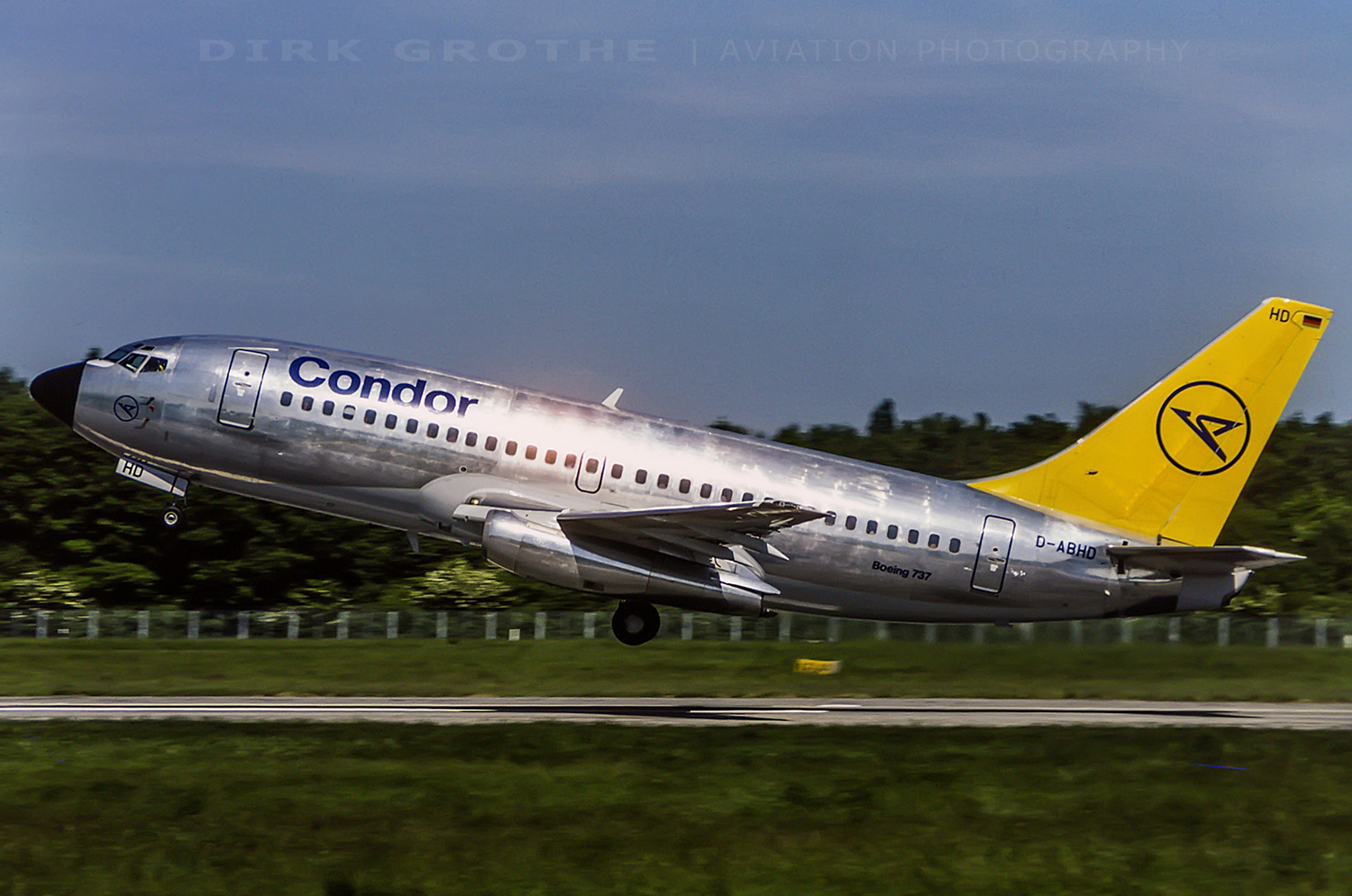
D-ABHD
Survivors:
No
Site:
Schedule:
Stuttgart - Izmir
MSN:
22635
YOM:
1981
Flight number:
DF3782
Country:
Region:
Crew on board:
5
Crew fatalities:
Pax on board:
11
Pax fatalities:
Other fatalities:
Total fatalities:
16
Captain / Total flying hours:
7584
Captain / Total hours on type:
3500.00
Copilot / Total flying hours:
2736
Copilot / Total hours on type:
787
Aircraft flight hours:
19334
Circumstances:
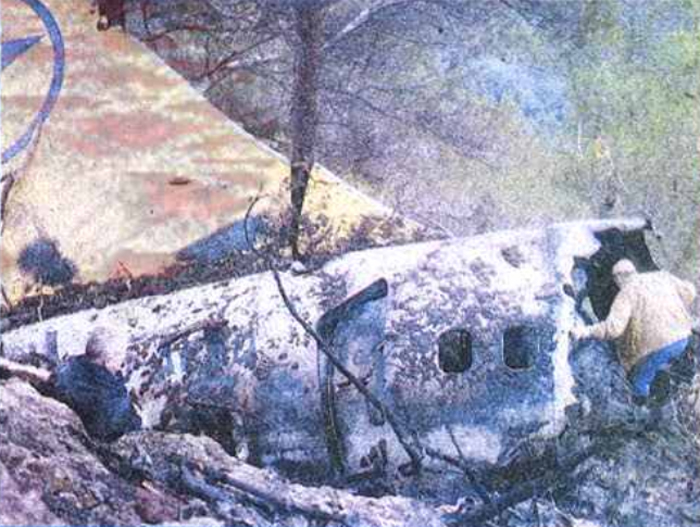
The crew started the approach to Izmir-Adnan Menderes and the copilot was the pilot-in-command. He was cleared to the Outer Marker (CU NDB) then for an ILS approach to runway 35. After passing the NDB, the crew switched to ILS and thus couldn't verify his position while in the procedure turn. The aircraft was outside the 35° sector of the ILS centreline and the crew followed the wrong side beam. The aircraft descended too low and struck the slope of Mt Dümentepe (800 meters high) located about 18 km southwest of the airport. It disintegrated on impact and all 16 occupants were killed.
Crew:
Wolfgang Hechler, pilot,
Helmuth Zöller, copilot,
Lothar Mühlmeister, steward,
Susan Epple, stewardess,
Susanne Kaltenbach, stewardess.
Passengers:
Zeki Aktaş,
Mübeccel Can,
Ethem Delinaslan,
Necla Demirel,
Tülay Yildiz,
Müslim Yildiz,
Mustafa Azur,
Hüseyin Vidinli,
Faruk Şimşek,
Tanza Akçif,
Sadri Yetmişbir.
Probable cause:
The accident was caused by a wrong use of the navigation aids on part of the flying crew. The cause was attributed mainly to the lack of adherence to the company procedures, especially in respect of crew coordination during approach and basic instrument flying procedures. At the time of the accident, the terminal radar was not available.

Crash of a Boeing 737-2P5 off Phuket: 83 killed

Date & Time: Aug 31, 1987 at 1536 LT
Type of aircraft:
Operator:
Registration:
HS-TBC
Survivors:
No
Schedule:
Hat Yai - Phuket
MSN:
22267
YOM:
1980
Flight number:
TG365
Country:
Region:
Crew on board:
9
Crew fatalities:
Pax on board:
74
Pax fatalities:
Other fatalities:
Total fatalities:
83
Captain / Total flying hours:
19538
Captain / Total hours on type:
5576.00
Copilot / Total flying hours:
5951
Copilot / Total hours on type:
156
Aircraft flight hours:
16963
Aircraft flight cycles:
20864
Circumstances:
Thai Airways Flight 365 was approaching Phuket VOR/DME on radial 119 after a flight from Hat Yai. At the same time Dragon Air Flight 203 (a Boeing 737 registered VR-HYL, carrying 62 occupants) also approached Phuket VOR/DME on radial 090. At 08:34 UTC Dragonair 203 reported at 2500 feet with Thai 365 in sight in front of them. The Thai Boeing was flying at 3000 feet at the time, and was 13 miles from Phuket VOR/DME. Dragonair 203, first priority in approach sequence, then turned right at 12 DME and was going to turn inbound for finals for runway 27. The Thai crew surmised that the other crew were making a false position report to gain landing priority and reported hurriedly that they were at 8 DME inbound and requested visual approach, though they hadn't reached 8 DME yet. This forced Phuket Approach to give Thai 365 landing priority at 08:35. The Dragonair crew (flying IFR) immediately warned that the Thai plane couldn't descend through their flight level. Concentrating on the conflicting traffic the speed decayed to 163 knots until the stick shaker activated. The Thai crew then applied power and raised the landing gear, but the aircraft entered a stall crashed into the sea, disintegrating on impact. All 83 occupants were killed.
Probable cause:
The pilot slowed the aircraft and it stalled while the pilot prepared to be number one on landing as advised by Phuket approach control. It appears that he was worrying and not sure whether he could make number one landing because the pilot if number two aircraft in sequence gave warning that the number one aircraft ahead was above him and could not descend passing through his level. The pilot added power and raised the gear after stick shaker activated but didn't execute a recovery before hitting the sea.