

Country
Operator Image

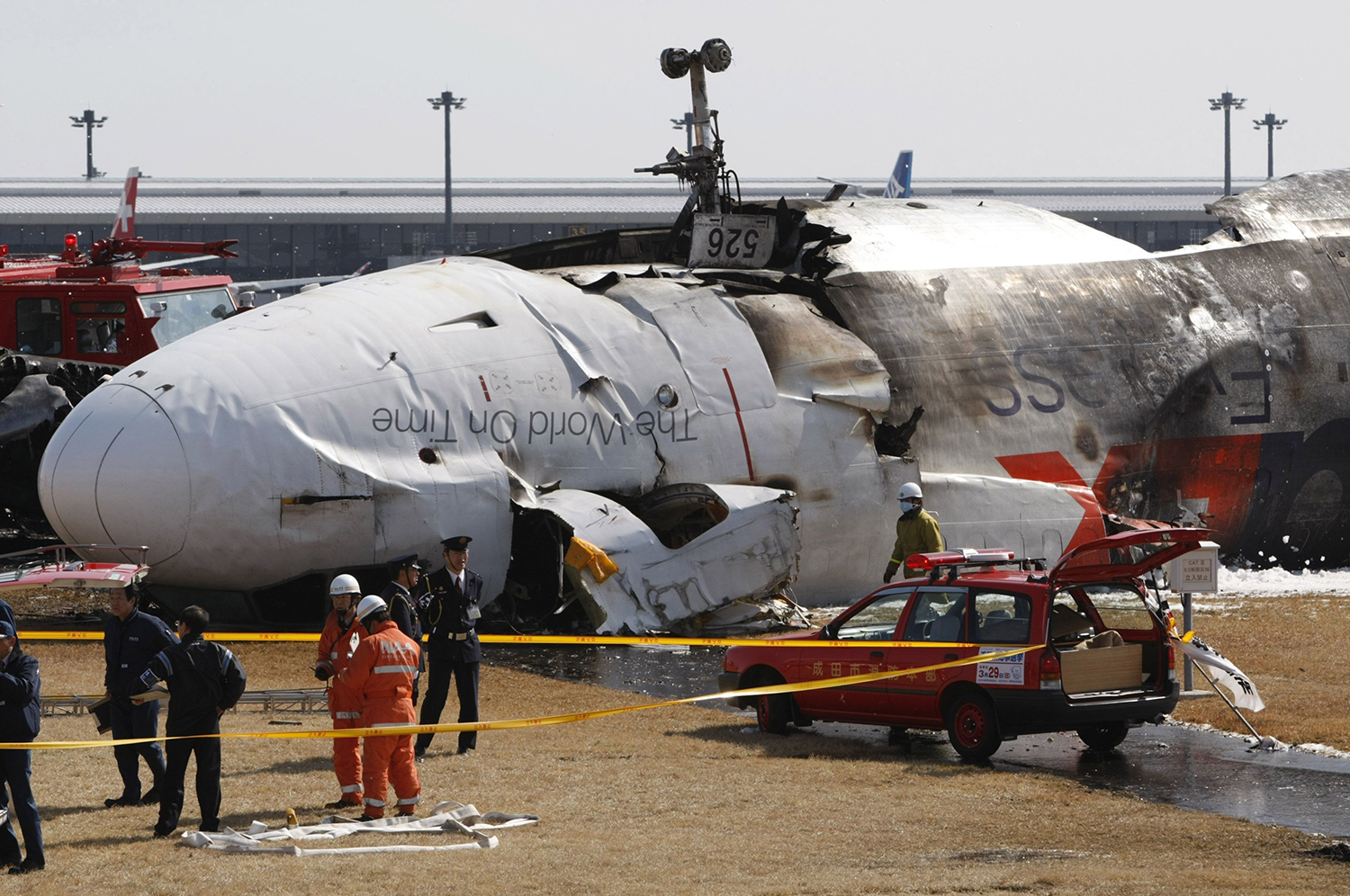
Crash of a McDonnell Douglas MD-11F in Tokyo: 2 killed
Date & Time:
Mar 23, 2009 at 0649 LT
Operator:
Registration:
N526FE
Survivors:
No
Schedule:
Guangzhou - Tokyo
MSN:
48600/560
YOM:
1993
Flight number:
FDX080
Crew on board:
2
Crew fatalities:
Pax on board:
0
Pax fatalities:
Other fatalities:
Total fatalities:
2
Captain / Total hours on type:
3648.00
Copilot / Total hours on type:
879
Aircraft flight hours:
40767
Aircraft flight cycles:
7131
Circumstances:
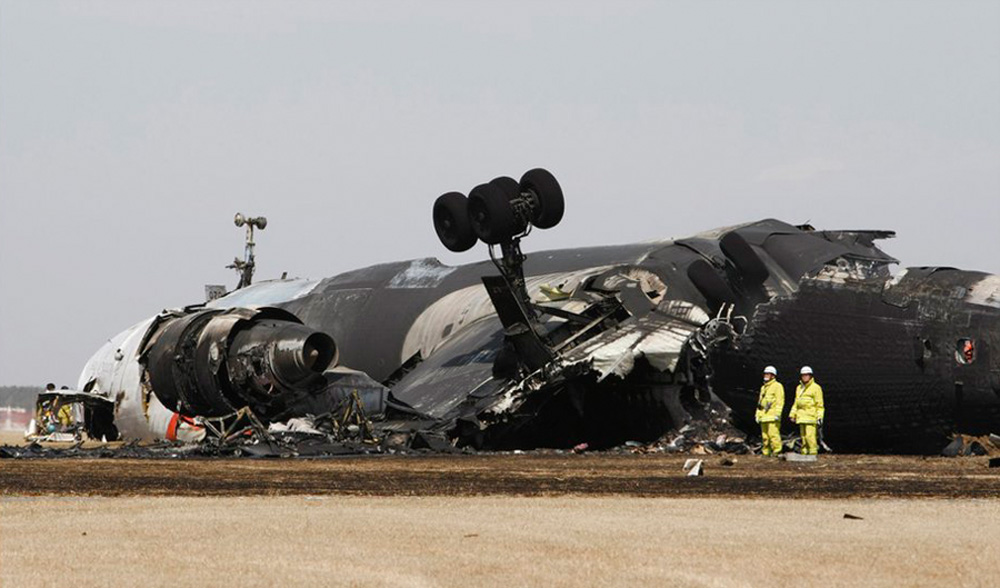
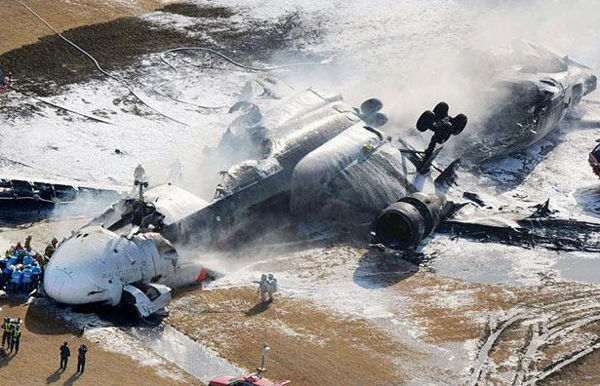
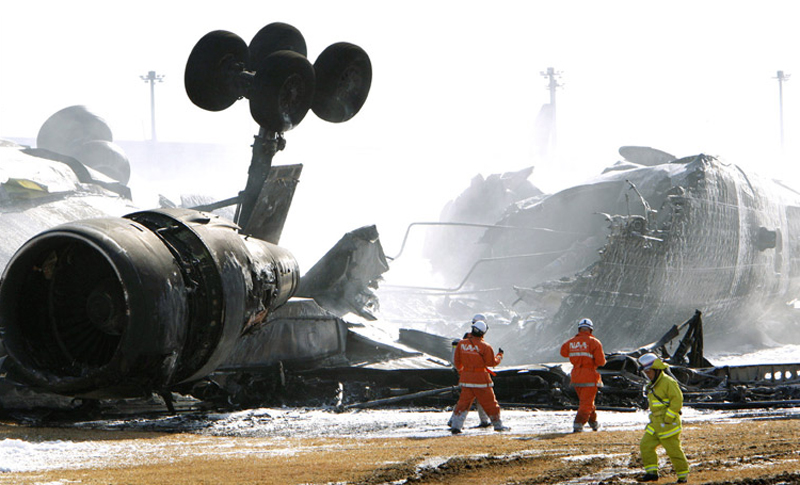
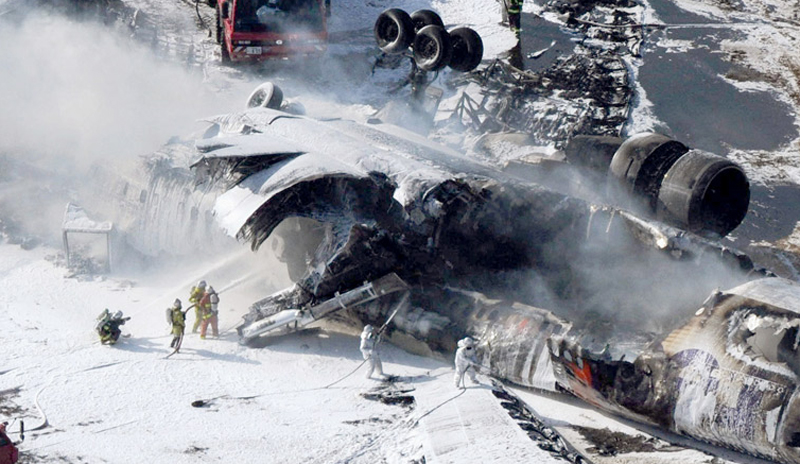
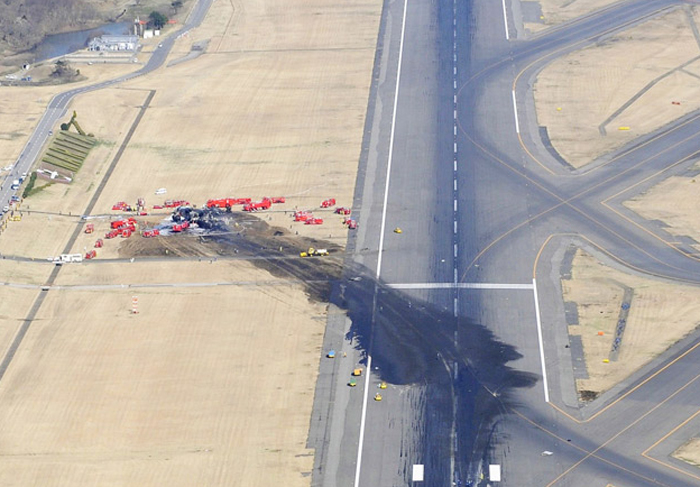
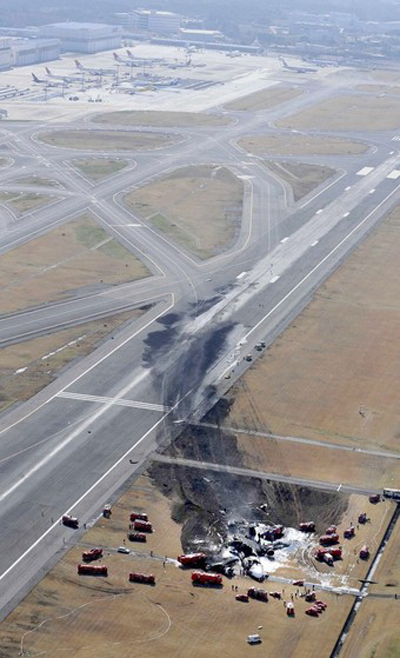
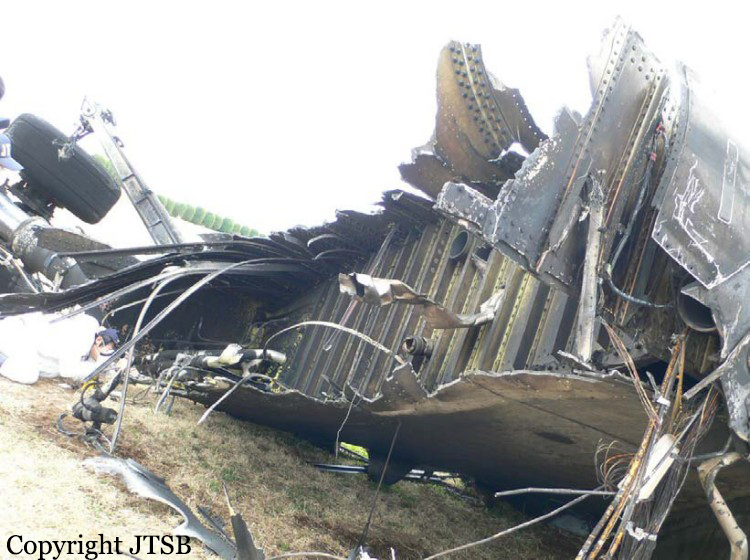
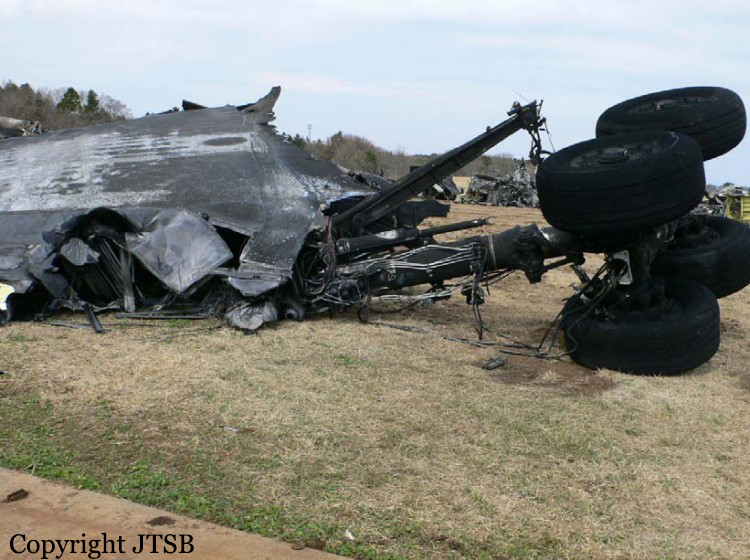
Aircraft bounced repeatedly during landing on Runway 34L at Narita International Airport. During the course of bouncing, its left wing was broken and separated from the fuselage attaching point and the airplane caught fire. The airplane rolled over to the left being engulfed in flames, swerved off the runway to the left and came to rest inverted in a grass area. The Pilot in Command (PIC) and the First Officer (FO) were on board the airplane, and both of them suffered fatal injuries. The airplane was destroyed and the post-crash fire consumed most parts.
Probable cause:
In this accident, when the airplane landed on Runway 34L at Narita International Airport, it fell into porpoising. It is highly probable that the left wing fractured as the load transferred from the left MLG to the left wing structure on the third touchdown surpassed the design limit (ultimate load). It is highly probable that a fire broke out as the fuel spillage from the left wing caught fire, and the airplane swerved left off the runway rolling to the left and came to rest inverted on the grass area. The direct causes which the airplane fell into the porpoise phenomenon are as follows:
a. Large nose-down elevator input at the first touchdown resulted in a rapid nose down motion during the first bounce, followed by the second touchdown on the NLG with negative pitch attitude. Then the pitch angle rapidly increased by the ground reaction force, causing the larger second bounce, and
b. The PF‘s large elevator input in an attempt to control the airplane without thrust during the second bounce. In addition, the indirect causes are as follows:
a. Fluctuating airspeed, pitch attitude due to gusty wind resulted in an approach with a large sink rate,
b. Late flare with large nose-up elevator input resulted in the first bounce and
c. Large pitch attitude change during the bounce possibly made it difficult for the crewmembers to judge airplane pitch attitude and airplane height relative to the ground (MLG height above the runway).
d. The PM‘s advice, override and takeover were not conducted adequately. It is somewhat likely that, if the fuse pin in the MLG support structure had failed and the MLG had been separated in the overload condition in which the vertical load is the primary component, the damage to the fuel tanks would have been reduced to prevent the fire from developing rapidly. It is probable that the fuse pin did not fail because the failure mode was not assumed under an overload condition in which the vertical load is the primary component due to the interpretation of the requirement at the time of type certification for the MD-11 series airplanes.
a. Large nose-down elevator input at the first touchdown resulted in a rapid nose down motion during the first bounce, followed by the second touchdown on the NLG with negative pitch attitude. Then the pitch angle rapidly increased by the ground reaction force, causing the larger second bounce, and
b. The PF‘s large elevator input in an attempt to control the airplane without thrust during the second bounce. In addition, the indirect causes are as follows:
a. Fluctuating airspeed, pitch attitude due to gusty wind resulted in an approach with a large sink rate,
b. Late flare with large nose-up elevator input resulted in the first bounce and
c. Large pitch attitude change during the bounce possibly made it difficult for the crewmembers to judge airplane pitch attitude and airplane height relative to the ground (MLG height above the runway).
d. The PM‘s advice, override and takeover were not conducted adequately. It is somewhat likely that, if the fuse pin in the MLG support structure had failed and the MLG had been separated in the overload condition in which the vertical load is the primary component, the damage to the fuel tanks would have been reduced to prevent the fire from developing rapidly. It is probable that the fuse pin did not fail because the failure mode was not assumed under an overload condition in which the vertical load is the primary component due to the interpretation of the requirement at the time of type certification for the MD-11 series airplanes.
Final Report:




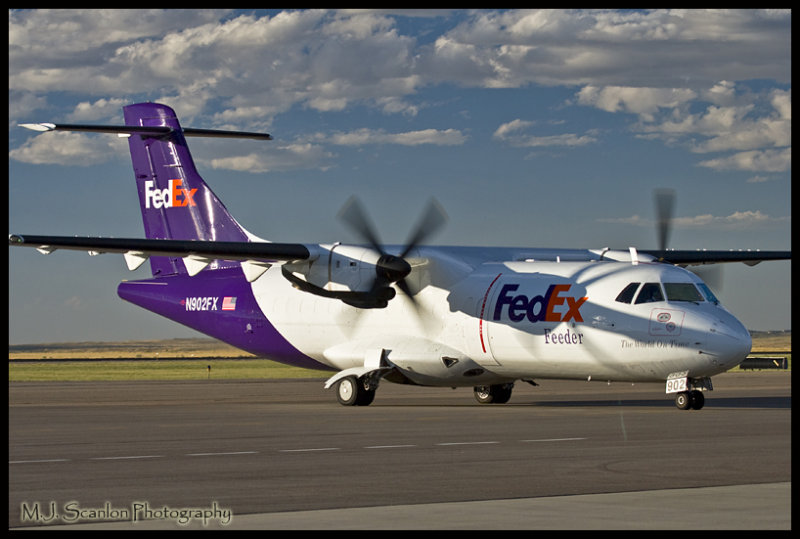
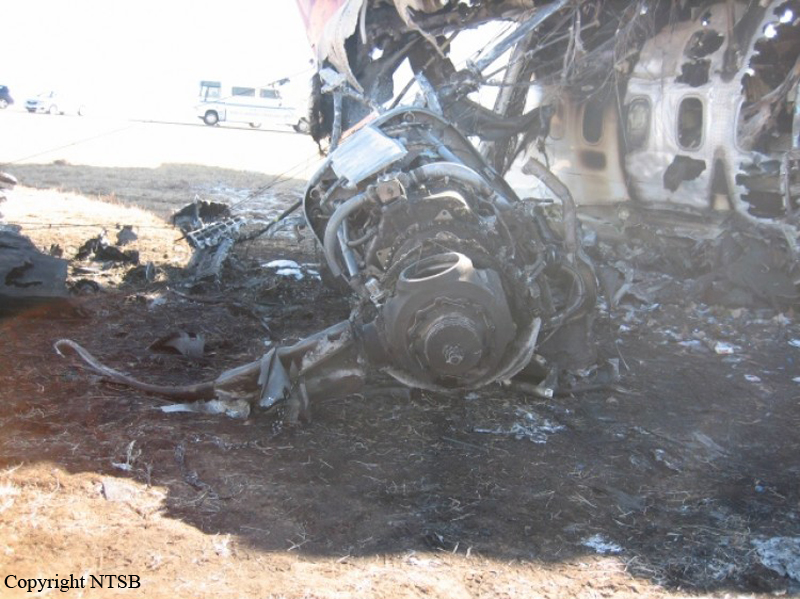
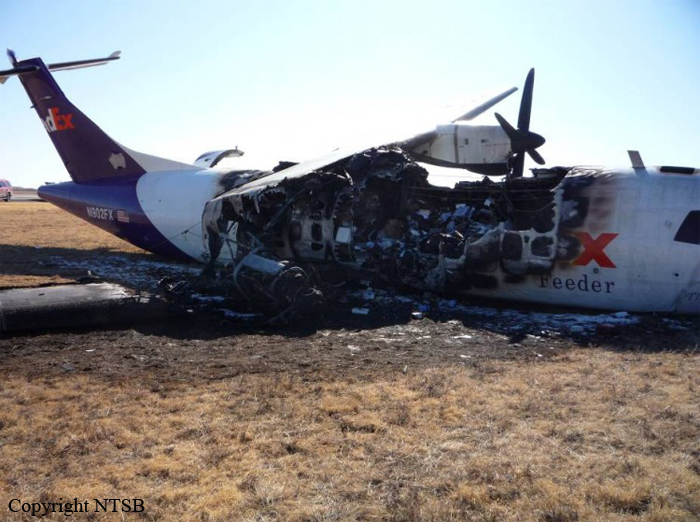
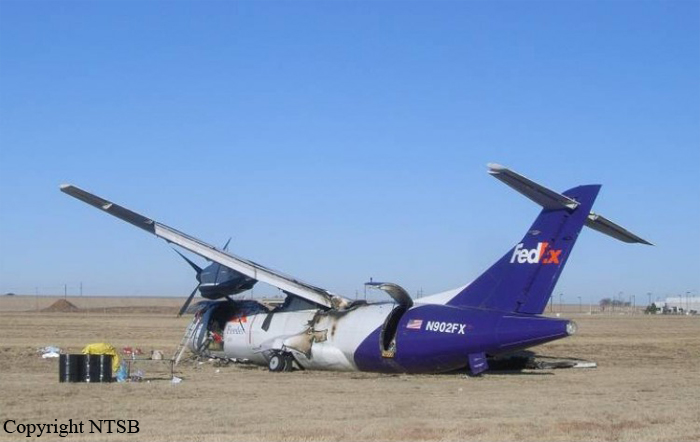
Crash of an ATR42-320 in Lubbock
Date & Time:
Jan 27, 2009 at 0437 LT
Operator:
Registration:
N902FX
Survivors:
Yes
Schedule:
Fort Worth - Lubbock
MSN:
175
YOM:
1990
Flight number:
FX8284
Crew on board:
2
Crew fatalities:
Pax on board:
0
Pax fatalities:
Other fatalities:
Total fatalities:
0
Captain / Total hours on type:
2052.00
Copilot / Total hours on type:
130
Aircraft flight hours:
28768
Aircraft flight cycles:
32379
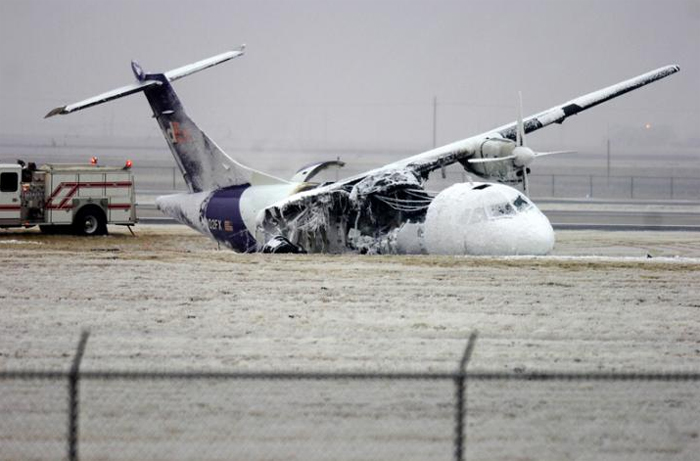
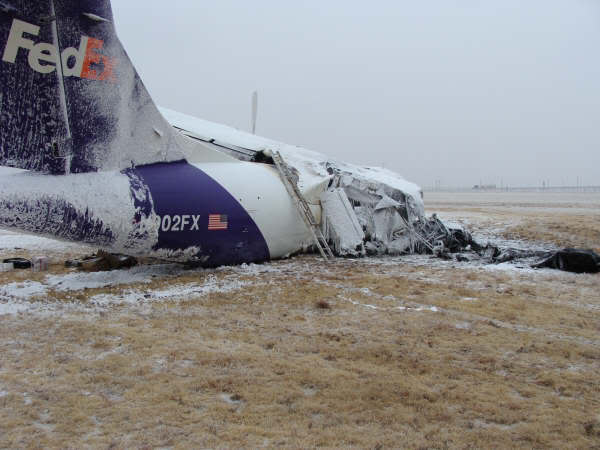
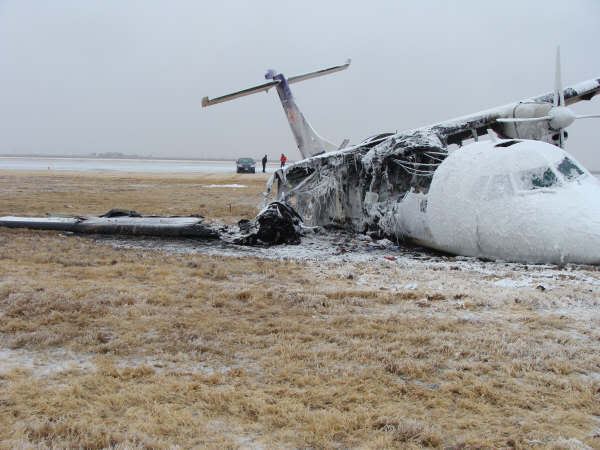
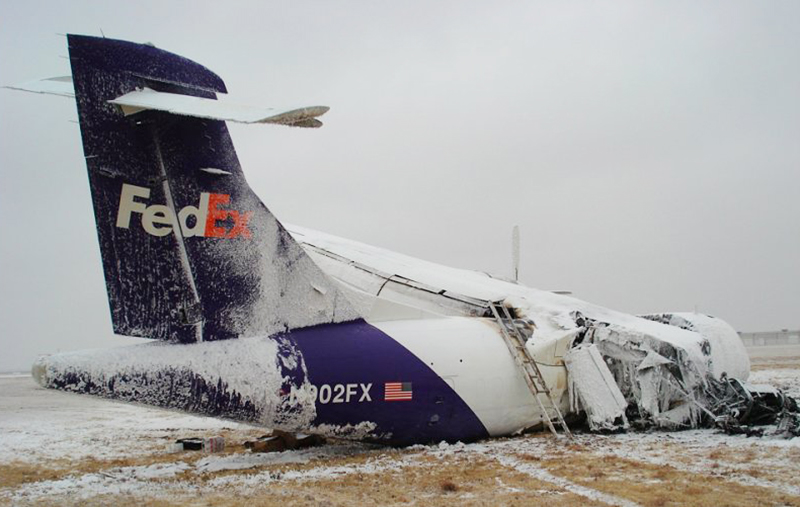
Circumstances:
Aircraft was on an instrument approach when it crashed short of the runway at Lubbock Preston Smith International Airport, Lubbock, Texas. The captain sustained serious injuries, and the first officer sustained minor injuries. The airplane was substantially damaged. The airplane was registered to FedEx Corporation and operated by Empire Airlines, Inc., as a 14 Code of Federal Regulations Part 121 supplemental cargo flight. The flight departed from Fort Worth Alliance Airport, Fort Worth, Texas, about 0313. Instrument meteorological conditions prevailed, and an instrument flight rules flight plan was filed.
Probable cause:
The National Transportation Safety Board determines that the probable cause of this accident was the flight crew’s failure to monitor and maintain a minimum safe airspeed while executing an instrument approach in icing conditions, which resulted in an aerodynamic stall at low altitude.
Contributing to the accident were:
-the flight crew’s failure to follow published standard operating procedures in response to a flap anomaly,
-the captain’s decision to continue with the unstabilized approach
-the flight crew’s poor crew resource management,
-fatigue due to the time of day in which the accident occurred and a cumulative sleep debt which likely impaired the captain’s performance.
Contributing to the accident were:
-the flight crew’s failure to follow published standard operating procedures in response to a flap anomaly,
-the captain’s decision to continue with the unstabilized approach
-the flight crew’s poor crew resource management,
-fatigue due to the time of day in which the accident occurred and a cumulative sleep debt which likely impaired the captain’s performance.
Final Report:
Crash of a Cessna 208B Super Cargomaster in Ada
Date & Time:
May 9, 2008 at 2045 LT
Operator:
Registration:
N893FE
Survivors:
Yes
Schedule:
Traverse City - Grand Rapids
MSN:
208B-0223
YOM:
1990
Flight number:
FDX7343
Crew on board:
1
Crew fatalities:
Pax on board:
0
Pax fatalities:
Other fatalities:
Total fatalities:
0
Captain / Total hours on type:
3450.00
Aircraft flight hours:
8625
Circumstances:
The airplane was on a visual approach to an airport when the engine stopped producing power. The pilot subsequently landed the airplane in a field, but struck trees at the edge of the field during the forced landing. Examination of the engine, engine fuel controls, and Power Analyzer and Recorder (PAR), provided evidence that the engine shut down during the flight. Further examination of engine and fuel system components from the accident airplane failed to reveal a definitive reason for the uncommanded engine shut-down.
Probable cause:
A loss of engine power for undetermined reasons.
Final Report:

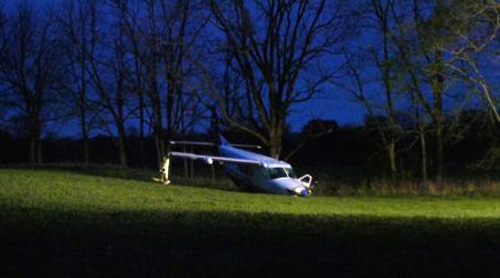
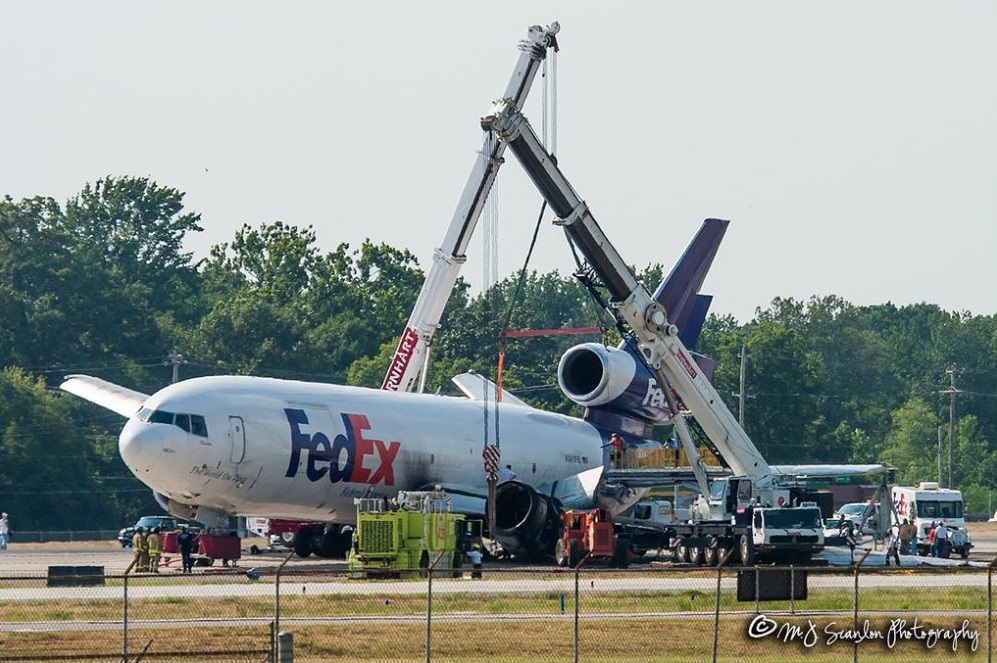
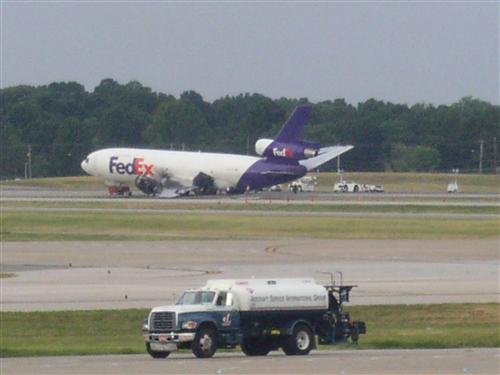
Crash of a Douglas DC-10-10F in Memphis
Date & Time:
Jul 28, 2006 at 1125 LT
Operator:
Registration:
N391FE
Survivors:
Yes
Schedule:
Seattle - Memphis
MSN:
46625/169
YOM:
1975
Flight number:
FDX630
Crew on board:
3
Crew fatalities:
Pax on board:
0
Pax fatalities:
Other fatalities:
Total fatalities:
0
Captain / Total hours on type:
4402.00
Copilot / Total hours on type:
244
Aircraft flight hours:
73283
Aircraft flight cycles:
27002
Circumstances:
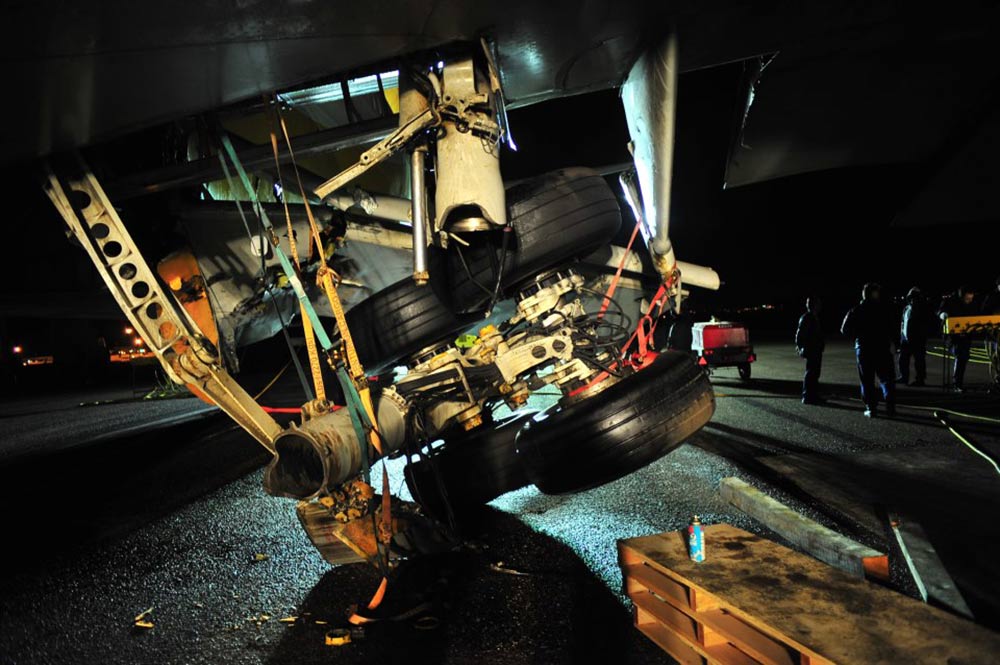
The approach and landing were stabilized and within specified limits. Recorded data indicates that the loads experienced by the landing gear at touchdown were within the certification limits for an intact landing gear without any pre-existing cracks or flaws. The weather and runway conditions did not affect the landing. The application of braking by the accident crew, and the overall effect of the carbon brake modification did not initiate or contribute to the landing gear fracture. Post-accident modifications to the MD-10 carbon brake system were implemented due to investigative findings for the purposes of braking effectiveness and reliability. Post accident emergency response by the flight crew and ARFF was timely and correct. The left main landing gear (LMLG) outer cylinder on the accident airplane had been operated about 8 ½ years since its last overhaul where stray nickel plating likely was introduced in the air filler valve hole. Nickel plating is a permissible procedure for maintaining the tolerances of the inner diameter of the outer gear cylinder, however the plating is not allowed in the air filler valve bore hole. Literature and test research revealed that a nickel plating thickness of 0.008" results in a stress factor increase of 35%. At some point in the life of the LMLG, there was a load event that compressively yielded the material in the vicinity of the air filler valve hole causing a residual tension stress. During normal operations the stress levels in the air filler valve hole were likely within the design envelope, but the addition of the residual stress and the stress intensity factor due to the nickel increased these to a level high enough to initiate and grow a fatigue crack on each side of the air filler valve hole. The stresses at the air filler valve hole were examined via development of a Finite Element Model (FEM) which was validated with data gathered from an instrumented in-service FedEx MD-10 airplane. The in-service data and FEM showed that for all of the conditions, the stress in the air filler valve hole was much higher than anticipated in the design of the outer cylinder. Fatigue analysis of the in service findings and using the nickel plating factor resulted in a significantly reduced fatigue life of the gear cylinder compared with the certification limits. During the accident landing the spring back loads on the LMLG were sufficient to produce a stress level in the air filler valve hole that exceeded the residual strength of the material with the fatigue cracks present.
Probable cause:
The failure of the left main landing gear due to fatigue cracking in the air filler valve hole on the aft side of the landing gear. The fatigue cracking occurred due to the presence of stray nickel plating in the air filler valve hole. Contributing to this was the inadequate maintenance procedures to prevent nickel plating from entering the air filler valve hole during overhaul.
Final Report: