


Country
Operator Image

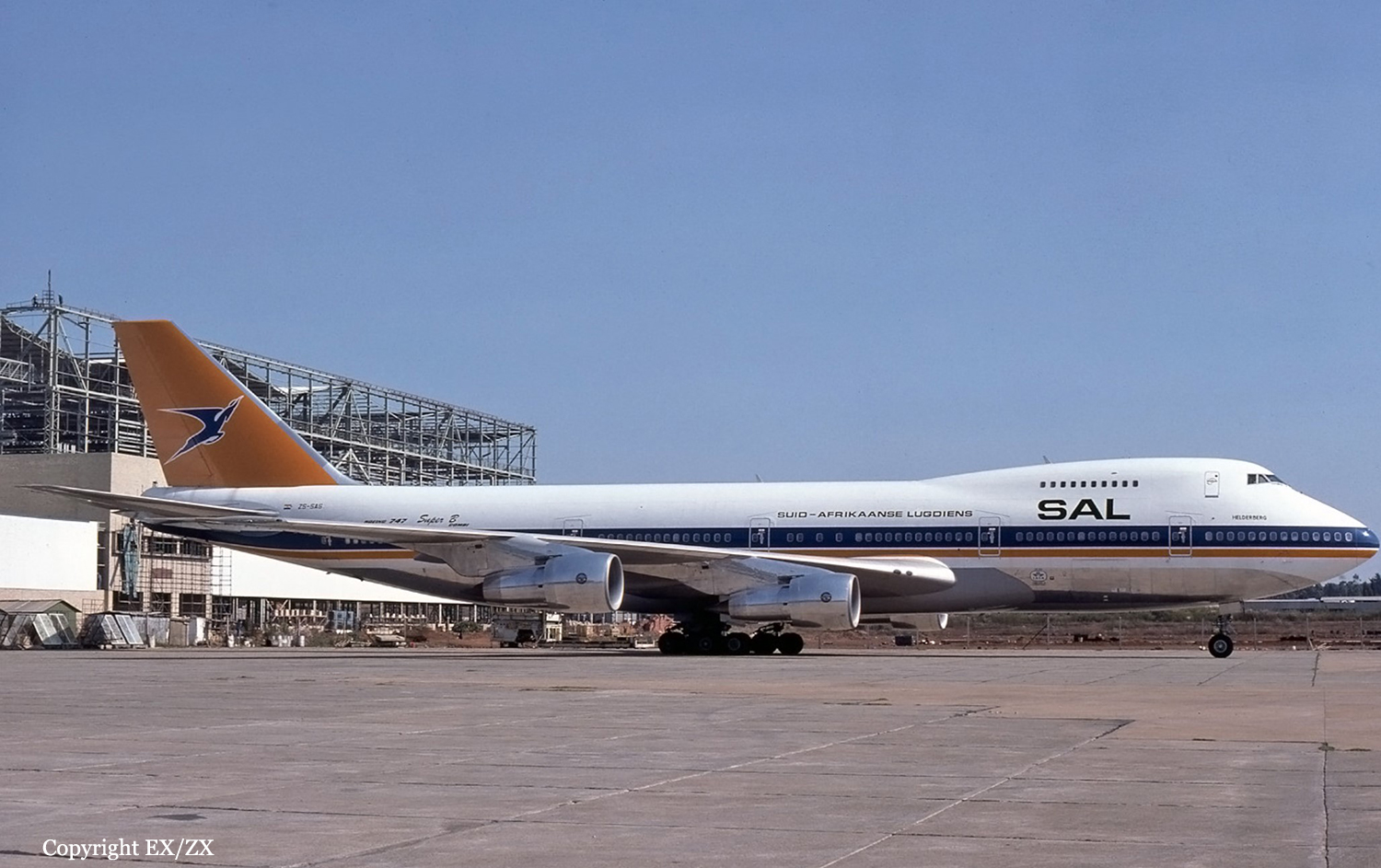
Crash of a Boeing 747-244B in the Indian Ocean: 159 killed
Date & Time:
Nov 28, 1987 at 0407 LT
Operator:
Registration:
ZS-SAS
Survivors:
No
Schedule:
Taipei – Port Louis – Johannesburg
MSN:
22171
YOM:
1980
Flight number:
SA295
Crew on board:
19
Crew fatalities:
Pax on board:
140
Pax fatalities:
Other fatalities:
Total fatalities:
159
Captain / Total hours on type:
3884.00
Copilot / Total hours on type:
4096
Aircraft flight hours:
26743
Aircraft flight cycles:
4877
Circumstances:
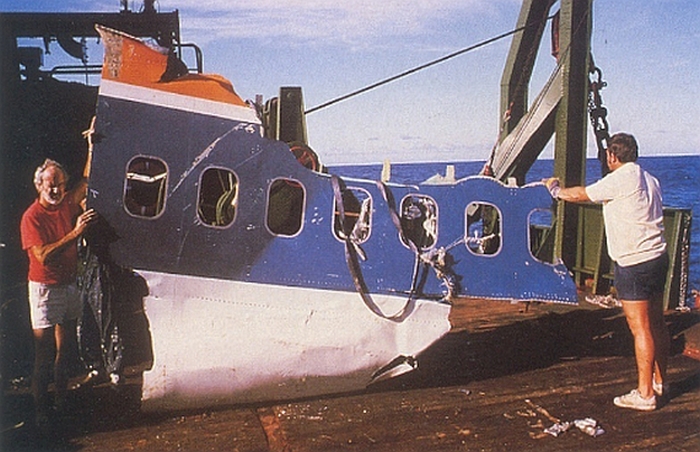
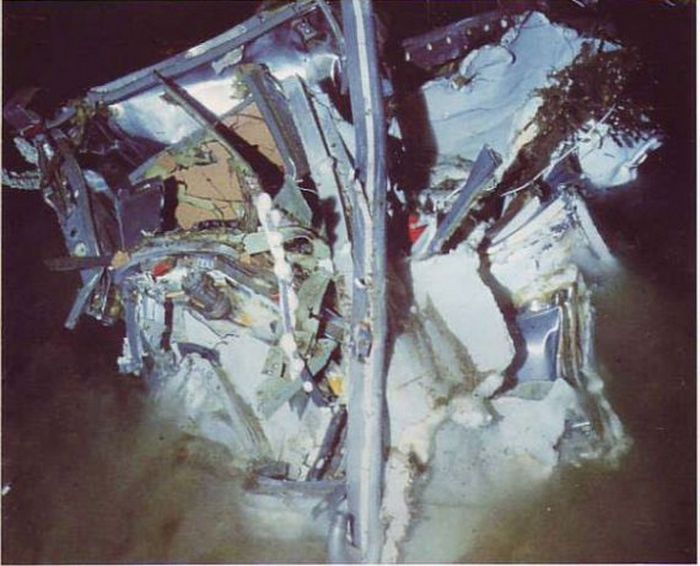
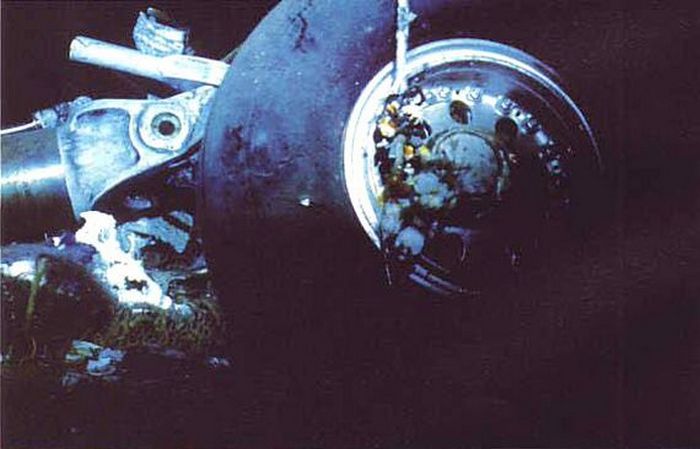
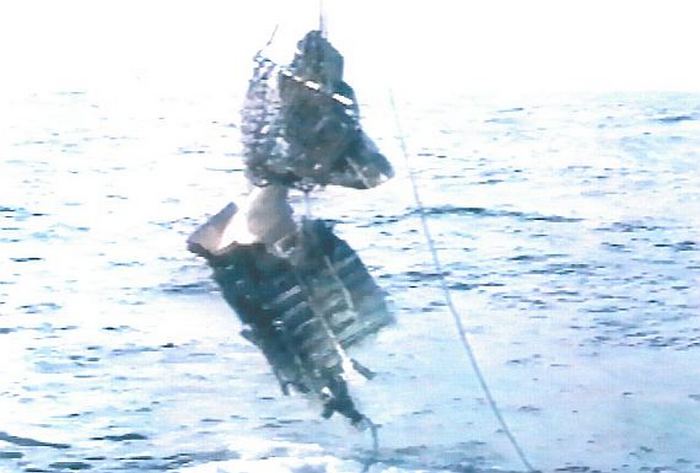
On November 27th 1987 flight SA295 was scheduled to depart from Taipei's Chiang Kai Shek Airport at 13:00 UTC for Mauritius' Plaisance Airport and Johannesburg, South Africa on a scheduled international air transport service. Due to adverse weather and the late arrival of a connecting flight the departure time was delayed and the airplane took off at 14:23 UTC with 149000 kg of fuel, 43225 kg of baggage and cargo, 140 passengers and a crew comprising 5 flight crew members and 14 cabin crew members. The calculated flight time was 10 hours 14 minutes. The take-off was normal. At 14:56 UTC the crew communicated with Hong Kong Radar and thereafter routine position reports were given to the flight information centres (FICs) at Hong Kong, Bangkok, Kuala Lumpur, Colombo, Cocos Islands and Mauritius. At 15:55 a routine report was made to the Operator's base at Johannesburg. The information given was that the airplane had taken off from Taipei at 14:23, was flying at FL310 and that the arrival time at Mauritius was estimated as 00:35 UTC. At about 22:30 the pilot called Mauritius FIC, using HF radio, and advised that the aircraft had been at position 070° East at 22:29 at FL350 and that the time at position 065° East was estimated as 23:12. At 23:13 the position report of 065° East at FL350 was given to Mauritius FIC. The estimated time of arrival (ETA) over position 060° East was given as 23:58. About 23:45 the master fire warning alarm sounded on the flight deck. Somebody, probably the pilot, inquired where the warning had come from and received the reply that it had come from the main deck cargo. The pilot then asked that the check list be read. Some 30 seconds later somebody on the flight deck uttered an oath. The pilot called Mauritius Approach Control at 23:49 and said that they had a smoke problem and were doing an emergency descent to FL140. The approach controller gave clearance for the descent and the pilot asked that the fire services be alerted. The controller asked if full emergency services were required to which the pilot replied in the affirmative. At 23:51 the approach controller asked the pilot for his actual position. The pilot replied: "Now we have lost a lot of electrics, we haven't got anything on the aircraft now". At 23:52 the approach controller asked for an ETA at Plaisance and was given the time of 00:30. At 23:52:50 the pilot made an inadvertent transmission when he said to the senior flight engineer: "Hey Joe, shut down the oxygen left". From this time until 00:01:34 there was a period of silence lasting 8 minutes and 44 seconds. From 00:01:34 until 00:02:14 the pilot inadvertently transmitted instructions, apparently to the senior flight engineer, in an excited tone of voice. Most of the phrases are unintelligible. At 00:02:43 the pilot gave a distance report as 65 nautical miles. This was understood by the approach controller to be the distance to the airport. In fact it was the distance to the next waypoint, Xagal. The distance to the airport at that point was approximately 145 nautical miles. At 00:02:50 the approach controller recleared the flight to FL50 and at 00:03:00 gave information on the actual weather conditions at Plaisance Airport, which the pilot acknowledged. When the approach controller asked the pilot at 00:03: 43 which runway he intended to use he replied one three but was corrected when the controller asked him to confirm one four. At 00:03:56 the controller cleared the flight for a direct approach to the Flic-en-Flac (FF) non-directional beacon and requested the pilot to report on approaching FL50. At 00:04:02 the pilot said: "Kay". From 00:08:00 to 00:30:00 the approach controller called the aircraft repeatedly but there was no reply. The aircraft crashed into the Indian Ocean at a position determined to be about 134 nautical miles North-East of Plaisance Airport. The accident occurred at night, in darkness, at about 00:07 UTC. The local time was 04:07. Within a few days drifting pieces of wreckage were found, but it took until January 28th, 1988 for the main wreckage field to be found on the Ocean floor, at a depth of 4400 meters. The cockpit voice recorder was recovered on 6 January 1989.
Probable cause:
Despite intensive investigation the Board was unable to find or conclude that fireworks or any other illegal cargo were carried in the aircraft. The accident followed an uncontrollable fire in the forward right pallet on the main deck cargo compartment. The aircraft crashed into the sea at high speed following a loss of control consequent on the fire.
Fire of an unknown origin had possibly:
1) incapacitated the crew;
2) caused disorientation of the crew due to thick smoke;
3) caused crew distraction;
4) weakened the aircraft structure, causing an in-flight break-up.;
5) burned through several control cables;
6) caused loss of control due to deformation of the aircraft fuselage.
Fire of an unknown origin had possibly:
1) incapacitated the crew;
2) caused disorientation of the crew due to thick smoke;
3) caused crew distraction;
4) weakened the aircraft structure, causing an in-flight break-up.;
5) burned through several control cables;
6) caused loss of control due to deformation of the aircraft fuselage.
Final Report:

Crash of a Boeing 707-344C in Windhoek: 123 killed
Date & Time:
Apr 20, 1968 at 2050 LT
Operator:
Registration:
ZS-EUW
Survivors:
Yes
Schedule:
Johannesburg - Windhoek - Luanda - Las Palmas - Frankfurt - London
MSN:
19705/675
YOM:
1968
Flight number:
SA228
Crew on board:
12
Crew fatalities:
Pax on board:
116
Pax fatalities:
Other fatalities:
Total fatalities:
123
Captain / Total hours on type:
4608.00
Copilot / Total hours on type:
229
Aircraft flight hours:
238
Circumstances:
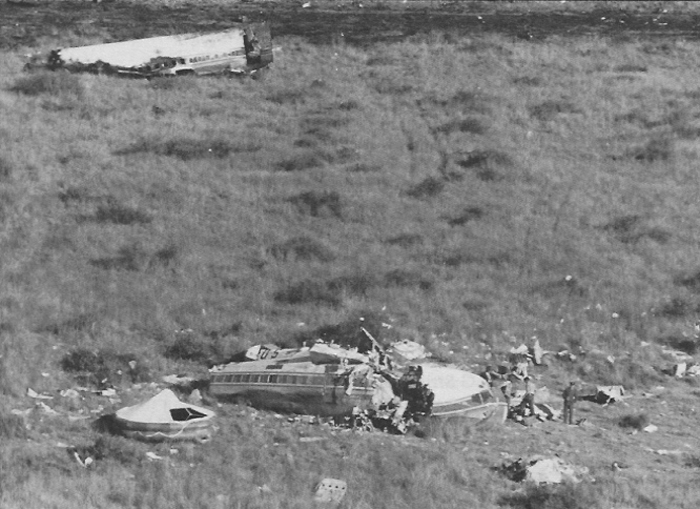
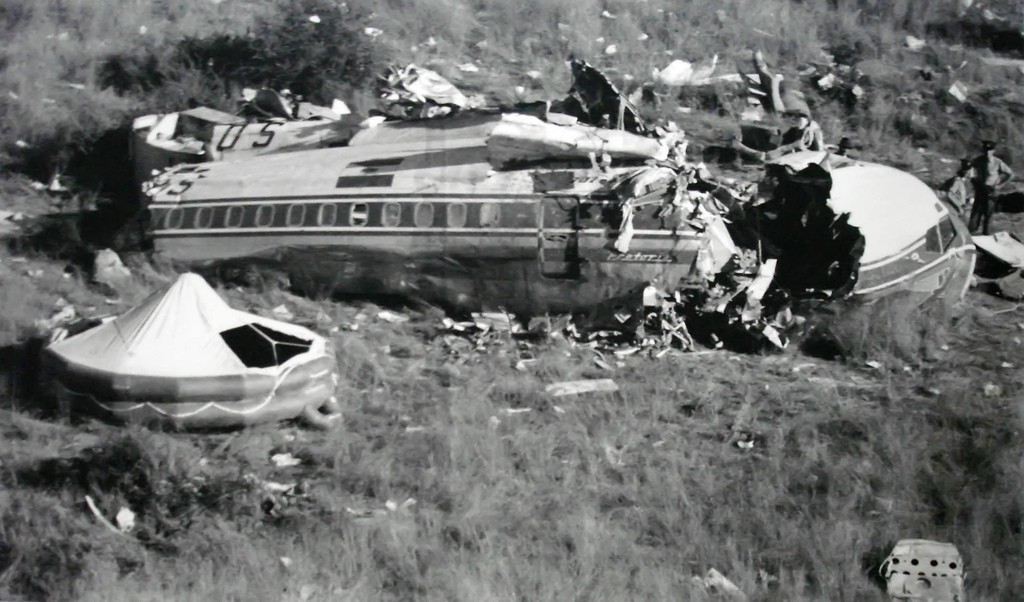
A Boeing 707-344C passenger jet, registered ZS-EUW, was destroyed in an accident near Windhoek-Strijdom International Airport, Namibia. The aircraft was operating on South African Airways' flight SA228 from Johannesburg to London via Windhoek, Luanda, Las Palmas and Frankfurt. The first leg of the flight was uneventful. Local weather conditions at Windhoek were fine: there was no cloud and no wind. The night was particularly dark as there was no moon and the horizon was indistinct. At 20:49 the aircraft took off from Windhoek runway 08 into conditions of complete darkness. The aircraft climbed to a height of about 650 feet above ground level. It leveled off and began to descend. Thirty seconds later, the aircraft flew into the ground at a point some 5,327 metres from the end of the runway. The level of the ground at the point of impact was 179 feet below the airport elevation or approximately 100 feet below the point of lift-off. The impact occurred at a ground speed of approximately 271 knots. The initial impact was in a slightly left-wing-down attitude. The fuselage and each of the 4 engine pods gouged deep trenches in the ground and the aircraft then began to break up as its momentum carried it onward. Wreckage was strewn over an area some 1,400 metres long and some 200 metres wide, and 2 separate fires broke out, presumably through the ignition of fuel on impact. Five passengers were seriously injured while 123 other occupants were killed.
Probable cause:
In regard to the cause of the accident:
(1) The effective cause of the accident was the human factor, and not any defect in the aircraft or in any of the engines or flight instruments.
(2) After a normal take- off and retraction of the landing gear, and while the aircraft was approaching an estimated height of 650 feet, the flaps were fully retracted and the engine output reduced from take- off power to climb power. There is no reason to suppose that these steps were not taken in the correct sequence and at the prescribed indicated airspeeds. In that phase of flight these alterations in flap configuration and engine power would have caused the aircraft to level off and then lose height
(a) unless the pilot checked that tendency and maintained a climbing attitude by appropriate action, or
(b) until the aircraft gained much more speed.
(3) The aircraft levelled off and lost height, and during the short period in which it did so the pilot appears to have acted as if he believed that the aircraft was still climbing. He appears to have altered the stabilizer trim to maintain the aircraft in its same pitch attitude, which he apparently believed was an attitude of climb, but which was in fact an attitude of descent. In that situation, which lasted for about 30 seconds, the aircraft lost approximately 750 feet in height and flew into the ground.
(4) The co-pilot failed to monitor the flight instruments sufficiently to appreciate that the aircraft was losing height.
The following causes probably contributed in greater or lesser degree to the situation described above:
(a) take-off into conditions of total darkness with no external visual reference;
(b) inappropriate alteration of stabilizer trim;
(c) spatial disorientation;
(d) pre-occupation with after-take-off checks.
The following causes might have contributed in greater or lesser degree:
(a) temporary confusion in the mind of the pilot on the position of the inertial-lead vertical speed indicator, arising from the difference in the instrument panel layout in the C model of the Boeing 707-344 aircraft, as compared with the A and B models, to which both pilots were accustomed;
(b) the pilot's misinterpretation, by one thousand feet, of the reading on the drum-type altimeter, which is susceptible to ambiguous interpretation on the thousands scale;
(c) distraction on the flight deck caused by a bird or bat strike, or some other relatively minor occurrence.
(1) The effective cause of the accident was the human factor, and not any defect in the aircraft or in any of the engines or flight instruments.
(2) After a normal take- off and retraction of the landing gear, and while the aircraft was approaching an estimated height of 650 feet, the flaps were fully retracted and the engine output reduced from take- off power to climb power. There is no reason to suppose that these steps were not taken in the correct sequence and at the prescribed indicated airspeeds. In that phase of flight these alterations in flap configuration and engine power would have caused the aircraft to level off and then lose height
(a) unless the pilot checked that tendency and maintained a climbing attitude by appropriate action, or
(b) until the aircraft gained much more speed.
(3) The aircraft levelled off and lost height, and during the short period in which it did so the pilot appears to have acted as if he believed that the aircraft was still climbing. He appears to have altered the stabilizer trim to maintain the aircraft in its same pitch attitude, which he apparently believed was an attitude of climb, but which was in fact an attitude of descent. In that situation, which lasted for about 30 seconds, the aircraft lost approximately 750 feet in height and flew into the ground.
(4) The co-pilot failed to monitor the flight instruments sufficiently to appreciate that the aircraft was losing height.
The following causes probably contributed in greater or lesser degree to the situation described above:
(a) take-off into conditions of total darkness with no external visual reference;
(b) inappropriate alteration of stabilizer trim;
(c) spatial disorientation;
(d) pre-occupation with after-take-off checks.
The following causes might have contributed in greater or lesser degree:
(a) temporary confusion in the mind of the pilot on the position of the inertial-lead vertical speed indicator, arising from the difference in the instrument panel layout in the C model of the Boeing 707-344 aircraft, as compared with the A and B models, to which both pilots were accustomed;
(b) the pilot's misinterpretation, by one thousand feet, of the reading on the drum-type altimeter, which is susceptible to ambiguous interpretation on the thousands scale;
(c) distraction on the flight deck caused by a bird or bat strike, or some other relatively minor occurrence.
Final Report:
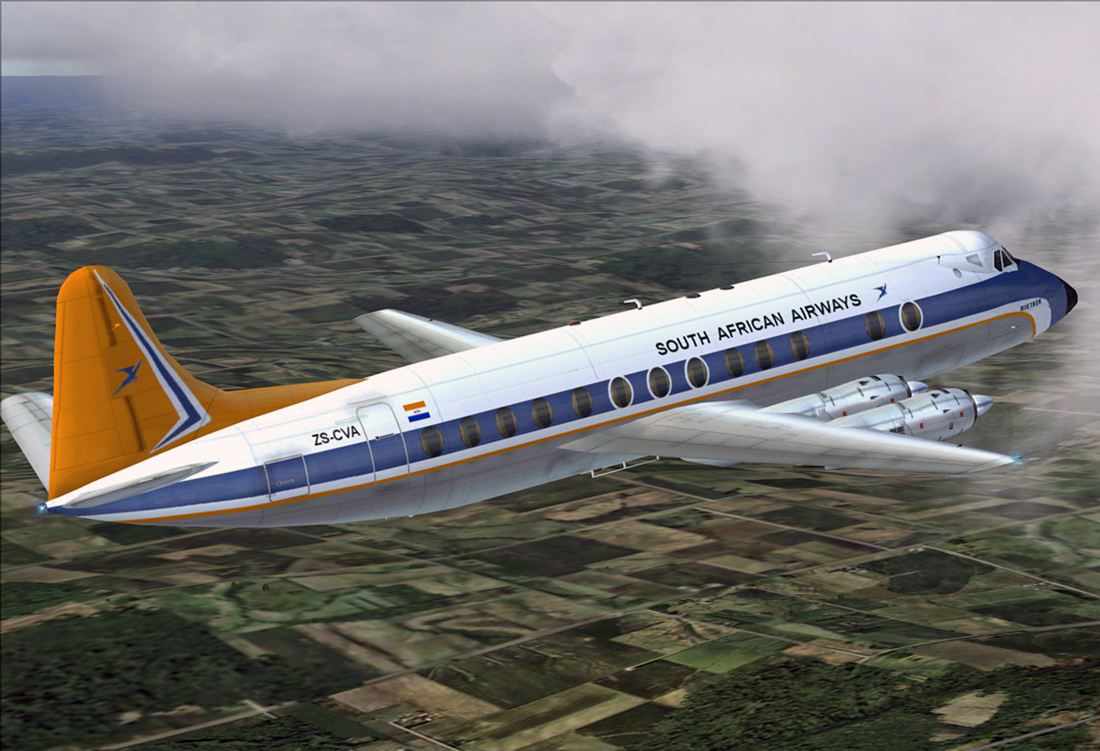
Crash of a Vickers 818 Viscount off East London: 25 killed
Date & Time:
Mar 13, 1967 at 1910 LT
Operator:
Registration:
ZS-CVA
Survivors:
No
Schedule:
Port Elizabeth – East London – Bloemfontein – Johannesburg
MSN:
317
YOM:
1958
Flight number:
SA406
Crew on board:
5
Crew fatalities:
Pax on board:
20
Pax fatalities:
Other fatalities:
Total fatalities:
25
Captain / Total hours on type:
3231.00
Copilot / Total hours on type:
109
Circumstances:
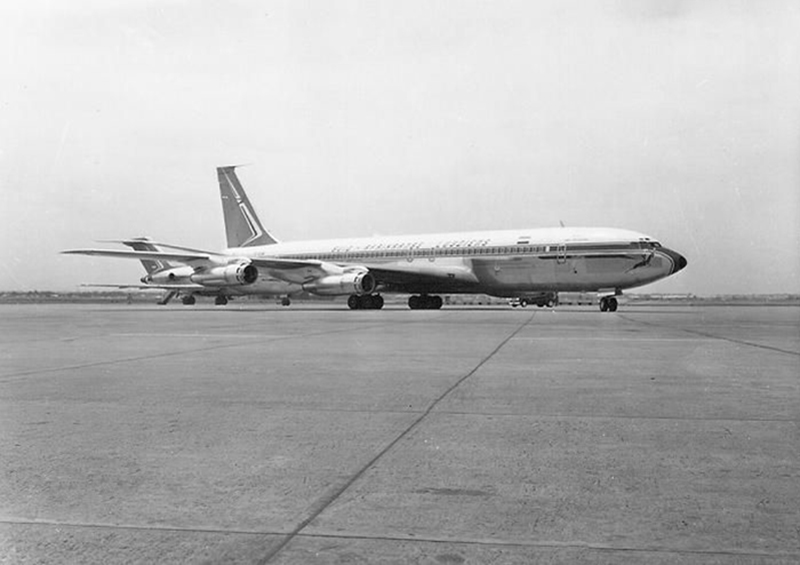
On 13th March 1967 Vickers Viscount aircraft ZS-CVA, "Rietbok", was on a scheduled public transport flight No. SA 406 from Port Elizabeth to Johannesburg via East London and Bloemfontein. Its Estimated Time of Arrival at East London was 1714 GMT, but the weather there was poor. The captain had indicated that he would probably overfly East London, but that he would have a look at conditions there before deciding to do so. The last communication from the aircraft was when it notified East London Airport Control that it was "at 2,000 ft. with the coastline in sight". It is estimated that the aircraft was then between 20 and 15 nautical miles from the Airport and that the time was approximately 1709 GMT. At 1710.08 GMT the aircraft crashed into the sea. The approximate position of the crash was 33°13.45’ S. , 27°38.3’ E. On board were Captain Gordon Benjamin Lipawsky, First Officer Brian Albert Richard Trenwith, 3 cabin crew and 20 passengers. Air-sea rescue operations were put in hand promptly, but there were no survivors. Bits of floating wreckage, consisting mainly of cabin interior fittings, were recovered by naval vessels and other pieces were washed ashore. The main wreckage of the aircraft is believed to he lying at a depth of between 180 and 220 feet, approximately 1½ miles off-shore. Extensive salvage operations were attempted, but were hindered by murky water, a current up to 8 kts and dangerous sea conditions. The aircraft was lost and all 25 occupants were killed.
Probable cause:
The available data is not sufficient for the originating cause of the accident to be determined with any degree of probability. In the opinion of the Board certain possibilities can be excluded as being inconsistent with the evidence and/or as being remote and improbable: among these possibilities are structural failure, failure of controls or control surfaces, multiple engine failure, instrument failure, explosion, fire, a "bad weather" accident and pilot error. However, on the evidence the Board cannot exclude as the originating cause of the accident a heart attack suffered by the captain in the air, with ensuing loss of control of the aircraft, and with the first officer being unable in the time available to regain sufficient control to prevent contact with the sea.
Final Report:
Crash of a Douglas C-47B-30-DK near Seymour: 2 killed
Date & Time:
Mar 6, 1962 at 1415 LT
Operator:
Registration:
ZS-DJC
Survivors:
Yes
Schedule:
Cape Town – Oudtshoorn – George – Plettenberg Bay – Port Elizabeth – Grahamstown – Queenstown – Collondale
MSN:
16189/32937
YOM:
1945
Flight number:
SA512
Crew on board:
4
Crew fatalities:
Pax on board:
3
Pax fatalities:
Other fatalities:
Total fatalities:
2
Captain / Total hours on type:
2484.00
Circumstances:
According to the copilot the aircraft flew below the clouds at about 300-500 ft above the ground. It was the pilot-in-command's intention to fly through the Katberg Pass below cloud and as the aircraft approached the mountains the cloud ceiling became lower and the pilot was faced with a critical situation. He called for METO (maximum except takeoff) power and in an attempt to clear the hills the right wing first made contact with the trees and then the right engine propeller cut into the rising ground. The aircraft came to rest against a rock face approximately 250 yd from the initial point of impact with the trees and approximately 500 ft from the top of the hill. Two crew members were killed while five other occupants were injured.
Probable cause:
The accident was attributed to an error of judgement on the part of the pilot-in-command who attempted low visual flight, beneath the cloud base, near mountains in deteriorating weather conditions.
Final Report:
Crash of a Lockheed 18-08-01 LodeStar off Scottburgh
Date & Time:
Feb 1, 1959
Operator:
Registration:
ZS-ASV
Survivors:
Yes
MSN:
2036
YOM:
1940
Crew on board:
3
Crew fatalities:
Pax on board:
0
Pax fatalities:
Other fatalities:
Total fatalities:
0
Circumstances:
The crew was performing a training flight when control was lost for unknown reason. The twin engine aircraft crashed into the sea few km off Scottburgh. All three crew members were rescued while the aircraft sank and was lost.